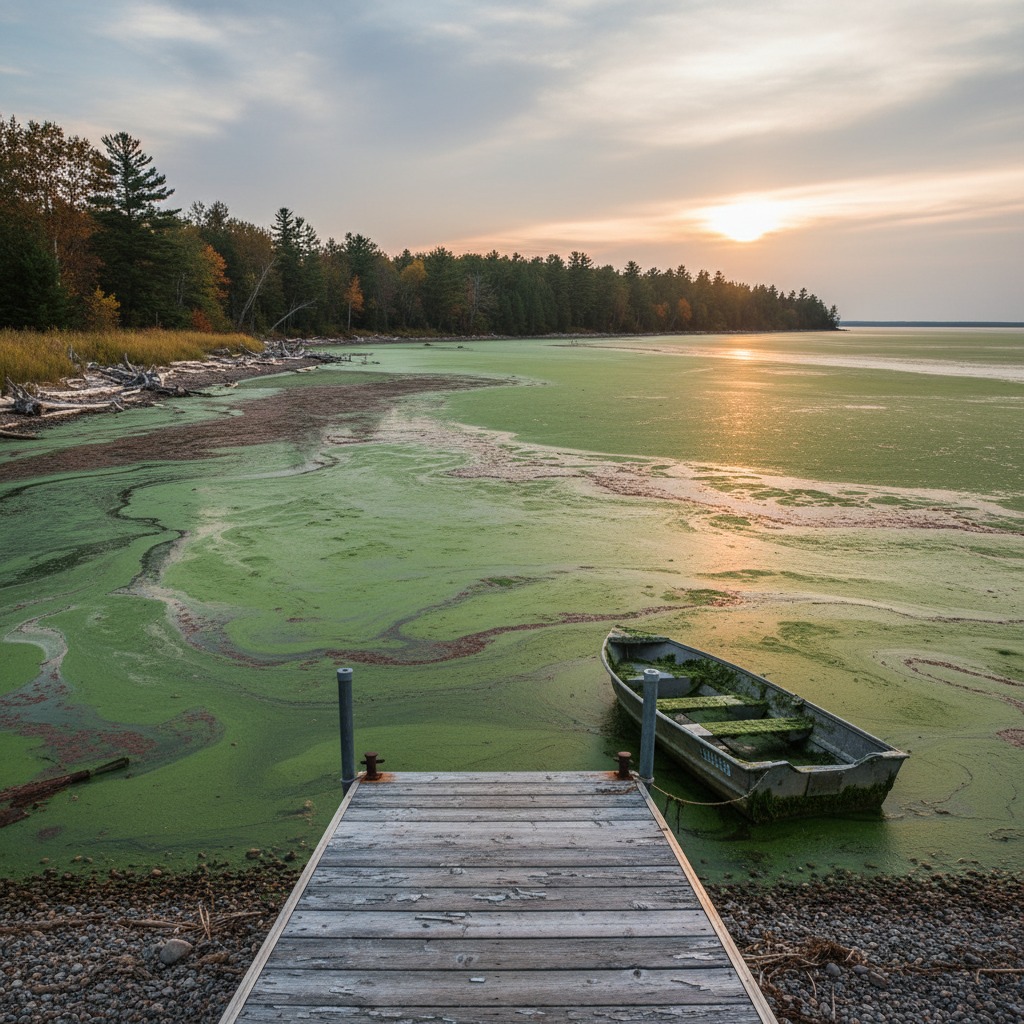
Algae Blooms and the Future of Lake Erie
In August 2014, the City of Toledo, Ohio issued a do-not-drink advisory to nearly 500,000 residents after microcystin, a toxin produced by cyanobacteria, was detected in the municipal water supply. The source was a massive algae bloom in the western basin of Lake Erie that had grown so dense it could be seen from space. Grocery stores ran out of bottled water within hours. The National Guard was called in to distribute supplies. For three days, one of the largest cities on the Great Lakes could not safely use its tap water.
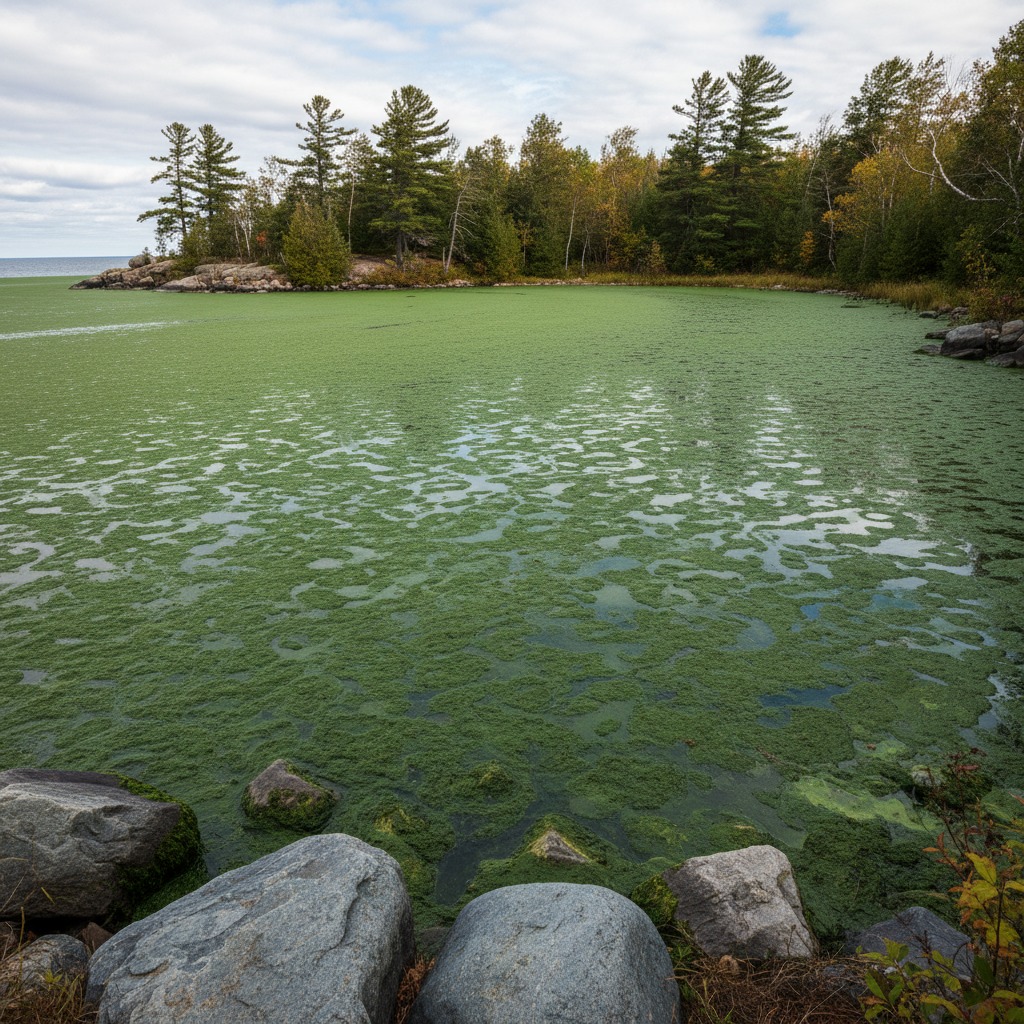
That crisis put Lake Erie's algae problem on the international map. But for the communities along the lake's north shore in Ontario, the blooms were already a familiar and worsening annual event. Every summer, as water temperatures climb and agricultural runoff peaks, the western basin of Lake Erie turns green. Some years the bloom is moderate. Other years it covers hundreds of square kilometres and lingers well into October.
The Mechanics of a Bloom
Algae blooms are not random events. They are the predictable result of too much phosphorus entering a body of water at the wrong time of year. Phosphorus is the limiting nutrient in most freshwater systems, meaning that when it is scarce, algae growth stays in check. When it becomes abundant, algae populations explode.
Lake Erie is particularly vulnerable because of its shallow western basin, where average depths are less than eight metres. Warm, shallow water heats up quickly in summer, creating ideal conditions for cyanobacteria, also called blue-green algae. These organisms thrive in warm, nutrient-rich, slow-moving water. And unlike most true algae, many cyanobacteria species produce toxins that are dangerous to humans, pets, and wildlife.

The primary source of phosphorus feeding Lake Erie's blooms is agricultural runoff from the Maumee River watershed in Ohio and the Thames River watershed in Ontario. Spring rains wash dissolved reactive phosphorus from fertilized fields into tributaries, which carry it into the lake just as water temperatures begin to rise. The timing could not be worse.
The Scale of the Problem
NOAA's annual harmful algal bloom forecast, issued each July, has become a closely watched metric for communities around the lake. The severity index, which uses satellite imagery and nutrient loading data to predict bloom size, has exceeded the "significant" threshold in most years since 2011. The 2015 bloom was among the largest ever recorded, covering more than 2,500 square kilometres.
The effects ripple through the regional economy. Beach closures along Ontario's Lake Erie shore, from Pelee Island to Port Colborne, have become routine during bloom season. Charter fishing operations report cancellations when surface scum makes conditions unpleasant. Waterfront property values in affected areas have stagnated relative to comparable properties on cleaner lakes. For a broader look at how water quality shapes the beach experience, read our piece on water quality at small-town beaches across Ontario.
The ecological damage is equally serious. When a large bloom dies and decomposes, it consumes dissolved oxygen in the water column, creating hypoxic "dead zones" where fish and other aquatic life cannot survive. Lake Erie's central basin dead zone, which forms annually in late summer, can span thousands of square kilometres. It forces coldwater species like walleye and yellow perch into compressed habitat layers, increasing stress and vulnerability to disease.
What Is Being Done
In 2015, the United States and Canada signed a revised Great Lakes Water Quality Agreement that included a target to reduce phosphorus loading into Lake Erie's western basin by 40 percent from 2008 levels. Both countries committed to meeting that target by 2025. As of late 2024, neither side was on track.
Ontario has invested in programs to encourage farmers in the Thames and Grand River watersheds to adopt nutrient management practices that reduce phosphorus loss. These include cover cropping, reduced tillage, buffer strips along watercourses, and precision fertilizer application. Participation has grown steadily, but the voluntary nature of most programs means adoption rates vary widely from farm to farm.
On the municipal side, several Ontario cities have upgraded their wastewater treatment plants to reduce phosphorus in their effluent. London, Ontario completed a major expansion of its Greenway Pollution Control Plant in 2023 that reduced phosphorus output by more than 50 percent. These point-source reductions are important, but they represent a smaller share of total loading than diffuse agricultural runoff.
The Wetland Connection
One of the most cost-effective strategies for reducing phosphorus delivery to Lake Erie is restoring and protecting the coastal wetlands that once filtered runoff before it reached the lake. Healthy wetlands trap sediment-bound phosphorus and take up dissolved phosphorus through biological processes, effectively acting as natural treatment systems.
The problem is that the Lake Erie basin has lost most of its original wetlands. Southern Ontario's Lake Erie shoreline has been heavily converted to agriculture, and the marshes that remain are often degraded by invasive species and nutrient overloading. Restoring these systems is a multi-decade undertaking, but it would deliver benefits that extend far beyond algae reduction. Our article on the quiet disappearance of coastal wetlands in Ontario examines this issue in depth.

Climate Change Complicates Everything
Even if phosphorus reduction targets are eventually met, climate change may undermine the gains. Warmer water temperatures extend the growing season for cyanobacteria. More intense spring rainstorms wash more phosphorus off fields in short, concentrated pulses. And changing precipitation patterns may shift the timing and magnitude of river flows in ways that are difficult to predict.
Research from the University of Windsor's Great Lakes Institute for Environmental Research suggests that under moderate climate warming scenarios, Lake Erie could experience larger and more toxic blooms by mid-century even with significant nutrient reductions. The implication is that the current phosphorus targets may not be aggressive enough to keep pace with the changing climate.
Living with the Bloom
For now, communities along Lake Erie are adapting to the reality that blooms will be a recurring feature of summer for the foreseeable future. Municipal water treatment plants have added microcystin monitoring and treatment capacity. Public health units issue advisories when toxin levels exceed recreational guidelines. Beach operators post signs and flag conditions daily during bloom season.
Some communities have turned to creative local solutions. Pelee Island, which sits in the middle of Lake Erie's western basin and is often surrounded by bloom water, has invested in advanced water filtration and public education campaigns to keep tourists informed. Port Stanley, a popular beach town on the north shore, uses real-time water quality monitoring linked to a public-facing dashboard.
The future of Lake Erie depends on whether the political will exists to match the scale of the problem. The science is clear: reducing phosphorus loading is the only way to shrink the blooms. The tools exist to do it. What has been missing, so far, is the sustained, cross-border commitment to deploy those tools at the scale required. Until that changes, the lake will keep turning green, and the communities that depend on it will keep paying the price. For more on how restoration projects are making a difference in similar situations, see our dedicated report.