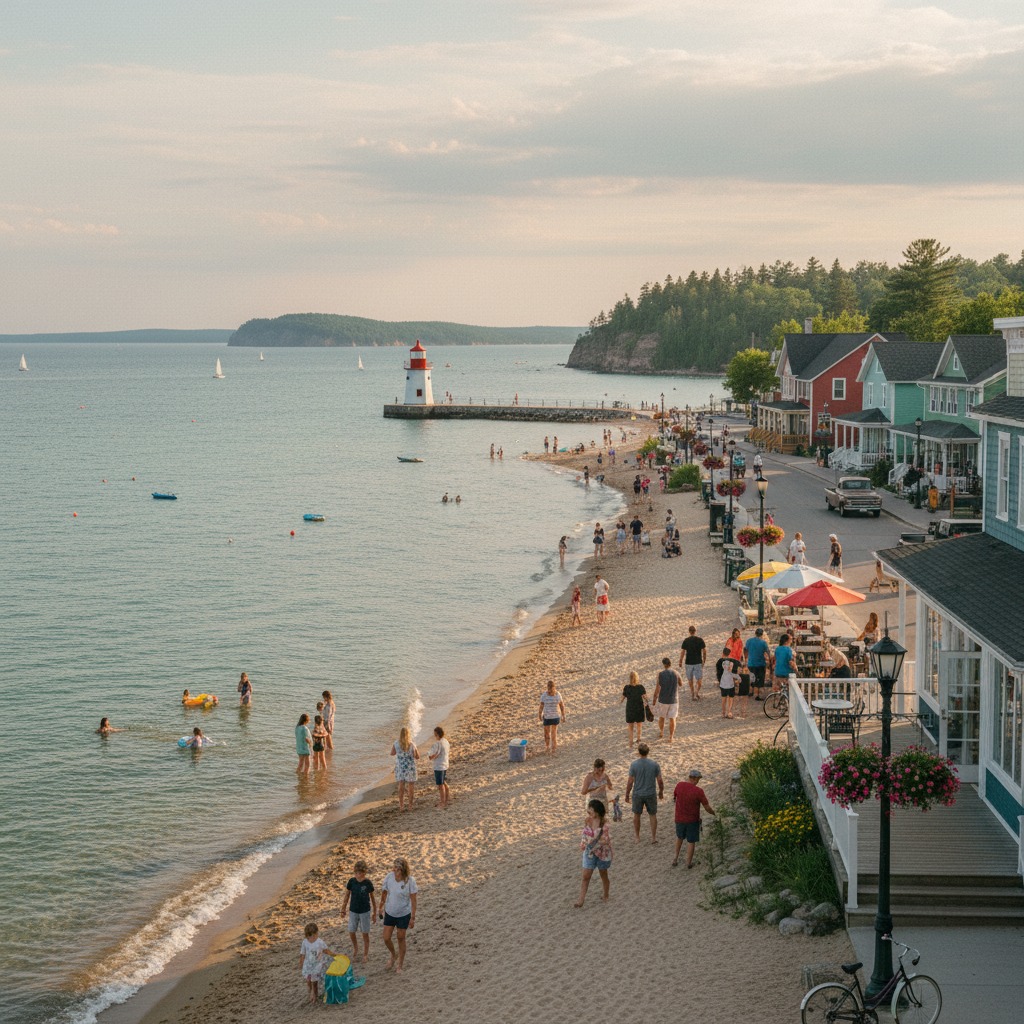
How Beach Towns Are Changing Across Ontario
Sauble Beach used to be a place where a family could rent a cottage for two weeks in July for what now seems like an absurd sum. The main strip had ice cream shops, a mini-golf course, and a general store that sold everything from sunscreen to fishing tackle. The beach itself, eleven kilometres of white sand along Lake Huron, was the draw. Everything else was just support.
That version of Sauble Beach still exists in fragments, but the town around it has shifted. Property values have tripled in the last fifteen years. Seasonal cottages are being torn down and replaced with year-round homes. The ice cream shops compete with craft breweries and farm-to-table restaurants. The beach is the same. The community is not.
This story is repeating itself across Ontario. Beach towns from Wasaga to Grand Bend, from Port Elgin to Sandbanks, are changing in ways that reflect broader forces: remote work migration, investment pressure, climate adaptation, and a fundamental rethinking of what these communities are supposed to be.
The Seasonal-to-Permanent Shift
The most significant change in Ontario beach towns is the conversion from seasonal to year-round living. For decades, places like Wasaga Beach and Grand Bend operated on a summer-heavy model. Populations swelled in June and contracted in September. Businesses opened and closed accordingly. Municipal services scaled up and down with the calendar.
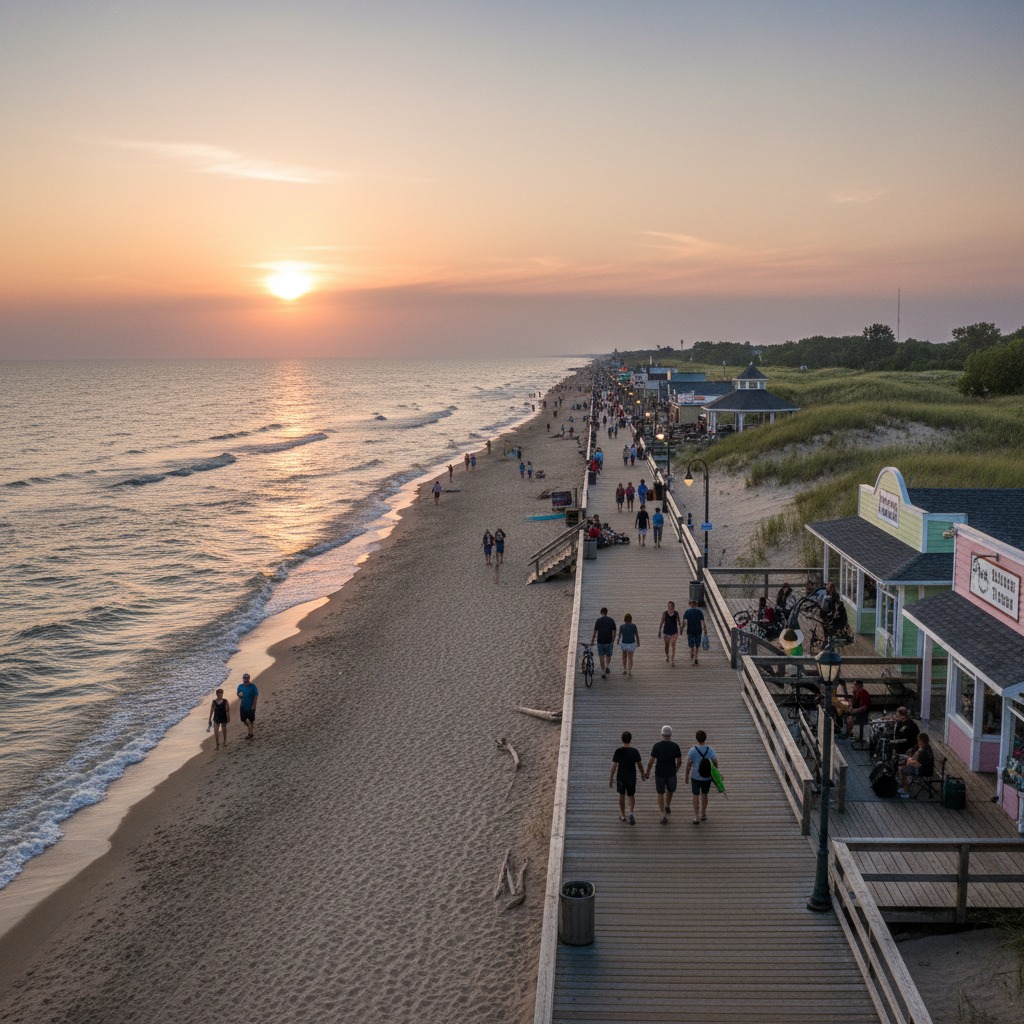
That model began breaking down well before the pandemic, but remote work accelerated the transition dramatically. Wasaga Beach, which had been growing steadily since the early 2000s, saw its permanent population surge. According to the Ontario Ministry of Finance population projections, Simcoe County, which includes Wasaga Beach, is expected to grow by more than 30 percent by 2046.
The implications are concrete. Year-round residents need year-round services: medical clinics, schools, snowplowing, water treatment capacity. Beach towns that spent decades budgeting for summer crowds are now grappling with the infrastructure demands of permanent communities. Wasaga Beach has been particularly open about this challenge, with its council repeatedly flagging the gap between growth and servicing capacity.
Grand Bend and the Tourism Economy
Grand Bend, on the southeastern shore of Lake Huron, represents a different trajectory. Unlike Wasaga Beach, Grand Bend has resisted large-scale residential conversion. The town remains heavily oriented toward tourism, with a strip of bars, restaurants, and shops that operates at full throttle from Victoria Day to Labour Day and goes quiet afterward.
But even in Grand Bend, the pressures are visible. Short-term rental platforms have transformed the housing stock. Cottages that once sat empty between visits are now booked every weekend through the summer. The revenue is good for property owners, but the effect on community cohesion is complicated. Neighbours change weekly. Noise complaints spike. The sense of a shared community thins out during the peak months when the population is highest.
The municipality of Lambton Shores, which governs Grand Bend, has introduced short-term rental licensing to manage the situation. Similar regulations have appeared in Muskoka and Prince Edward County, all of them trying to balance tourism revenue against residential livability.
Infrastructure and Climate
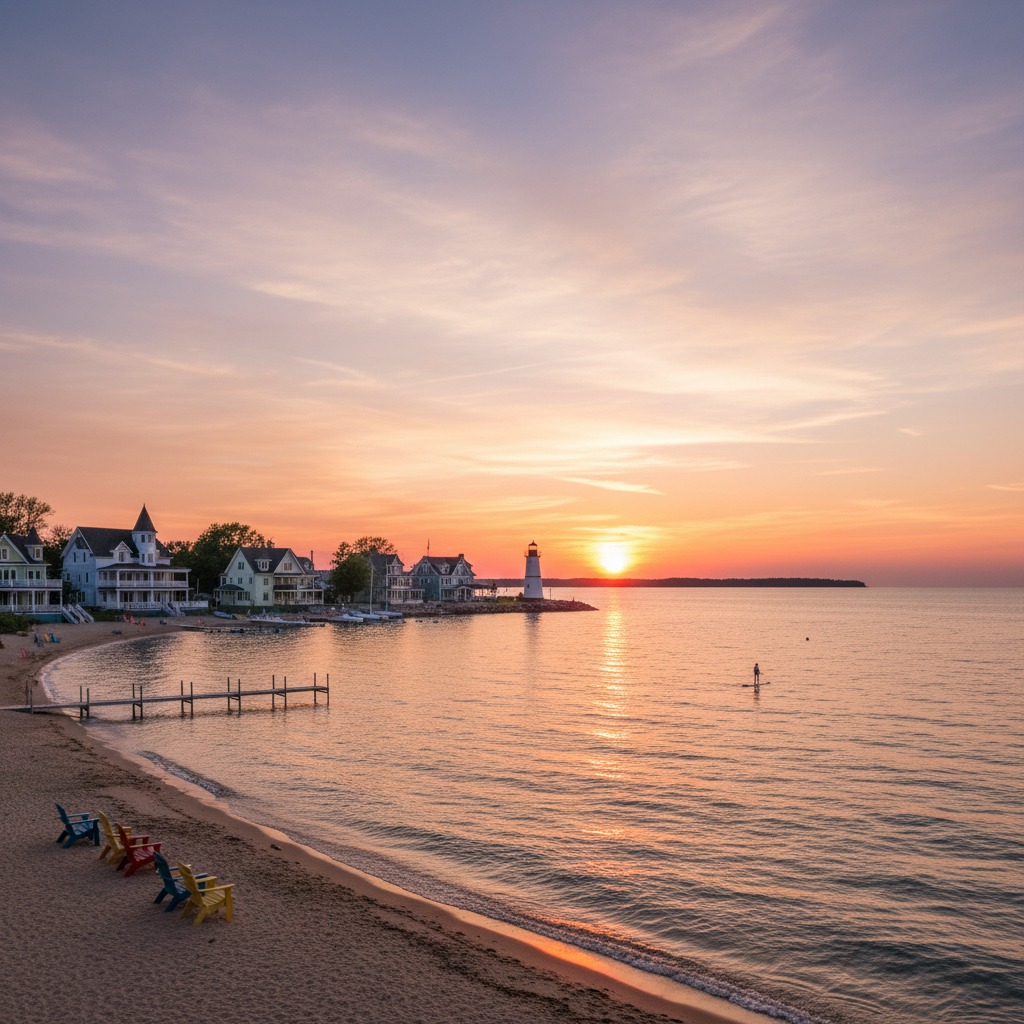
Beach erosion is the climate issue that beach towns cannot ignore. Along the Lake Huron shoreline, several communities have lost significant beachfront over the past decade. High water levels in 2019 and 2020 caused dramatic bluff erosion in some areas, destroying properties and threatening roads.
The response varies. Some municipalities have invested in shoreline hardening, using armour stone and concrete to protect vulnerable sections. Others have taken a managed retreat approach, buying out damaged properties and letting the shoreline adjust naturally. Neither strategy is cheap, and both provoke strong feelings among residents.
Stormwater management is another growing concern. Beach towns were typically built with minimal drainage infrastructure, appropriate for small seasonal populations on sandy soil. As those towns densify and as rainfall events intensify, flooding during summer storms has become more common. Port Elgin and Kincardine have both invested in stormwater upgrades in recent years, and the costs have shown up on property tax bills.
The Cultural Shift
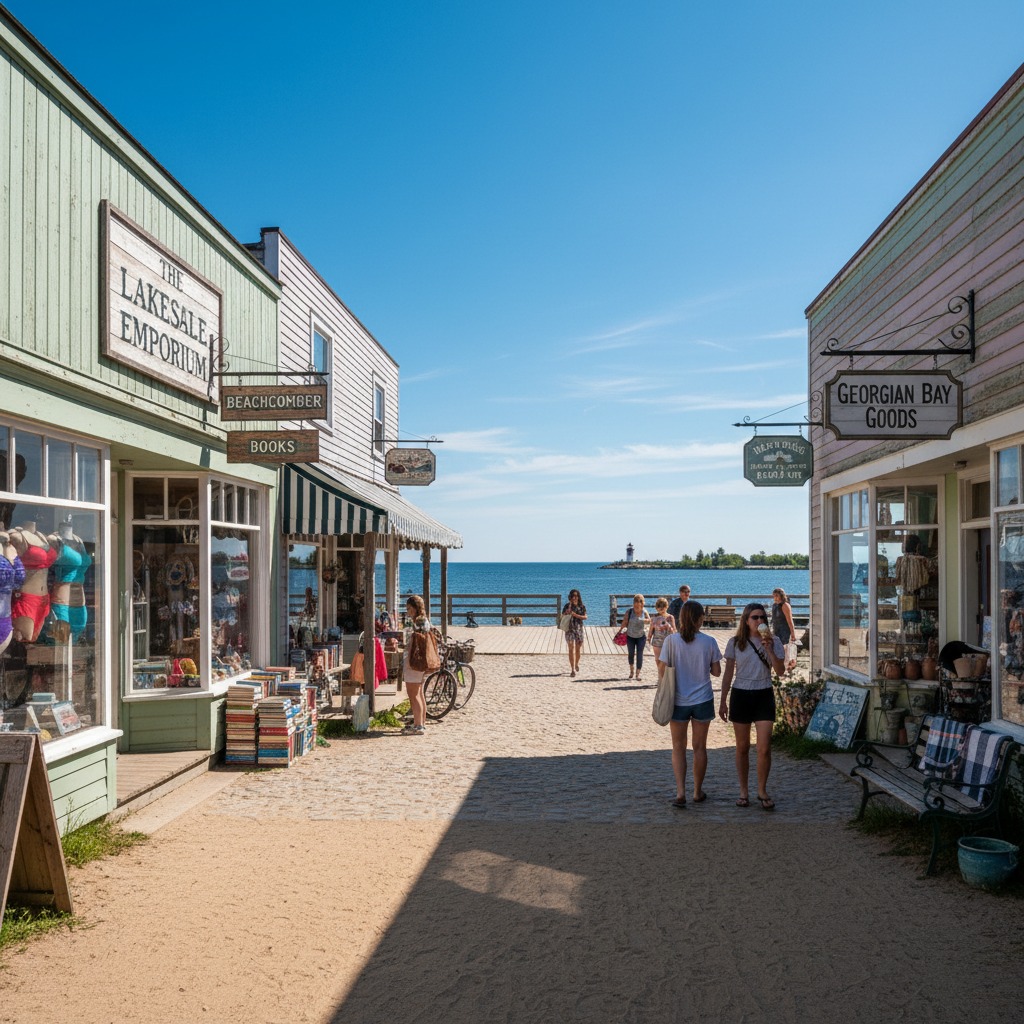
Walk the main street of any Ontario beach town and you will see the cultural change in the storefronts. The bait shop gives way to the boutique. The family diner competes with the wine bar. The hardware store becomes the lifestyle store. This is not unique to beach towns; it is happening across small-town Ontario. But in beach communities, the transformation feels more acute because the original character was so specific.
Harbour towns have working waterfronts that anchor their identity regardless of what happens on the commercial strip. Beach towns are more vulnerable to cultural displacement because their identity is tied to recreation, and recreation trends shift. The crowd that once came for a simple week at the beach now expects curated experiences, and the towns are adapting to meet that expectation.
Sandbanks, in Prince Edward County, is perhaps the most evolved example. The beach itself, managed by Ontario Parks, remains a natural treasure. But the surrounding area has become one of Ontario's premier wine and culinary destinations. The visitors who come for the beach stay for the wineries, and the economic ecosystem has grown to serve both. Whether this evolution serves the original community as well as it serves visitors is a question locals debate regularly.
What Gets Lost and What Remains
The anxiety in Ontario's beach towns is not about change itself. Change is constant, and most longtime residents understand that. The anxiety is about control. When housing prices rise beyond what local service workers can afford, the community loses the people who keep it running. When short-term rentals displace long-term neighbours, the social fabric weakens. When public waterfront access is squeezed by private development, the democratic character of the beach erodes along with the sand.
Some communities are pushing back thoughtfully. The Town of The Blue Mountains, which includes the beach community of Thornbury, has implemented affordable housing policies tied to new development. Wasaga Beach has invested in waterfront revitalization that prioritizes public space over private development. These efforts are incremental, but they reflect a growing understanding that beach towns need active stewardship to remain real communities rather than seasonal theme parks.
The beach will always be there. The question is what kind of community surrounds it, and who gets to call that community home. Ontario's beach towns are answering that question in real time, one planning application and one council vote at a time.