Harbour Towns of Ontario: Where the Water Still Shapes Daily Life
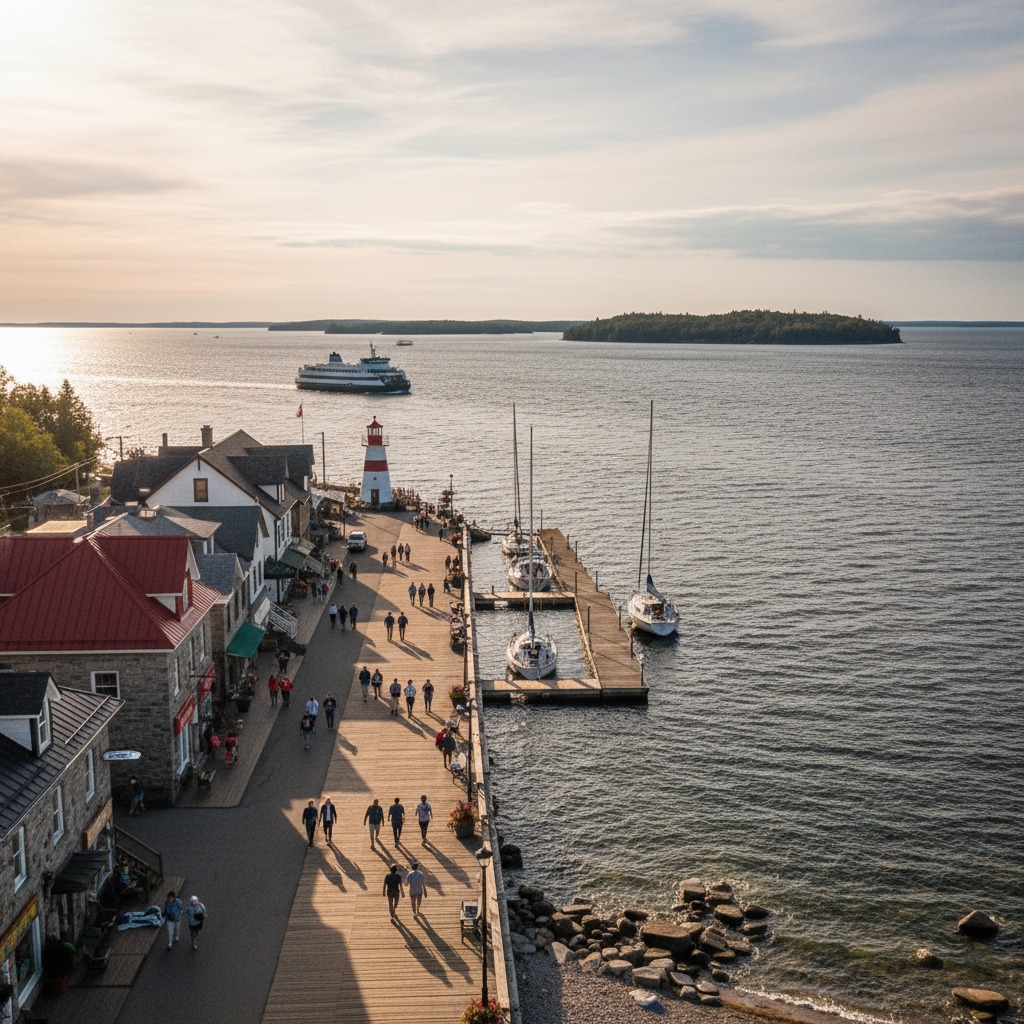
Stand on the main pier in Cobourg at six in the morning, and you will see something the rest of Ontario rarely witnesses: a town waking up around water. Fishing boats idle past the breakwall. Dog walkers trace the harbour path. A few early risers sit on the benches outside the yacht club with paper coffee cups, watching the light change across Lake Ontario. This is not a weekend ritual. It happens every single day.
Ontario's harbour towns carry a different rhythm than their inland counterparts. The water is not a backdrop here. It is infrastructure, economy, and identity rolled into one. From Goderich on Lake Huron to Port Dover on Lake Erie, from Midland on Georgian Bay to Picton on the Bay of Quinte, these places share a common thread: the harbour is the beating heart of the community, and life arranges itself accordingly.
What Makes a Harbour Town
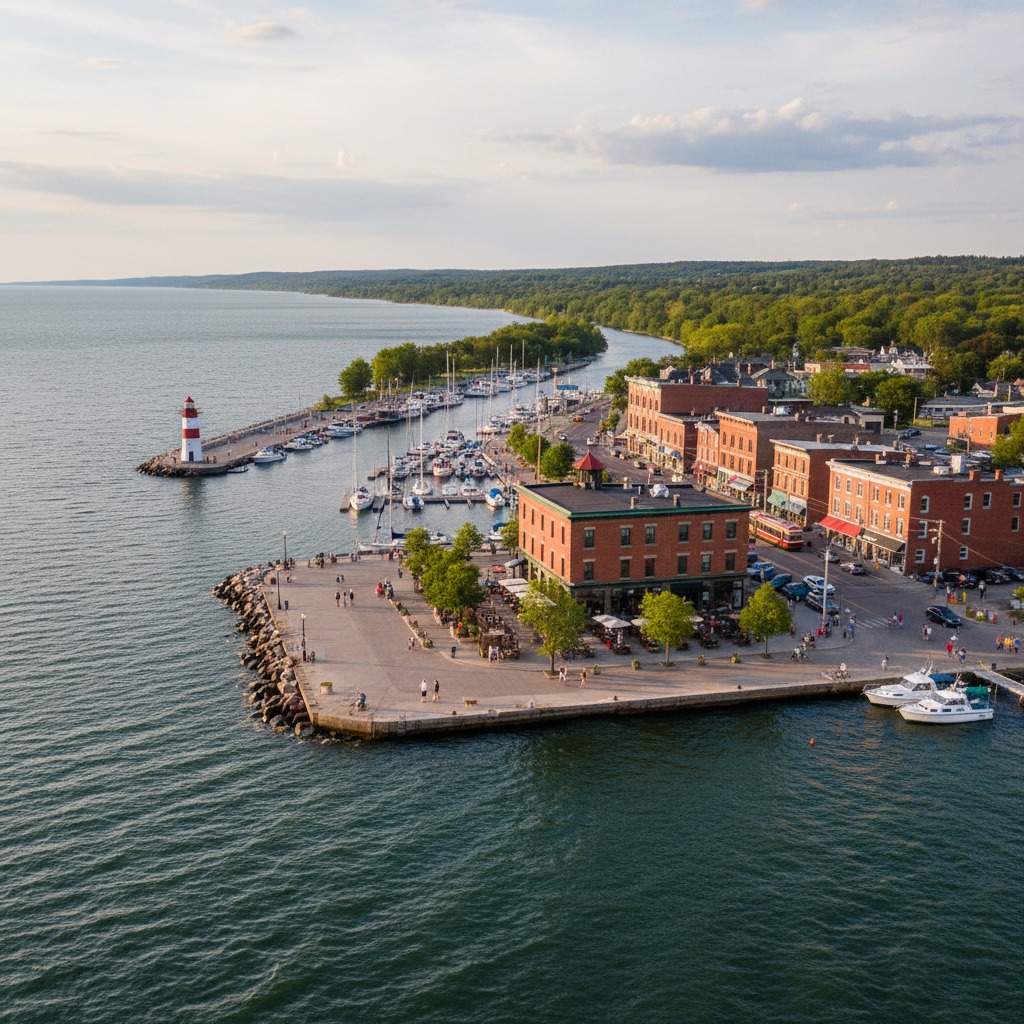
Not every lakeside community qualifies. A harbour town needs a working port, even a modest one. It needs marine traffic that goes beyond pleasure boating. And it needs a built environment that faces the water rather than turning away from it. Cobourg, for instance, rebuilt its downtown around the harbour in the 1990s after decades of neglect. Today the marina, the beach, and the commercial strip function as a single continuous zone.
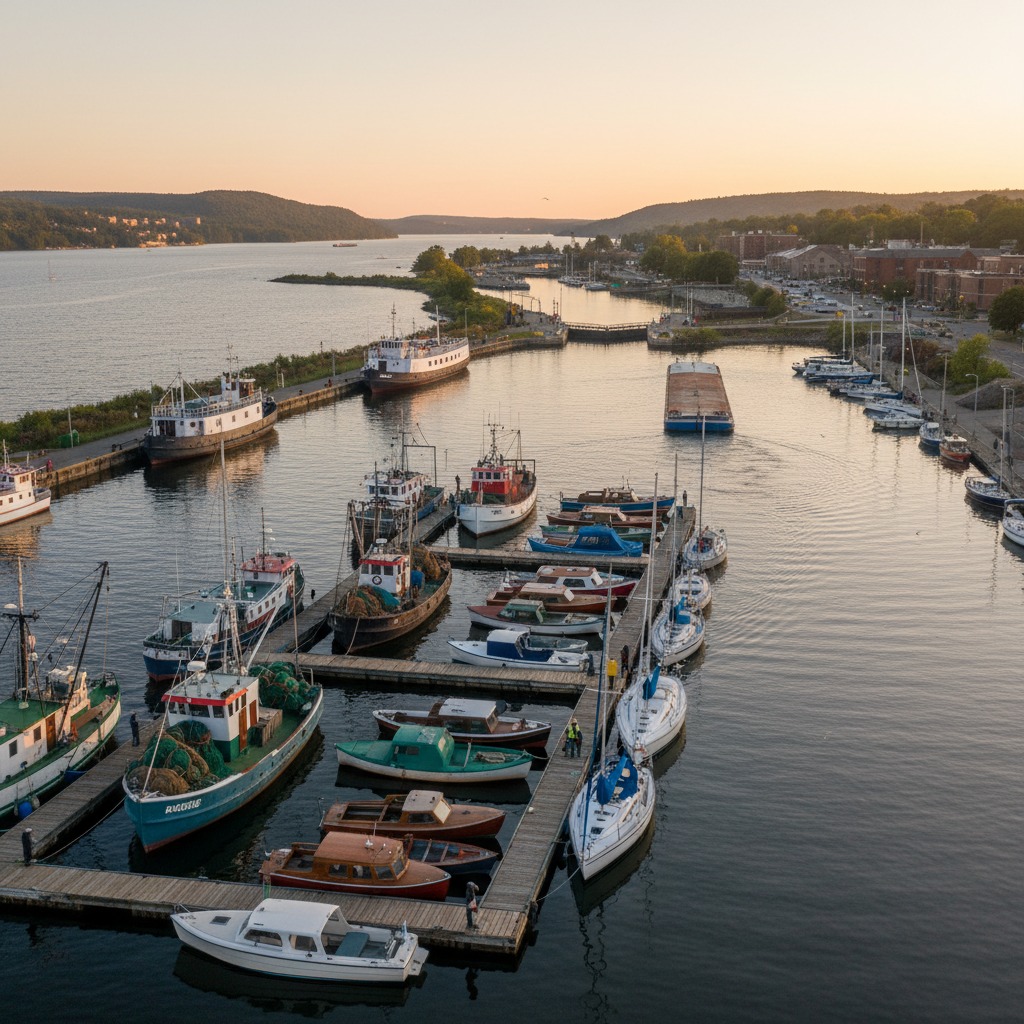
Port Dover, along the north shore of Lake Erie, may be the most textbook example. The fishing fleet operates year-round. The commercial fish houses along the harbour sell fresh perch directly to locals. Restaurants along Main Street compete not on ambiance but on freshness, and the town's identity is so closely tied to fish that the annual Friday the 13th motorcycle rally feels almost like an interruption of the real business.
Then there is Goderich, which the Ontario Ministry of Tourism once called "the prettiest town in Canada." Its harbour sits at the base of a steep bluff, separated from the town square above by a winding road that gives the place a sense of geological drama. The salt mine beneath the harbour floor adds another layer to the story: Goderich is a town that draws from the water and from far below it.
The Economic Thread
Harbour towns share a particular economic structure. Tourism is significant but rarely dominant. Commercial fishing, marine services, and small-scale manufacturing tend to fill in the gaps. In Midland, the harbour anchors a regional economy that includes boat building, tourism related to the Lake Huron shoreline, and a growing retirement population drawn by the water views and walkable downtown.
Collingwood, once defined by its shipyard, reinvented itself around recreation when the yard closed in 1986. The harbour now hosts a mix of pleasure craft, charter fishing operations, and sailing schools. The shipyard lands became condos and parkland. Some longtime residents see that transformation as a loss. Others see it as survival. Both perspectives hold truth.
What sets harbour towns apart from other waterfront communities is this economic diversity. A beach town might rely heavily on summer visitors. A cottage community might depend on seasonal property taxes. A harbour town typically has multiple economic engines running at once, and that gives it a resilience that other waterfront places sometimes lack.
Architecture and Layout
The built form of a harbour town tells its own story. Streets tend to funnel toward the water. Warehouses and fish houses sit close to the docks, with commercial buildings a block or two behind. Churches and schools occupy the higher ground. This pattern repeats in Meaford, in Thornbury, in Port Stanley, in Kingston's inner harbour district.
Heritage preservation efforts have become a defining issue for many of these places. In towns that have pursued revitalization, the question of what to keep and what to replace comes up with every new development proposal. Port Hope managed the balance better than most by preserving its downtown heritage buildings while allowing the waterfront to evolve into a mixed-use recreational zone.
The architectural tension often comes down to scale. A four-storey condo block that might blend in perfectly in Barrie or Hamilton can overwhelm the streetscape of a harbour town built for two-storey brick storefronts. Residents in these communities have learned to watch development applications closely.
Seasonal Rhythms and Year-Round Life
Every harbour town has two calendars: the municipal one and the marine one. Ice-out in spring triggers a burst of activity. Boat launches fill up. Marina operators scramble to get docks in. By late May, the harbour is fully operational, and the town takes on its summer character.
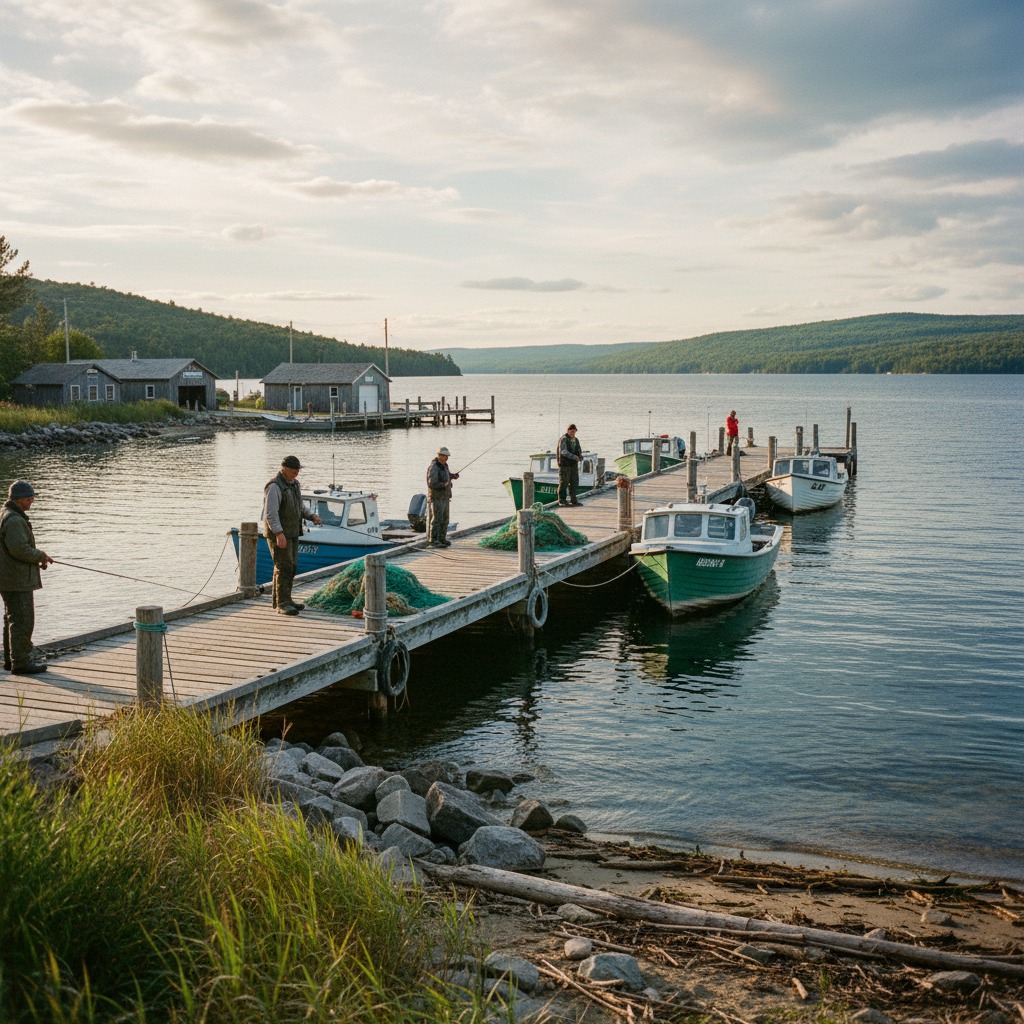
Fall is different. The boats come out. Shrink-wrap appears in the marina lots. Restaurants cut their hours. But unlike pure cottage country, harbour towns do not shut down. The year-round population in Cobourg, Goderich, and Port Dover is large enough to sustain grocers, hardware stores, and coffee shops through the winter months. This continuity matters. It means these places maintain civic institutions, volunteer fire departments, and local newspapers that many seasonal communities have lost.
Winter brings its own rituals. Ice fishing on the harbour in Port Dover. Cross-country skiing along the waterfront in Georgian Bay towns. The quiet months are when municipal councils hold their most consequential meetings, when budgets are set, and when decisions about public waterfront access are debated with less outside attention.
Challenges Ahead
The pressures on Ontario harbour towns are real and growing. Rising water levels in the Great Lakes have caused significant damage to harbour infrastructure in recent years. According to the International Joint Commission, water level fluctuations are expected to become more volatile as climate patterns shift. For towns whose economic survival depends on functional harbours, that is not an abstract concern.
Housing affordability has become another pressure point. Remote work migration during and after the pandemic pushed property values in waterfront communities sharply upward. Cobourg, Collingwood, and Goderich all saw double-digit price increases between 2020 and 2023. Young families and service workers who once formed the backbone of these towns are finding it harder to stay.
Yet the fundamental appeal endures. Ontario's harbour towns offer something that suburban development cannot replicate: a sense of place rooted in a working relationship with water. That relationship is messy, weather-dependent, and sometimes unprofitable. But it gives these towns a character that no amount of planning can manufacture from scratch. The harbours were there first, and the best of these communities have never forgotten it.