Fall Fishing the Great Lakes Tributaries
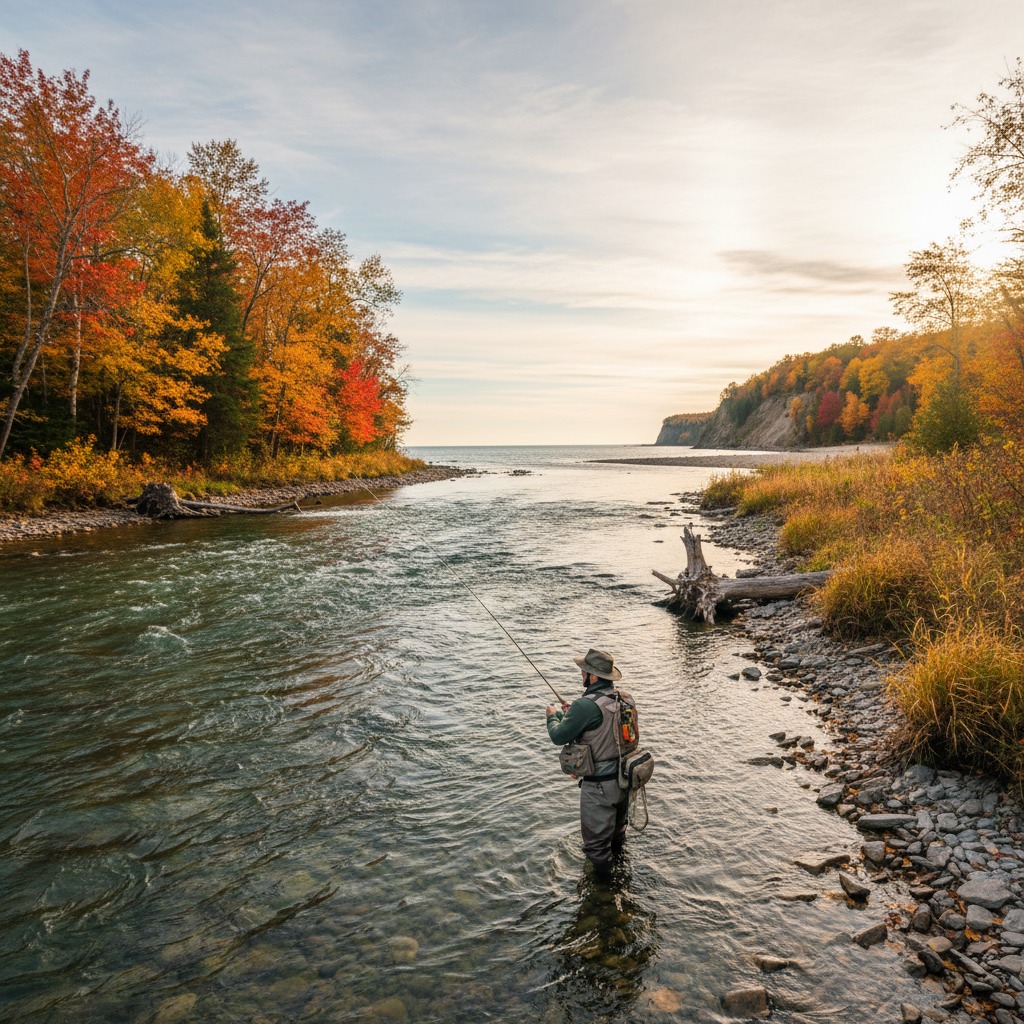
Every autumn, millions of Pacific salmon and steelhead trout leave the open waters of the Great Lakes and push into the rivers and creeks that feed them. What follows is Ontario's most dramatic fishing season: powerful fish in small water, surrounded by fall colour, accessible to anyone with a rod and a pair of waders.
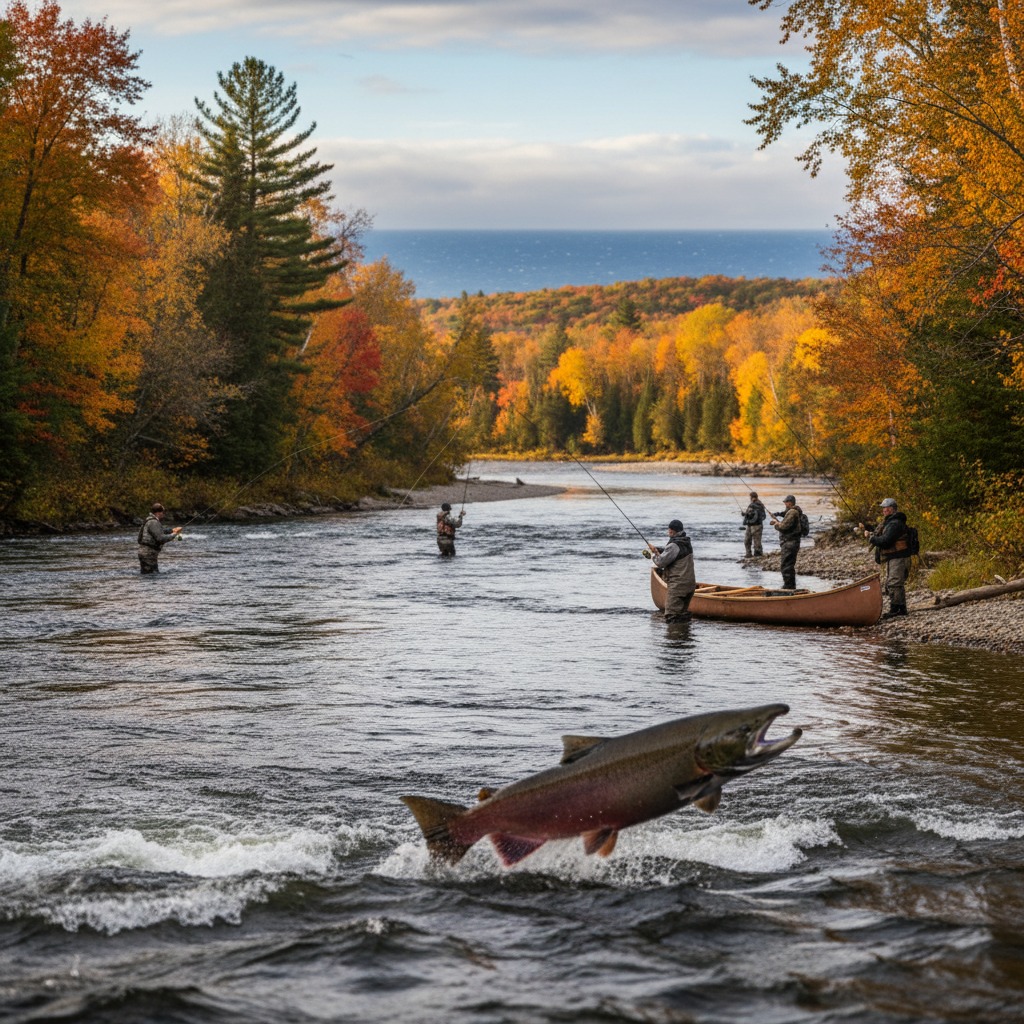
The fall tributary run is not a secret. On popular rivers, the banks can be lined with anglers standing elbow to elbow. But the fishery is large enough, and the number of tributaries great enough, that solitude is available to those who seek it. The key is understanding the timing, the rivers, and the techniques that produce in current-driven water.
The Species and the Timeline
Chinook (king) salmon are the first to run, beginning in late August and peaking through September and into early October. These are big fish, averaging 15 to 25 pounds, with some exceeding 30. They enter the rivers dark and aggressive, and they hit hard on their way upstream. Chinook deteriorate quickly once they enter fresh water, so the best fishing is in the lower reaches of the river, close to the lake.
Coho salmon follow the chinook, running from late September through November. Coho are smaller, typically 5 to 12 pounds, but they're more acrobatic and tend to hold their silver coloration longer in the river. They're also more responsive to artificial lures and flies than chinook.
Steelhead (rainbow trout) begin entering tributaries in October and continue through November, with some rivers seeing runs well into winter and spring. Steelhead are the prized target for many tributary anglers because they return to the lake after spawning, making them a renewable fishery, and because they fight with an intensity that puts salmon to shame pound for pound.
The Rivers
Ganaraska River, Port Hope: The Ganaraska is one of Ontario's most accessible salmon rivers. The fish ladder in downtown Port Hope lets you watch fish migrating from the sidewalk. Public access is available upstream and downstream of the dam, and the river's compact size means you're never far from a fish. The downside is crowds, especially on weekends in late September.
Credit River, Mississauga to Orangeville: The Credit is the GTA's home river for salmon and steelhead. The lower sections near Port Credit are tight and pressured, but upstream sections near Norval and Glen Williams offer more room. The Credit River Anglers Association does significant conservation work on this river.
Saugeen River, Lake Huron: The Saugeen is a large river by Ontario standards, and its fall runs of chinook and steelhead are among the best in the province. The stretch from Walkerton downstream to Southampton passes through deep pools and fast runs that hold fish all season. Access is available at several road crossings and through the Saugeen Valley Conservation Authority properties.
Nottawasaga River, Georgian Bay: The Nottawasaga enters Georgian Bay at Wasaga Beach and draws chinook, coho, and steelhead runs each fall. The river is wide and wadeable in many sections, with public access at several points. The smaller tributaries feeding the Nottawasaga, including the Boyne and Pine Rivers, also receive fish.
Bronte Creek, Lake Ontario: A smaller tributary near Oakville, Bronte Creek punches above its weight for fall fishing. The lower sections near the lake draw salmon, and steelhead push further upstream into the conservation area. The creek is small enough that a single fish in a pool is visible from the bank.
Techniques
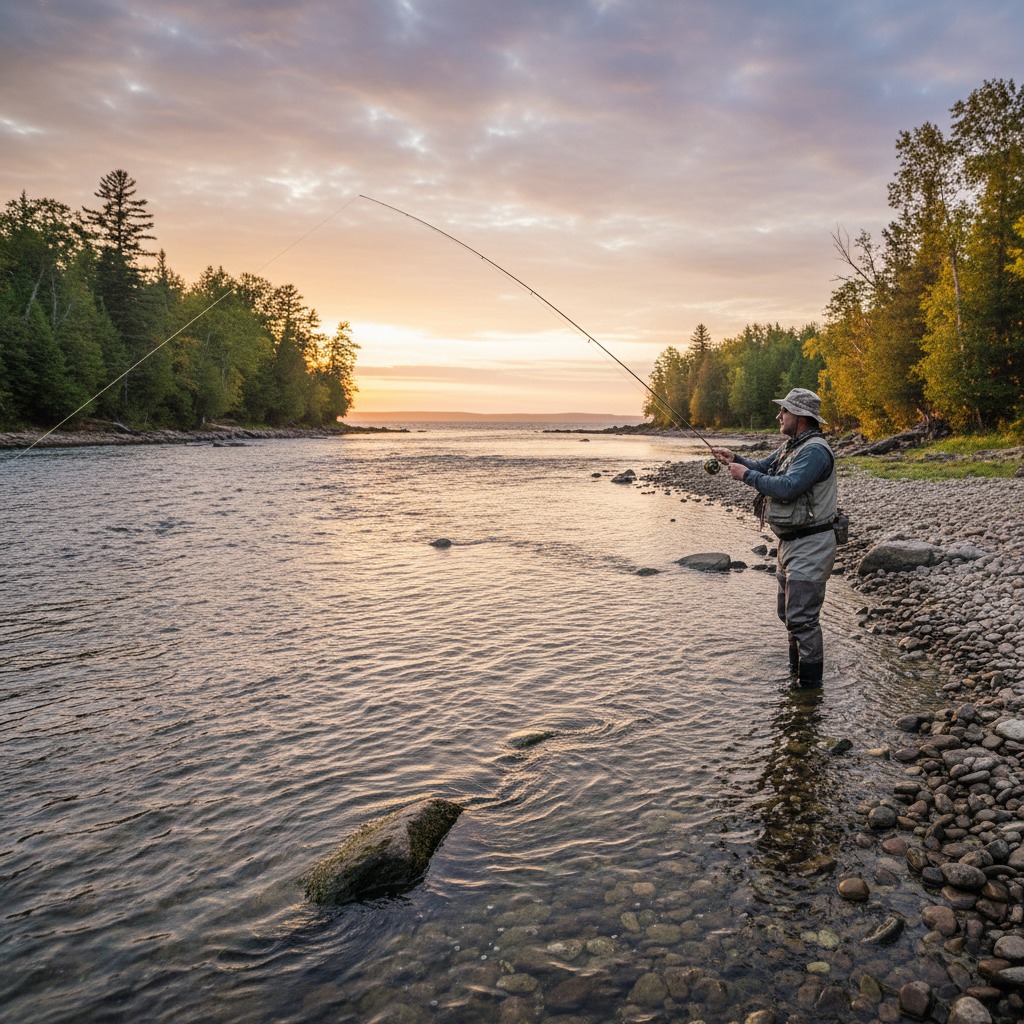
Float fishing is the dominant technique on Ontario tributaries. A long rod (10 to 13 feet), a centrepin reel loaded with light line, a float, and a bait offering drifted through the current is the standard approach. Bait choices include cured roe (salmon eggs), worms, wax worms, and artificial beads that imitate eggs.
Fly fishing is effective and increasingly popular, particularly for steelhead. Egg patterns, nymphs, and woolly buggers fished under an indicator work well. Swinging wet flies through pools and tail-outs is the most traditional approach and produces explosive strikes.
Spin fishing with small spoons, spinners, and jigs is also effective, especially for coho salmon in pools. The key in all cases is getting your presentation down to the bottom of the water column, where the fish hold. Tributary fishing is about controlling your drift, not casting distance.
Etiquette on the River
Fall tributary fishing concentrates anglers on limited public water. The etiquette is straightforward but often ignored. Don't crowd into a pool that's already occupied. Move upstream or downstream to find your own water. When someone is playing a fish, give them room. Don't cross through a pool someone is actively fishing. And release fish carefully, especially spawning salmon, whose eggs represent the future of the fishery.
Catch and release is required for steelhead on many tributaries, and selective harvest regulations apply on others. Check the Ontario fishing regulations for your specific river and zone before keeping any fish.
Access and Conservation
Public access on tributaries is typically available at road crossings, municipal parks, and conservation authority properties. Some rivers have landowner agreements that allow fishing access on private land, but these should not be assumed. When in doubt, stay on public land or ask permission.
The fall tributary fishery depends on habitat conservation. Shoreline development, erosion, and pollution all threaten the spawning habitat that salmon and steelhead need. Supporting local conservation authorities and respecting the rivers that make this fishery possible is every angler's responsibility.
The fall run is a brief window, perhaps eight to ten weeks when the fishing is exceptional. If you've never experienced it, find a river near you, gear up, and go. The fish are there, the colour is spectacular, and there is nothing else like it in Ontario.