How Ice Damage Affects Shoreline Structures Every Winter
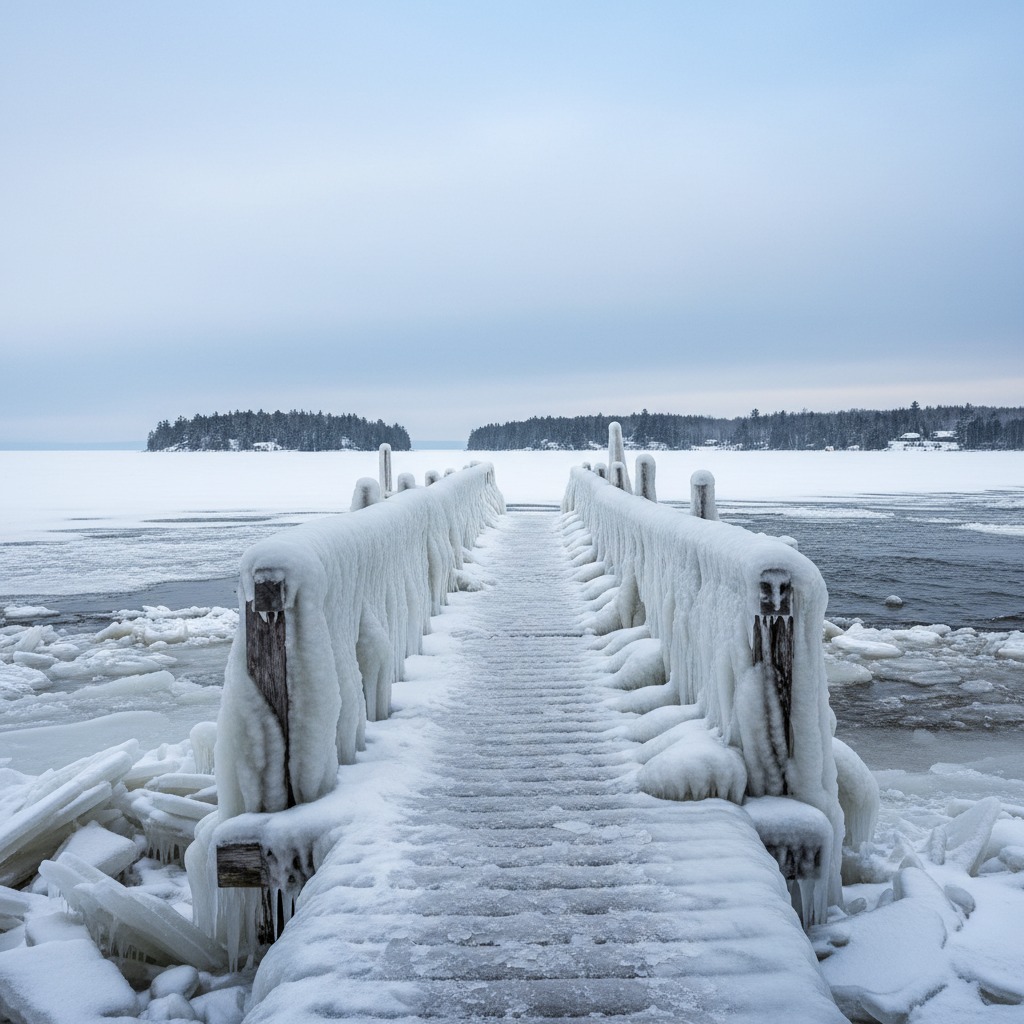
Every spring, when the ice finally releases its grip on Ontario's lakes and rivers, the damage becomes visible. Dock pilings tilted at odd angles. Concrete seawalls cracked and shifted out of alignment. Armour stone displaced like children's blocks. Steel sheet piling buckled inward. The forces that lake and river ice exert on shoreline structures are enormous, and they catch many property owners off guard, particularly those who are new to waterfront ownership.
Ice damage is not a freak event or a sign of poor construction. It is a predictable, annual process driven by the physics of freezing water. Understanding how ice interacts with structures is the first step toward protecting waterfront investments from forces that have been reshaping Ontario's shorelines for millennia.
The Three Mechanisms of Ice Damage
Ice affects shoreline structures through three distinct mechanisms: thermal expansion, ice heave, and ice push. Each operates differently, and the severity of each depends on the specific characteristics of the site, the structure, and the winter.
Thermal expansion occurs when a solid ice sheet warms on a sunny winter day. Even a modest temperature increase causes the ice to expand, and on a large lake, the cumulative expansion across kilometres of ice sheet generates pressures that can reach 150 kilopascals, roughly equivalent to the weight of a loaded transport truck concentrated on each square metre of structure face. Docks, breakwalls, and retaining walls that sit in the ice sheet absorb these forces directly. Concrete walls crack. Steel bends. Wooden cribs shift on their foundations.
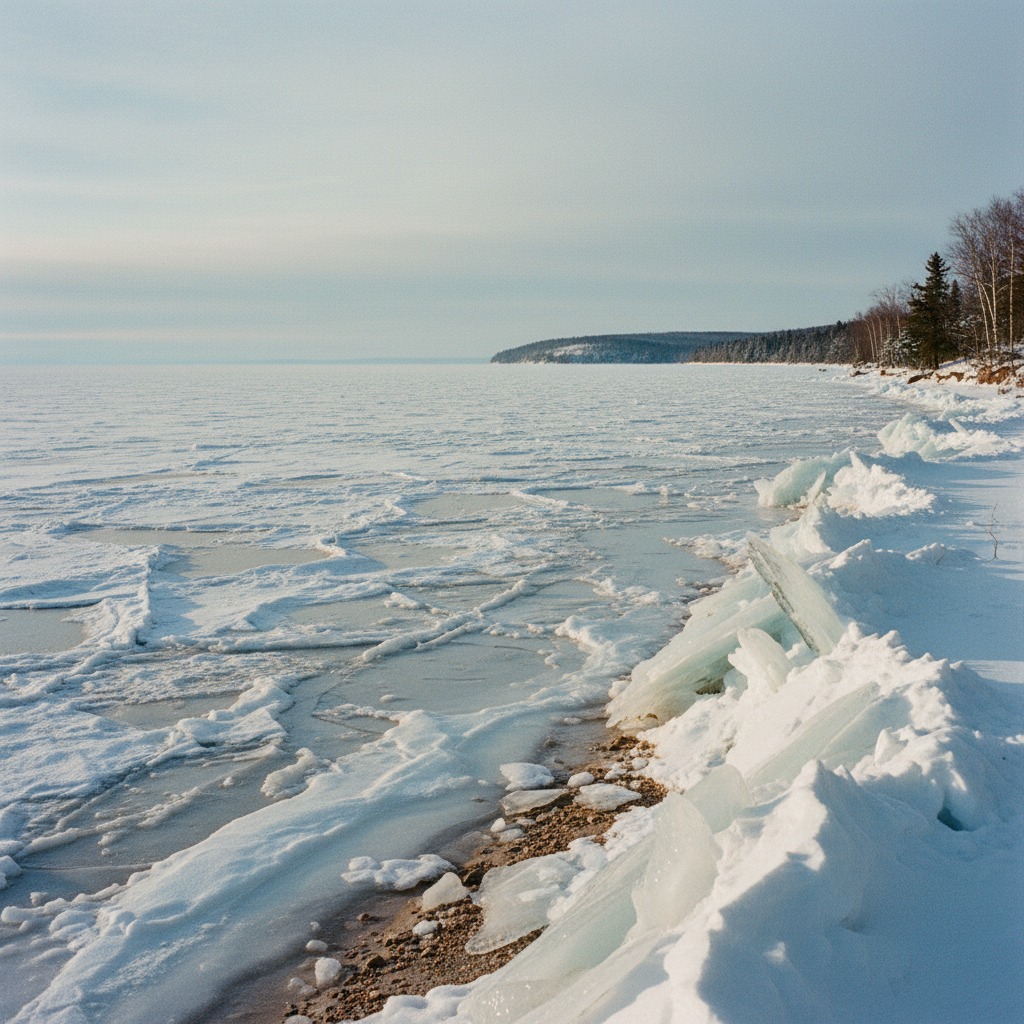
Ice heave is the vertical force exerted when ice forms around structural elements like dock pilings, posts, or anchors and then lifts as the ice sheet rises with fluctuating water levels. A piling frozen into the ice can be pulled upward by tens of centimetres over the course of a winter, particularly in areas where water levels change frequently. When the ice melts, the piling does not return to its original position. After several years of repeated heaving, pilings can be pulled entirely out of the lake bed.
Ice push, sometimes called ice shove, occurs when wind drives broken ice sheets onshore. This is the most dramatic and destructive form of ice damage. Sheets of ice up to a metre thick, propelled by strong winds across open water, can bulldoze across beaches, climb over seawalls, and shove structures metres inland. Lake Erie and Lake Huron are particularly prone to ice push events because of their large fetch distances and the frequency of strong winter storms.
Which Structures Are Most Vulnerable
Permanent docks, meaning those that remain in the water year-round, suffer the most consistent ice damage. The combination of thermal expansion pressing against the dock face and ice heave pulling on submerged pilings creates stress that accumulates over successive winters. Floating docks fare somewhat better, as they can rise and fall with the ice, but their anchoring systems and gangway connections are still vulnerable.
Concrete and masonry seawalls are susceptible to freeze-thaw cycling in addition to the direct forces of ice pressure. Water enters cracks and pores in the concrete, freezes, expands, and widens the cracks. Over years, this process can reduce a solid concrete wall to crumbling rubble. The process accelerates in the splash zone, where the wall is repeatedly wetted and frozen throughout the winter.
Armour stone revetments, while generally more flexible than rigid walls, can still be displaced by ice push and thermal expansion. Stones weighing several tonnes have been moved by ice forces on exposed Great Lakes shorelines, a reminder that the power of lake ice should not be underestimated.
The Connection to Climate Change
The relationship between climate change and ice damage is more complex than it might initially appear. Warmer winters mean less total ice coverage, which should theoretically reduce ice damage. But warmer winters also mean more frequent freeze-thaw cycles, more mid-winter open-water periods that allow wave action to work on structures, and more variable ice conditions that are harder to predict and prepare for.
The 2024 winter on Lake Huron illustrated this paradox. Below-average ice cover meant that large stretches of shoreline were exposed to wave action well into January, causing erosion that would normally be prevented by the protective ice foot that forms along the shore. When ice did form in February, rapid temperature swings produced intense thermal expansion events that damaged structures along the Saugeen Shores and Kincardine waterfronts.
Protecting Structures from Ice
The most effective protection against ice damage is also the simplest: remove the structure from the water before freeze-up. Seasonal dock removal eliminates the risk entirely and is standard practice across most of Ontario's cottage country. For permanent docks that cannot be removed, ice-deflecting designs that present angled surfaces to the ice sheet can redirect thermal expansion forces. De-icing bubblers, which circulate warm water from the lake bottom to prevent ice from forming around structures, are used at some marinas and private docks, though they require electricity and ongoing maintenance.
For seawalls and revetments, the best defence is robust engineering that accounts for ice forces in the design. This means using air-entrained concrete that resists freeze-thaw cycling, specifying armour stone large enough to resist displacement, and designing wall profiles that deflect rather than absorb ice pressure. Many older structures were not designed with these considerations, which is why communities that experience both ice damage and spring flooding often find themselves dealing with compounding infrastructure failures.
Natural shoreline features provide surprising resilience against ice. Gently sloping beaches absorb ice push by allowing ice sheets to ride up gradually rather than slamming against a vertical face. Vegetated shoreline buffers trap snow and insulate the ground, reducing the depth of frost penetration in the soil behind the shoreline. Large boulders and fallen trees along natural shorelines break up ice sheets and dissipate their energy before they can reach inland structures.
Property owners considering new shoreline protection should consult with engineers experienced in Great Lakes ice conditions and with their local conservation authority before beginning work. The permits required under the Ontario Lakes and Rivers Improvement Act exist in part to ensure that shoreline modifications account for ice forces and do not simply transfer the problem to neighbouring properties.
Ice is a fact of life on Ontario's waterways. The structures we build along the shore must be designed to coexist with it, not simply endure it. Understanding the forces at work is the starting point for making decisions that protect both investments and the natural shoreline features that provide resilience against the most powerful force a frozen lake can deliver.