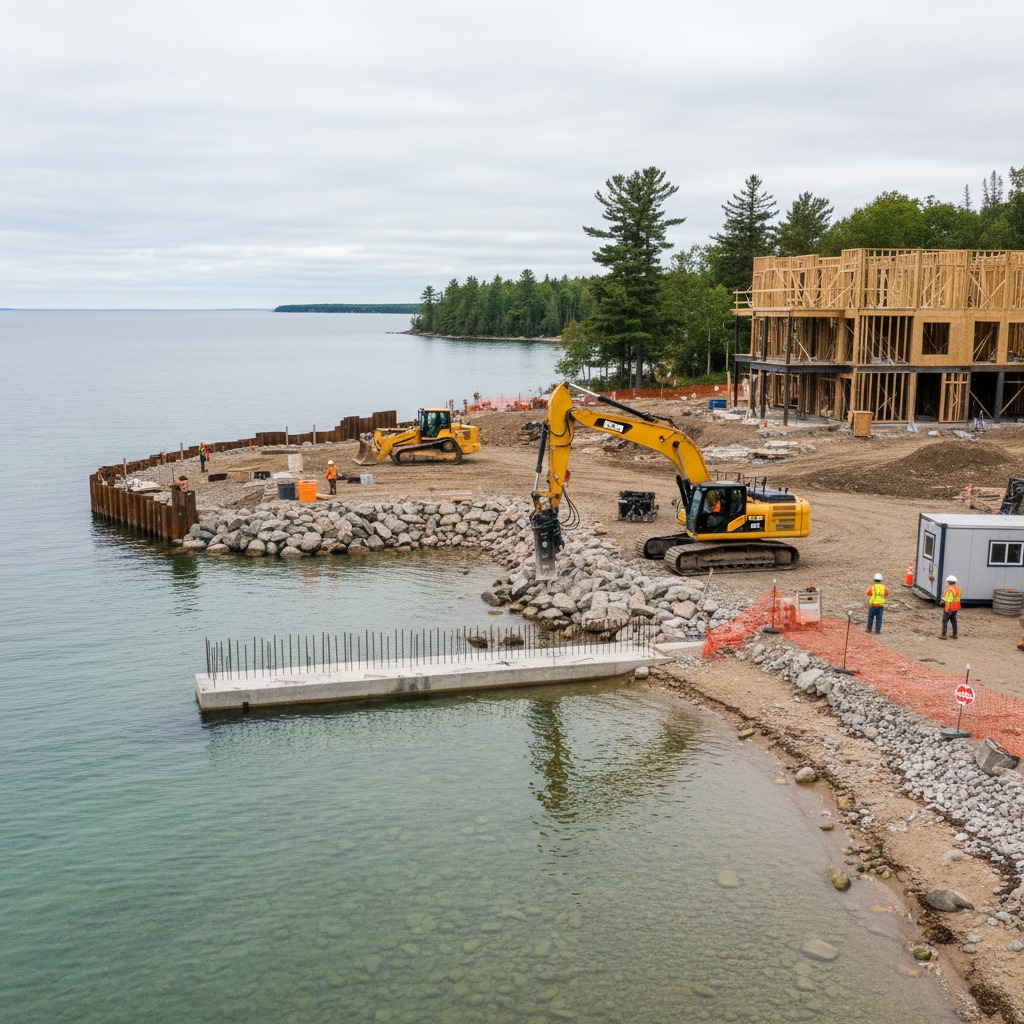
Building Near the Water: Setbacks, Surveys, and Surprises
You have the waterfront lot. You have the architect's drawings. You have the contractor lined up for a spring start. What you may not have is a realistic understanding of how many agencies need to approve your project, how long that will take, and how much the regulatory process will alter your plans.
Building near water in Ontario is not like building anywhere else. The regulatory overlay is denser, the timelines are longer, and the surprises are more frequent. Knowing what to expect before you start saves months of frustration and thousands of dollars in redesign costs.
The Setback Framework
Every Ontario municipality with waterfront development has setback requirements that govern how close you can build to the water. These setbacks vary, but common ranges are 15 metres to 30 metres from the high-water mark, depending on the municipality, the type of waterway, and the category of development.
The "high-water mark" itself is not always obvious. On lakes with regulated water levels, the high-water mark may be defined by the dam operator's records. On unregulated lakes, it is determined by physical evidence: the line along the shoreline where terrestrial vegetation meets aquatic vegetation, debris lines, or soil markings. In disputed cases, a surveyor or geomorphologist may need to establish the mark, at costs ranging from $1,500 to $5,000.
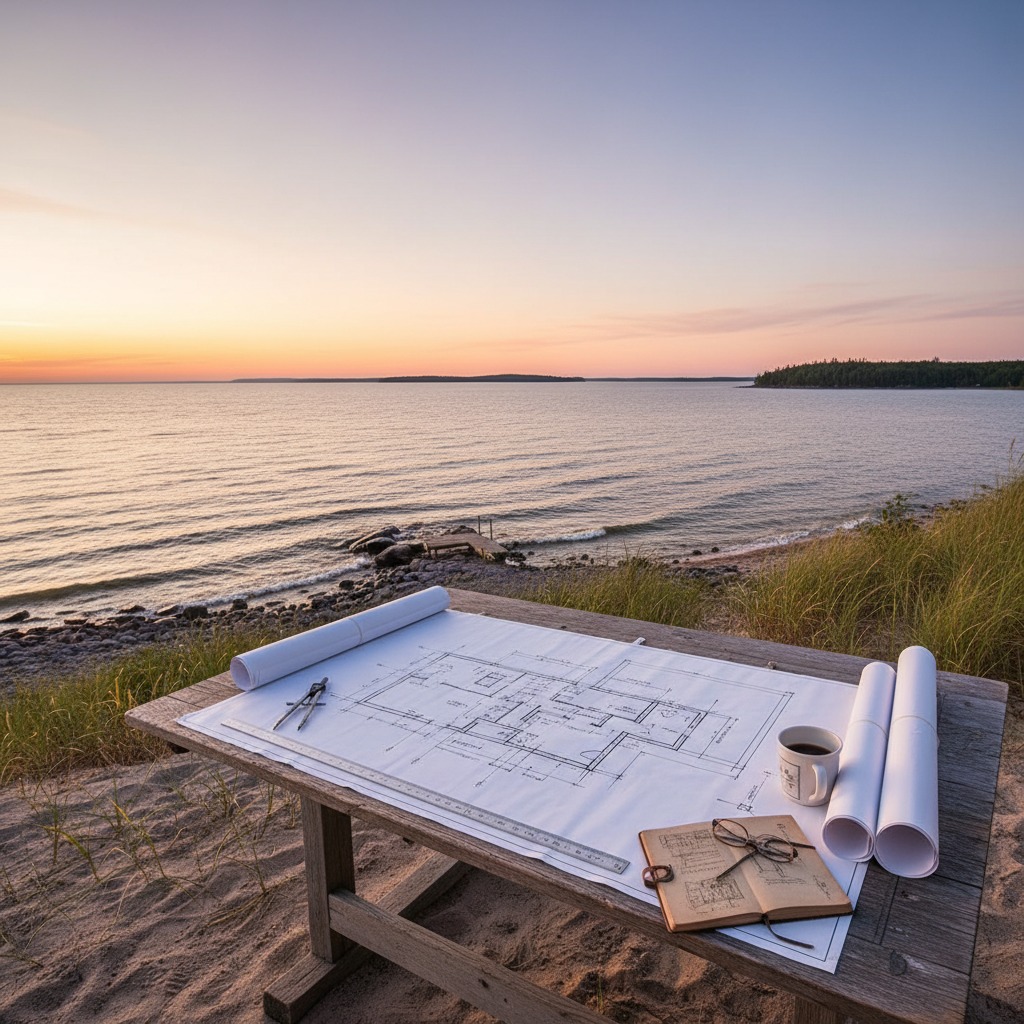
Setback requirements from the water are often more restrictive than the standard front, side, and rear yard setbacks that apply to all properties in the zone. On a shallow waterfront lot, the combined effect of front setback, rear (water) setback, and side setbacks can leave a buildable footprint that is surprisingly small. I have seen cases where a 60-foot-wide lot yields a building envelope of just 20 by 30 feet after all setbacks are applied.
Conservation Authority Permits
Ontario's 36 conservation authorities regulate development within their jurisdictions under Section 28 of the Conservation Authorities Act. On waterfront properties, almost any construction activity triggers the need for a conservation authority permit. This includes new buildings, additions, renovations that alter the building footprint, grading changes, and even tree removal in some cases.
The conservation authority review focuses on natural hazards (flooding, erosion, dynamic beaches), natural heritage features (wetlands, fish habitat, significant woodlands), and water quality. Their assessment may require studies you had not anticipated: a flood plain analysis, a geotechnical assessment, an environmental impact study, or a stormwater management plan.
Application fees range from $500 to $5,000 depending on the scope of the project and the conservation authority. Processing times typically run six to twelve weeks, though complex applications can take longer. The conservation authority may approve your application with conditions, such as construction timing restrictions, sediment and erosion control requirements, or habitat compensation measures.
The Survey Requirement
A current survey is not optional for waterfront construction. It is essential. Old surveys may not reflect changes in the shoreline, property boundaries that have shifted due to erosion or accretion, or road allowances that affect the buildable area.
For new construction, most municipalities require a survey prepared by an Ontario Land Surveyor showing the existing conditions and the proposed building location relative to all property boundaries and setback lines. This survey, combined with the building permit application, forms the basis for the municipality's review.
Survey costs for waterfront properties range from $2,500 to $6,000, depending on the complexity of the lot, the condition of existing survey markers, and whether the shoreline needs to be mapped. In areas with significant erosion, the survey may reveal that the buildable area has changed since the last survey, potentially invalidating plans based on older information.
Non-Conforming Buildings
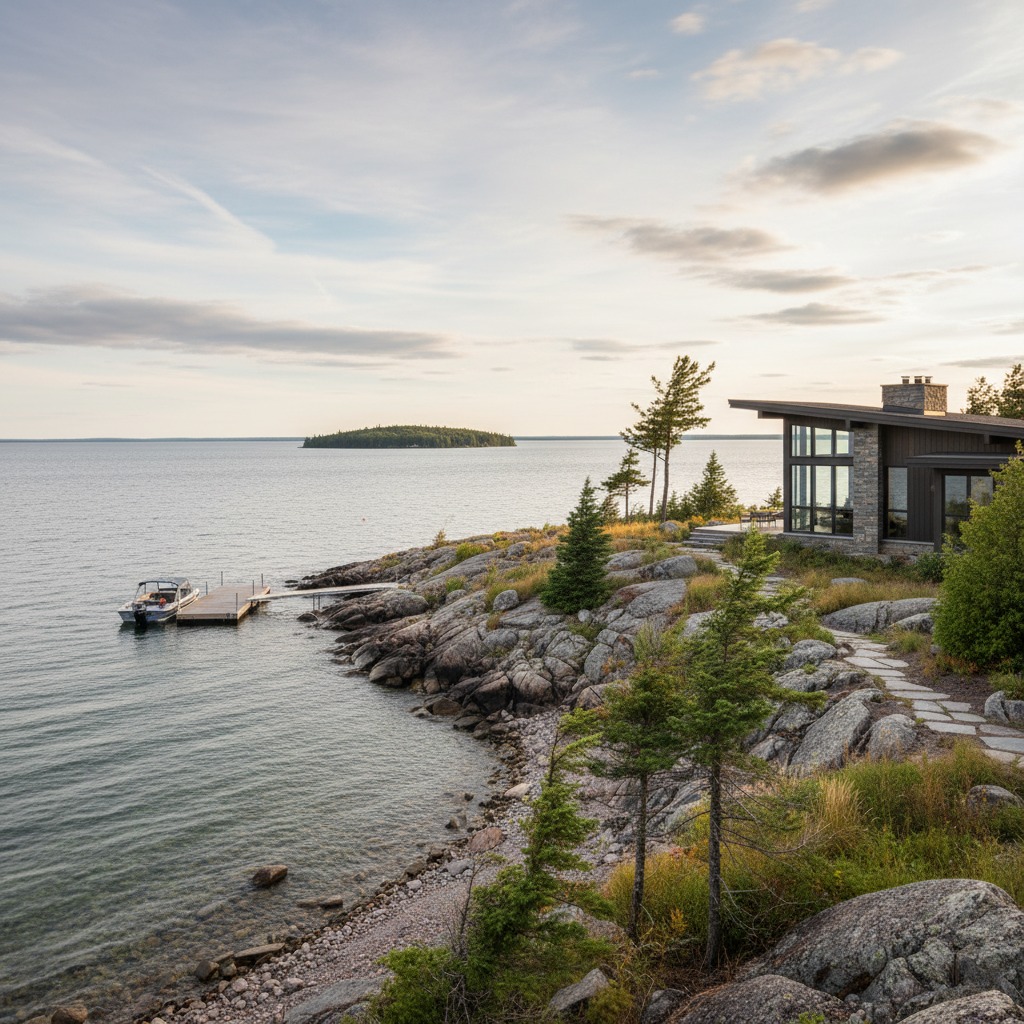
Many existing waterfront buildings are legally non-conforming, meaning they were built before current setback requirements and do not comply with them. In Ontario, non-conforming buildings can generally be maintained, repaired, and even renovated, provided the non-conformity is not increased.
The trouble arises when you want to do more than maintain. Adding a second storey to a cottage that sits 10 metres from the water, when the current setback is 20 metres, may or may not be permitted depending on the municipality's interpretation of "increasing the non-conformity." Some municipalities allow vertical expansion of non-conforming buildings. Others do not.
Demolition and rebuilding presents the sharpest challenge. If you tear down a non-conforming building, you generally lose the non-conforming status. The new building must meet current setbacks, which may push it to a completely different location on the lot. For cottages that sit close to the water, this can make rebuilding on the same footprint impossible without a minor variance from the Committee of Adjustment.
Minor variances for waterfront setbacks are not guaranteed. The Committee of Adjustment applies four tests: is the variance minor, is it desirable for the appropriate development of the land, does it maintain the general intent and purpose of the zoning bylaw, and does it maintain the general intent and purpose of the official plan? Meeting all four tests for a waterfront setback reduction requires strong supporting documentation and, often, professional planning advice.
What Catches People Off Guard
The most common surprise is the timeline. A project that would take four to six weeks to permit on an urban lot can take four to six months on the waterfront, once you account for conservation authority review, environmental studies, survey preparation, and municipal processing. Plan accordingly and set contractor expectations from the start.
The second surprise is cost. Between surveys, environmental studies, additional permit fees, and design modifications required by regulatory agencies, the pre-construction soft costs for a waterfront build can add $15,000 to $40,000 beyond what an equivalent inland project would require.
The third surprise involves trees. Many waterfront municipalities have tree-cutting bylaws that restrict or prohibit the removal of trees above a certain diameter. On a wooded lot, this can limit where you can place a building, driveway, or septic system. An arborist's report, identifying which trees can be removed and which must be preserved, is often a required submission with the permit application.
Getting It Right
Before you design, before you budget, and before you commit to a timeline, do this: visit the municipal planning department and the local conservation authority. Ask them what is permitted on your specific lot. Bring the lot dimensions, the property identification number, and a rough sketch of what you want to build.
Hire professionals who know waterfront projects. An architect or designer with experience navigating waterfront permit requirements will design with the regulations in mind, avoiding costly redesigns. A planning consultant can guide your application through the multi-agency approval process.
And budget for the unexpected. Waterfront construction has more variables than inland building. Rock encountered during excavation. Seasonal construction restrictions. Weather delays amplified by proximity to the water. The projects that succeed are the ones with realistic timelines, adequate budgets, and owners who understand that building near the water is a privilege that comes with rules attached.