
Dock Permits in Ontario: What You Can and Cannot Build
You bought the waterfront property. Now you want a dock. Simple enough, right? Not in Ontario. Building a dock involves navigating a regulatory framework that touches municipal, provincial, and federal jurisdictions. The rules vary depending on the type of waterway, the size of what you want to build, and where your property sits in relation to the water.
The good news is that most residential docks can be built without major regulatory hurdles. The key is knowing which rules apply to your situation and following the proper process from the start.
The Basic Framework
Ontario dock regulations flow from several sources. The federal Fisheries Act protects fish habitat. The federal Navigation Protection Act covers navigable waterways. The provincial Public Lands Act governs structures on Crown land beneath waterways. Municipal zoning bylaws set local standards. And conservation authorities may have additional requirements depending on your location.
For most residential docks, the practical starting point is determining whether your dock requires a work permit under the Ontario Public Lands Act. If the lakebed or riverbed in front of your property is Crown land (which it usually is on navigable waterways), you need authorization from the Ministry of Natural Resources and Forestry to place a structure on it.
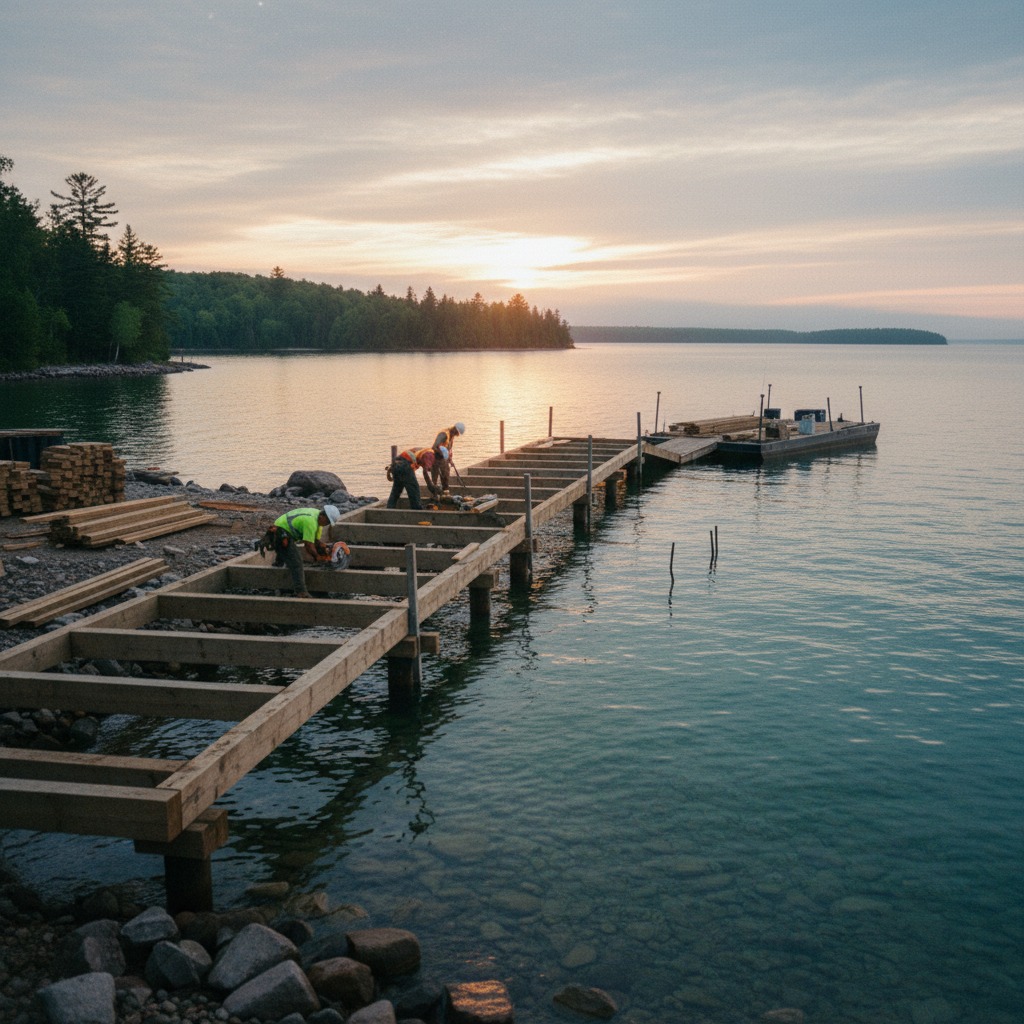
The exceptions are narrow but important. Temporary, seasonal docks that are removed each fall generally do not require a work permit, provided they meet size restrictions and do not permanently alter the lakebed. Permanent docks, crib docks, and any structure that involves placing fill or driving piles into the lakebed will typically require permits.
Size Matters
Most municipalities set maximum dimensions for residential docks. A typical maximum is 15 square metres of surface area, with a maximum width of 1.5 metres and a length that extends to a water depth of about 1.2 metres at normal levels. These dimensions accommodate a standard single-slip dock suitable for one boat.
If you want something larger, a double-wide dock, an L-shaped configuration, or a dock that extends into deeper water, you will likely need variances or additional permits. The same applies if you want to add features like a swim platform, a boat lift, or a sundeck at the end of your dock.
Many waterfront owners are surprised to learn that their municipality regulates dock size at all. The assumption that "it's my property, I can build what I want" runs headlong into the reality that the water and the land beneath it are shared resources managed for the benefit of everyone.
Floating vs. Fixed vs. Crib
The type of dock you choose affects both the regulatory process and the long-term costs. Floating docks, anchored to the bottom with cables or chains, are generally the least regulated option. They rise and fall with water levels, cause minimal disturbance to the lakebed, and can be removed seasonally with relative ease.
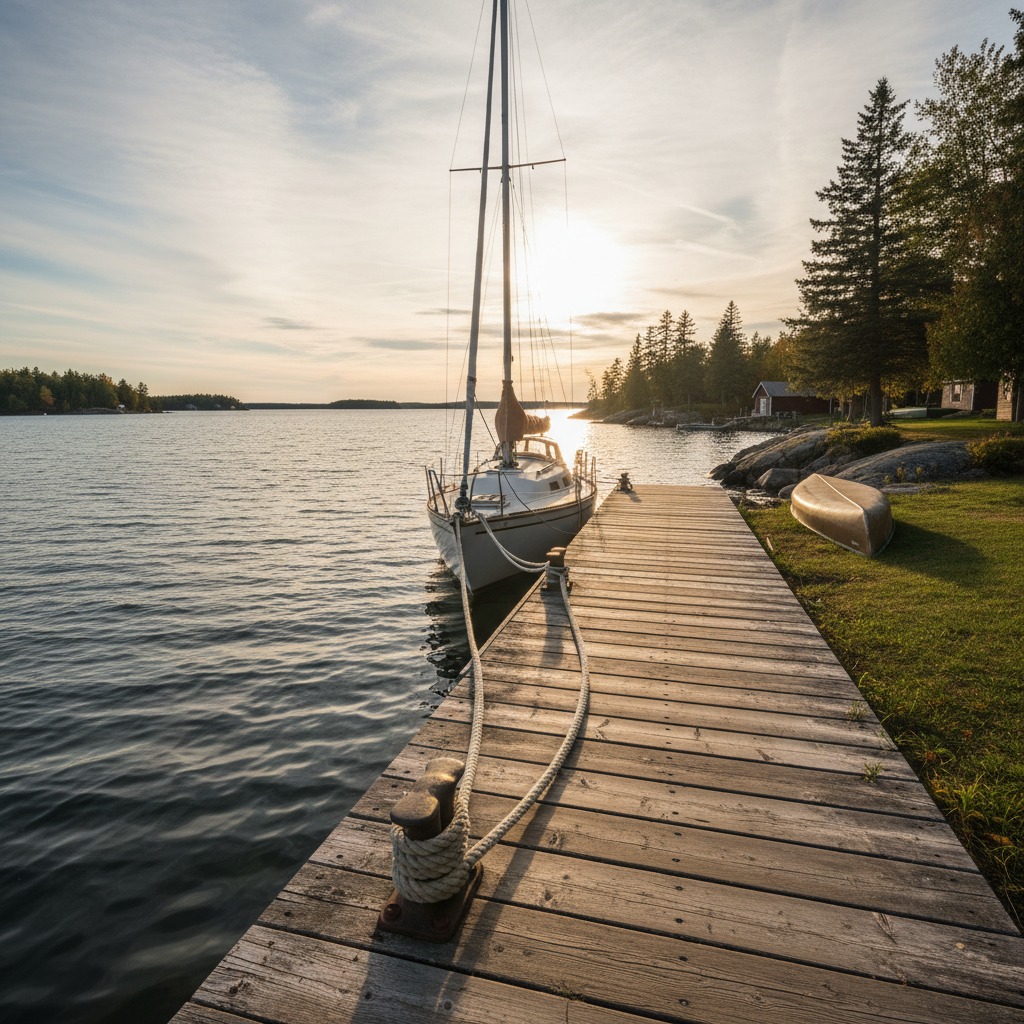
Pipe docks, which rest on adjustable aluminum legs driven into the lake bottom, are the most common residential choice. They are relatively affordable ($2,000 to $8,000 depending on size), easy to install and remove, and durable enough for decades of use with basic maintenance. Most municipalities treat them as temporary structures as long as they are removed for winter.
Crib docks and permanent pile-driven docks are a different category entirely. These involve placing substantial structures on the lakebed, which triggers work permit requirements, environmental assessments, and sometimes federal navigation reviews. Crib docks, built from timber frames filled with rock, were historically common but face increasing regulatory resistance due to their environmental impact. The costs of building and maintaining these permanent structures can be substantial.
The Conservation Authority Factor
If your property falls within a conservation authority's jurisdiction (and most waterfront properties do), you may need an additional permit under Ontario Regulation 97/04. Conservation authorities regulate development within regulated areas, which typically include a buffer zone extending from the water's edge.
The conservation authority's primary concern is whether your dock construction will affect natural features, fish habitat, or flood plain dynamics. Their review process can take four to eight weeks, and they may impose conditions such as construction timing windows (to avoid fish spawning periods), limitations on materials, or requirements for habitat compensation.
This is an area where many waterfront owners get into trouble. Building a dock without the required conservation authority approval can result in orders to remove the structure, fines, and requirements to restore the site to its original condition. The cost of non-compliance far exceeds the cost of doing it right.
Federal Requirements
On navigable waterways, dock construction may need to comply with the Canadian Navigable Waters Act. The threshold for federal review depends on the waterway's status and the dock's impact on navigation. Most residential docks on inland lakes fall below the threshold, but docks on major rivers, shipping channels, or designated heritage waterways may trigger federal review.
The Fisheries Act applies broadly to any work in or near water that could harm fish or fish habitat. In practice, this means avoiding construction during spawning seasons, minimizing sediment disturbance, and ensuring your dock does not block fish passage. For standard residential docks, compliance is straightforward. For larger projects, a professional environmental assessment may be required.
Practical Steps
Before you order materials or hire a contractor, take these steps. First, check your municipal zoning bylaws for dock-specific regulations, including maximum size, setback from side lot lines, and any prohibited dock types. Your municipality may also have specific rules about boathouses and covered structures that extend over the water.
Second, contact the local conservation authority to determine whether your project requires their approval. Provide them with a sketch showing the proposed dock's location, dimensions, and construction details.
Third, check whether the lakebed is Crown land and whether a work permit is required. Your lawyer should have investigated this during the property purchase process, but it is worth confirming.
Fourth, talk to your neighbours. Dock placement can affect their access, their views, and their enjoyment of the water. Many waterfront disputes originate from unilateral decisions about docks and other shoreline structures. A conversation before construction can prevent a conflict after.
Finally, consider hiring a professional dock builder who knows the local regulatory environment. Experienced builders have working relationships with municipal officials and conservation authority staff. They know what gets approved and what does not, and they can guide your project through the permitting process efficiently.
Dock ownership is one of the genuine pleasures of waterfront life. Getting the permits right from the start ensures that pleasure is not interrupted by enforcement actions, removal orders, or disputes with neighbours who feel you overstepped the boundaries.