The Real Cost of Owning and Maintaining a Dock
The dock is the physical connection between your property and the water. It is where you tie up the boat, watch the kids swim, sit with a morning coffee, and fish on summer evenings. It is also, in many cases, the single most maintenance-intensive structure on the property, with costs that accumulate year after year in ways that buyers and new owners rarely anticipate.
Dock ownership is not a one-time purchase. It is an ongoing financial commitment that varies dramatically depending on the type of dock, the conditions on your waterway, and how diligent you are about maintenance. Here is what to expect.
Purchase and Installation Costs
The initial cost of a dock depends on its type, size, and the complexity of your shoreline. Here are realistic 2025 price ranges for the most common residential dock types in Ontario.
Pipe docks (removable aluminum or steel frame with composite or wood decking): $2,500 to $8,000 for a basic single-run dock of 20 to 40 feet. This is the most common and most affordable option for small to medium lakes with moderate water depths.
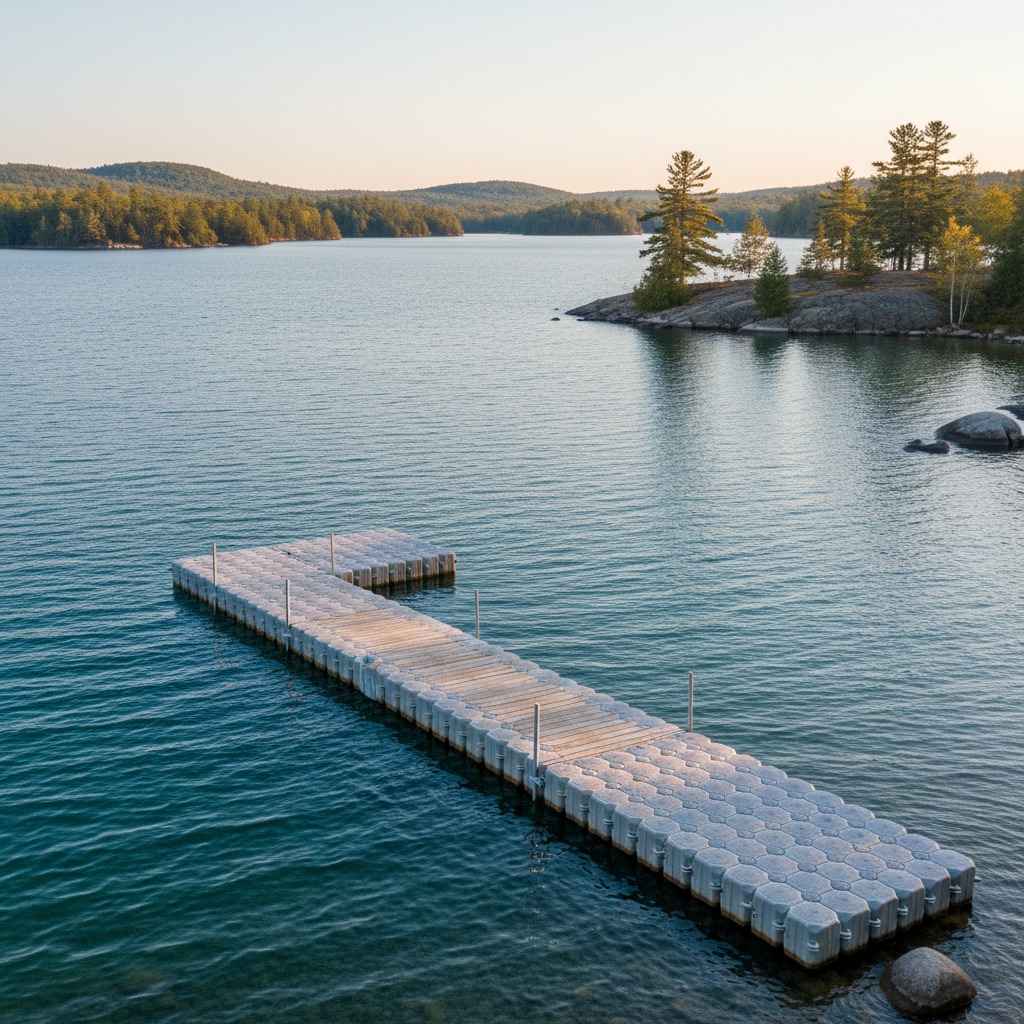
Floating docks (buoyant sections connected by hinges, anchored to the bottom): $4,000 to $15,000 depending on size and configuration. Better for locations with fluctuating water levels or soft lake bottoms where pipe docks struggle.
Crib docks (timber frames filled with stone, creating a permanent structure): $15,000 to $50,000 depending on size and water depth. These are permanent installations that require specific permits and offer the most stable platform, but they carry the highest construction and maintenance costs.
Cantilever docks (mounted on shore and extending over the water without lake-bottom support): $5,000 to $12,000. Suitable for rocky shorelines where driving pipes or placing cribs is difficult.
Professional installation adds $500 to $2,000 to the purchase price, depending on the dock type and site conditions. Some owners install pipe docks themselves, but crib docks, cantilever systems, and large floating configurations generally require professional installation.
Annual Seasonal Costs
In most of Ontario, docks go in during spring and come out in fall. The exceptions are permanent crib docks and a few sheltered locations where floating docks can remain year-round. For everyone else, the seasonal installation and removal cycle is an annual cost.
If you do it yourself, the cost is your time plus minor supplies: replacement hardware, lubricant for connections, and any needed repairs identified during installation. Budget two to six hours of physical labour, depending on the dock's size and complexity. This is not light work. Dock sections are heavy, the water is cold in spring, and the lake bottom is unpredictable.
Professional installation and removal services cost $300 to $800 per season per dock in most Ontario waterfront markets. Some operators bundle spring installation and fall removal into an annual contract. Demand is high during the narrow windows when these services are needed, so book early. Waiting until May to call about installation may mean waiting until June to get your dock in the water.
Maintenance and Repair
Dock maintenance is a continuous cycle of inspection, prevention, and repair. The specifics depend on your dock type and the conditions it faces.
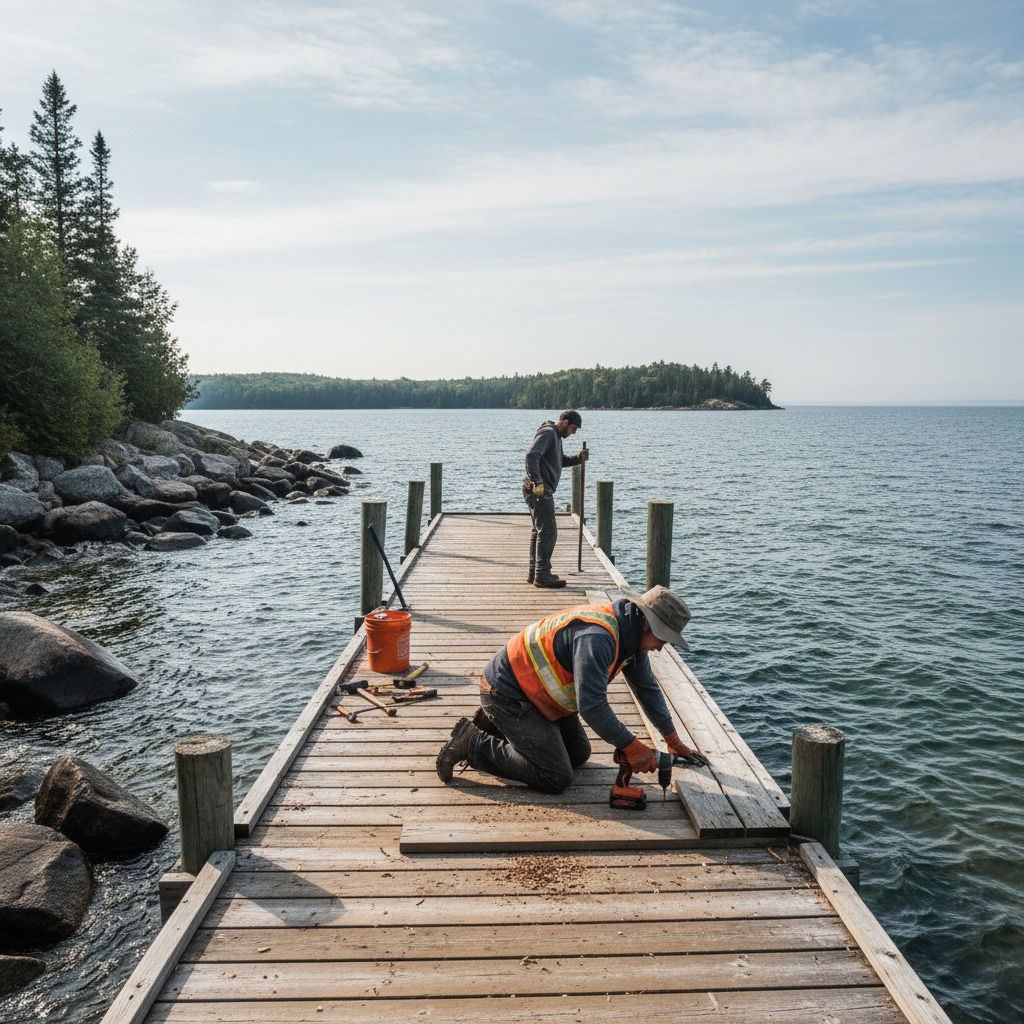
Wood components (decking, crib timbers, railings) require annual inspection for rot, splitting, and structural weakness. Cedar and pressure-treated lumber last 15 to 25 years in a dock application, but individual boards may need replacement sooner. Budget $200 to $500 annually for wood replacement on a medium-sized dock.
Metal components (pipes, brackets, hardware) corrode in the water environment. Aluminum resists corrosion better than steel but costs more initially. Annual inspection of all metal components for corrosion, bent sections, and worn fittings is essential. Hardware replacement runs $50 to $200 annually under normal conditions.
Composite and plastic decking materials have become increasingly popular for their low maintenance requirements. They do not rot, split, or need staining. But they cost 50 to 100 percent more than wood initially and can become slippery when wet or algae-covered, requiring periodic cleaning with a pressure washer or specialized cleaner.
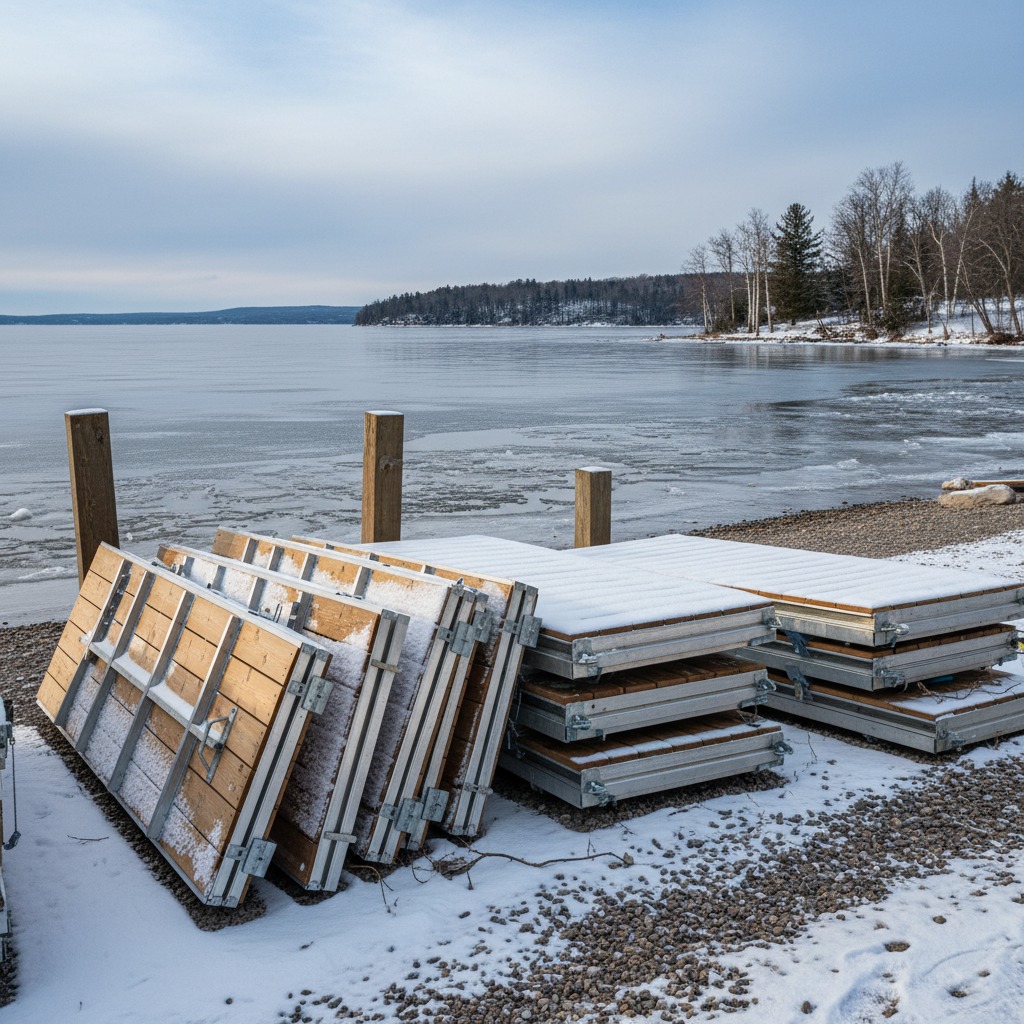
Ice damage is the wild card in the annual cost equation. Winter conditions on Ontario waterways can be brutal, and even properly removed docks can suffer damage from ice during storage if not placed on stable ground above the spring flood line. Crib docks that remain in the water year-round absorb ice forces directly, and annual repairs for ice damage can range from minor (resetting displaced stones) to major (rebuilding entire sections).
The Replacement Clock
No dock lasts forever. Pipe docks have a typical lifespan of 15 to 25 years before the frames, hardware, and decking need comprehensive replacement. Floating docks last 15 to 20 years, with the buoyancy components often being the first to fail. Crib docks can last 30 to 50 years but require periodic timber replacement and stone resetting that amounts to gradual reconstruction over their lifespan.
Replacement costs generally exceed the original purchase price due to inflation and often due to changed regulatory requirements. A dock that was built without permits 25 years ago may need to meet current standards when replaced, potentially limiting its size or requiring a different type of construction. The regulatory environment for waterfront structures has tightened considerably, and what was acceptable a generation ago may not be permissible today.
Insurance and Liability
Your dock is typically covered under your homeowner's insurance policy as an appurtenant structure. Verify this with your insurer, particularly if you have a high-value dock or one with boat lifts, marine railways, or other equipment.
Liability is the more significant insurance concern. A dock is an attractive nuisance that invites swimming, jumping, fishing, and general waterside activity. Guests, neighbours, and trespassers can all be injured on or around your dock, and you may be liable for those injuries. Ensure your liability coverage is adequate, with a minimum of $2 million recommended for waterfront properties with docks. An umbrella policy provides additional protection at modest cost.
If you allow others to tie boats to your dock, you may assume liability for damage to their vessels and for any injuries that occur during docking. A clear understanding of who uses your dock and under what terms protects you from unexpected claims.
The Annual Budget
For a typical residential pipe dock on an Ontario lake, here is a realistic annual cost summary. Professional installation and removal: $600. Hardware and minor repairs: $200. Wood or decking replacement (amortized): $300. Insurance allocation: $200. Capital reserve for eventual replacement (based on a 20-year replacement cycle for a $6,000 dock): $300. Total: approximately $1,600 per year.
For a crib dock, double or triple that figure. For a dock with a boat lift ($5,000 to $15,000 purchase price), add the lift's own maintenance and replacement costs.
These costs are part of the full cost of waterfront ownership that buyers should understand before purchasing. The dock is not an amenity you buy once and forget about. It is a structure that demands your attention, your time, and your money every year for as long as you own the waterfront property. For most owners, the investment is worthwhile. The dock is where the best moments of waterfront life happen. But those moments are funded by a maintenance commitment that smart owners build into their annual budget from day one.