Do Naturalized Shorelines Actually Work?
The pitch sounds almost too good to be true. Rip out the concrete seawall, plant some native shrubs and grasses, scatter some boulders and logs along the bank, and you get a shoreline that controls erosion, filters pollutants, supports fish and wildlife, and looks better than what was there before. Conservation authorities across Ontario have been promoting naturalized shorelines for over a decade, and thousands of lakefront property owners have been urged to adopt them. But do they actually deliver on the promise?
The answer, based on the growing body of monitoring data from projects across the Great Lakes basin, is nuanced. Naturalized shorelines work well in many settings. In some, they outperform traditional hard armouring. In others, they fall short, particularly where expectations were unrealistic or the design did not match site conditions. The evidence is strong enough to say that naturalized shorelines are a legitimate tool for shoreline management. It is also strong enough to say they are not a universal solution.
What a Naturalized Shoreline Is
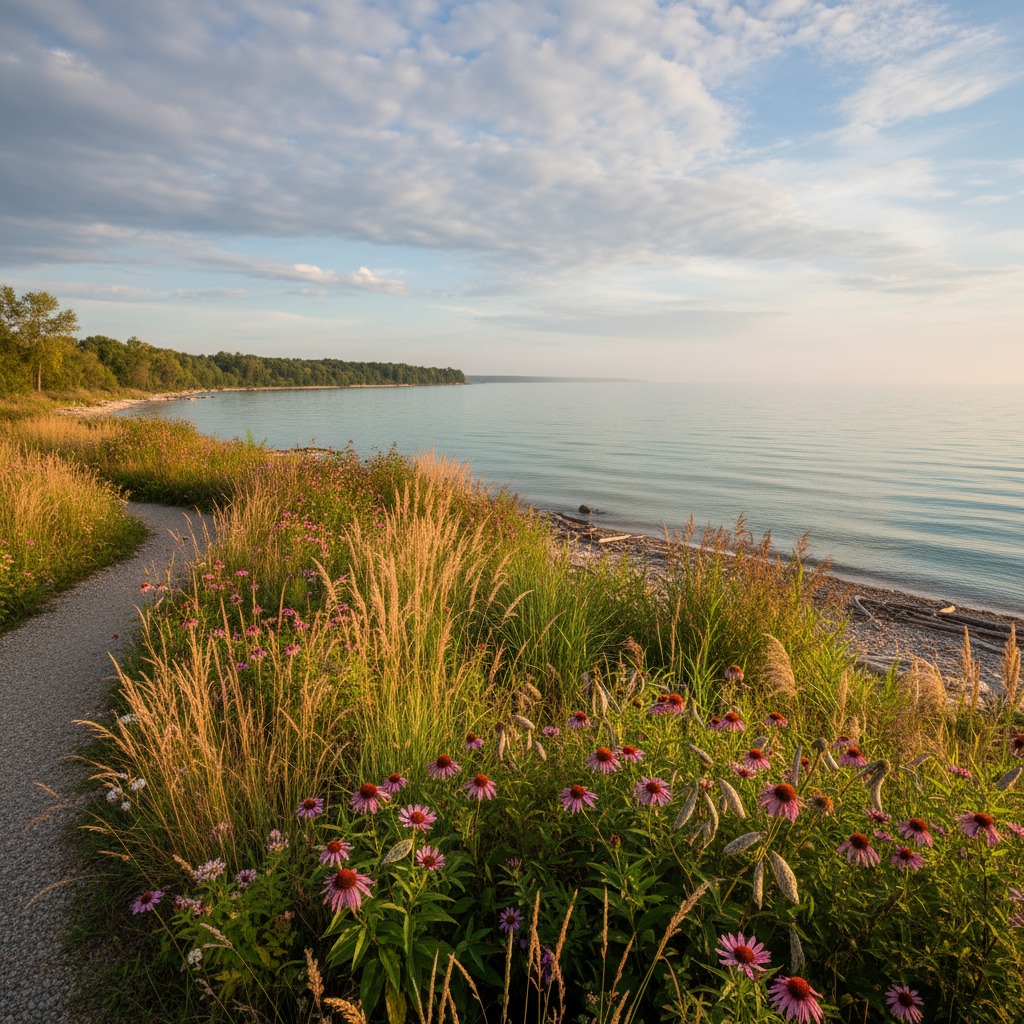
The term "naturalized shoreline" covers a range of approaches, from simple native plantings along the water's edge to engineered bioengineering systems that combine living materials with structural elements. At the simplest end, a property owner might replace a mowed lawn with a three-metre buffer of native shrubs and grasses. At the more complex end, a bioengineered shoreline might include coir (coconut fibre) logs staked into the bank to hold soil in place, live willow stakes driven into the slope to establish root networks, rock sills placed offshore to reduce wave energy, and graded banks planted with species selected for their root depth and erosion resistance.
The key distinction from traditional hard armouring is that naturalized shorelines are designed to work with natural processes rather than against them. Instead of deflecting wave energy with a rigid wall, they absorb and dissipate it through a combination of vegetation, slope, and material flexibility. Instead of sealing the interface between land and water, they maintain the permeable, gradual transition that characterizes a natural shoreline.
The Evidence for Erosion Control
The most common reason property owners consider a naturalized shoreline is erosion. They want to stop losing land. So the first question is whether these approaches actually reduce erosion rates.
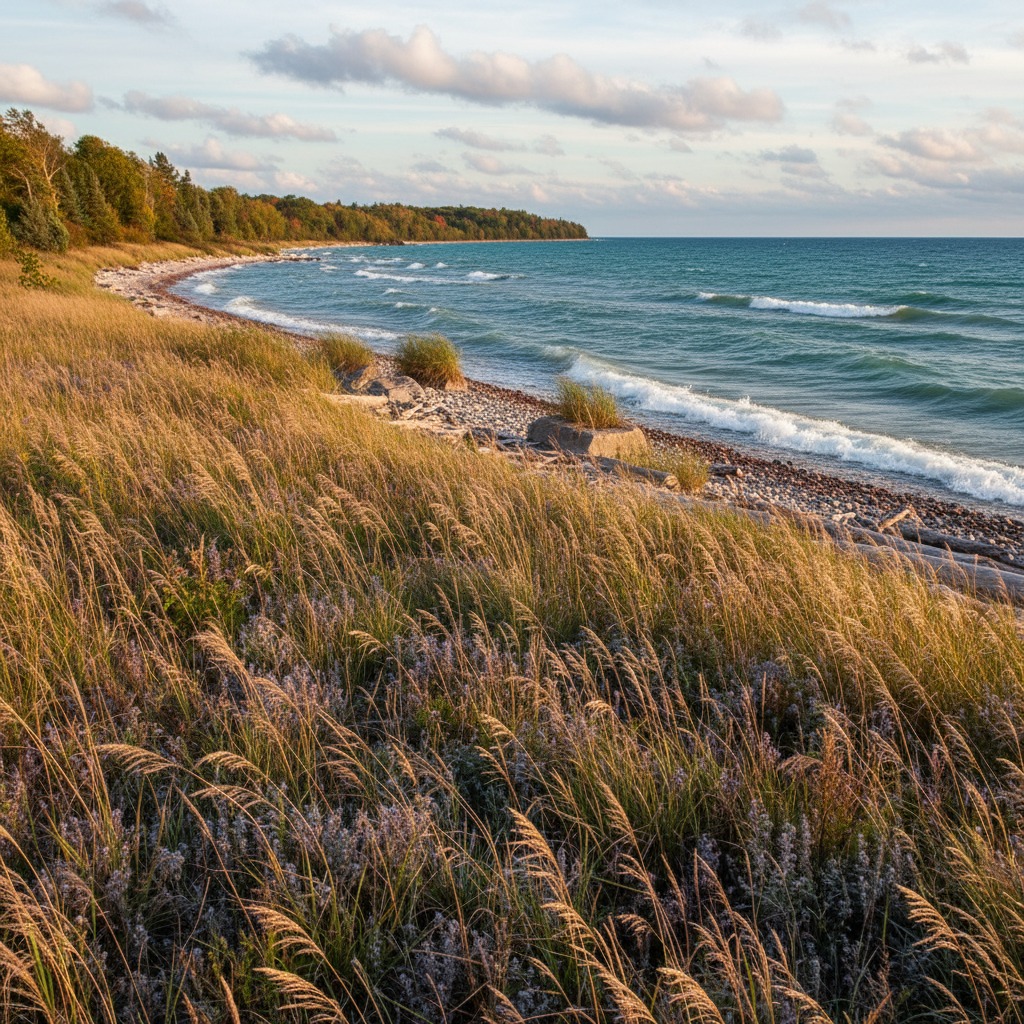
Monitoring data from several long-term study sites in Ontario suggests they do, under the right conditions. A five-year study led by the Toronto and Region Conservation Authority tracked erosion rates at 14 naturalized shoreline installations along the Lake Ontario waterfront between 2016 and 2021. Compared to untreated control sites, the naturalized shorelines reduced bank recession by an average of 55 percent. At several sites, erosion was effectively halted for the duration of the monitoring period.
The results were best on low-to-moderate energy shorelines, where wave action is not extreme and the bank material is amenable to vegetative stabilization. On high-energy shorelines with tall, unstable bluffs or heavy clay soils, the results were more variable. Some sites experienced significant damage during major storm events, requiring repair and replanting. This is consistent with the broader understanding of Great Lakes erosion dynamics explored in our article on how shoreline erosion is reshaping the Great Lakes.
The comparison to hard armouring is not straightforward. Concrete seawalls and sheet pile are more effective at preventing any erosion at the specific point where they are installed. But they frequently accelerate erosion on adjacent properties through wave reflection, a problem that naturalized approaches largely avoid. When assessed at a reach scale rather than a property scale, naturalized shorelines often produce better overall outcomes.
Water Quality Benefits
Naturalized shorelines filter runoff before it reaches the water, trapping sediment, absorbing nutrients, and reducing bacterial loading. This function is particularly valuable in cottage communities and small towns where stormwater management infrastructure is limited.
A study from Lakehead University measured phosphorus and suspended sediment concentrations in runoff from properties with naturalized buffers versus those with lawns extending to the water's edge. Properties with naturalized buffers of three metres or more showed 60 to 75 percent lower phosphorus concentrations and 80 percent lower sediment loads in their runoff. The implications for downstream water quality are significant, particularly on lakes already experiencing nutrient enrichment problems.
This filtering capacity is one reason why conservation authorities recommend naturalized buffers as part of broader stormwater management strategies for waterfront towns. The vegetation does not replace the need for engineered stormwater infrastructure, but it provides an important supplementary function that reduces pollutant delivery at the source.
Habitat Improvements
The ecological case for naturalized shorelines is perhaps the strongest. Monitoring data consistently shows that naturalized shorelines support more species of fish, invertebrates, amphibians, and birds than hardened shorelines. The structural complexity provided by native vegetation, woody debris, and irregular bank profiles creates the microhabitats that aquatic and semi-aquatic species need for feeding, reproduction, and shelter.
A comparative study of fish communities on naturalized versus hardened shorelines in the Kawartha Lakes found that naturalized sites supported 40 percent more fish species and three times the abundance of juvenile fish, indicating superior nursery habitat function. These findings align with the broader body of research on how shoreline development affects fish habitat and what it takes to reverse the damage.
Where They Fall Short
Naturalized shorelines are not appropriate for every situation, and overselling their capabilities does the concept a disservice.
They are less effective on high-energy shorelines with direct exposure to large-fetch wave action, such as the open coastlines of Lake Huron and Lake Erie. In these settings, the forces involved can overwhelm vegetation and bioengineering materials during major storms. Hybrid approaches that combine structural elements like rock sills or breakwaters with naturalized plantings behind them tend to perform better on exposed coasts.
They also require patience. A newly planted naturalized shoreline does not provide full erosion protection on day one. The root systems that bind the soil need one to three growing seasons to establish, and during that period, the site may be vulnerable to erosion if a significant storm hits before the vegetation is fully rooted. Temporary erosion control measures like coir blankets and biodegradable stakes bridge this gap, but property owners need to understand that the payoff is not immediate.
Maintenance is another consideration. Unlike a concrete wall that requires little attention for years, a naturalized shoreline needs ongoing management. Invasive species, particularly phragmites and purple loosestrife, will colonize disturbed shoreline sites aggressively if not controlled. Native plantings may need supplemental watering during dry summers in their first year. And woody debris features may need repositioning after storm events. The maintenance burden is modest compared to the cost of repairing hard infrastructure, but it is not zero.
Making the Decision
For property owners weighing their options, the decision between a naturalized shoreline and traditional armouring should start with a site assessment by a qualified professional. Conservation authorities offer guidance on shoreline management and can help identify which approach is best suited to a particular location. The regulatory framework that governs shoreline work, which varies by jurisdiction, is covered in our article on how conservation authorities regulate shoreline activity.
Cost is often comparable. A well-designed naturalized shoreline typically costs $200 to $500 per linear metre, depending on the complexity of the installation. A concrete seawall or armour stone revetment can run $500 to $1,500 per metre or more. When the long-term maintenance costs and the avoided costs of downstream erosion are factored in, naturalized approaches frequently come out ahead on a lifecycle basis.
The evidence from a decade of monitoring in Ontario supports a clear conclusion: naturalized shorelines work, and they work well, when they are properly designed, installed on appropriate sites, and maintained over time. They are not a magic bullet. But for the majority of shoreline properties in the province, they offer a combination of erosion control, water quality improvement, and habitat enhancement that hard infrastructure simply cannot match. The restoration projects that have succeeded across Ontario demonstrate what is achievable when the approach is done right.