Why Protecting Spawning Habitat Should Be a Local Priority
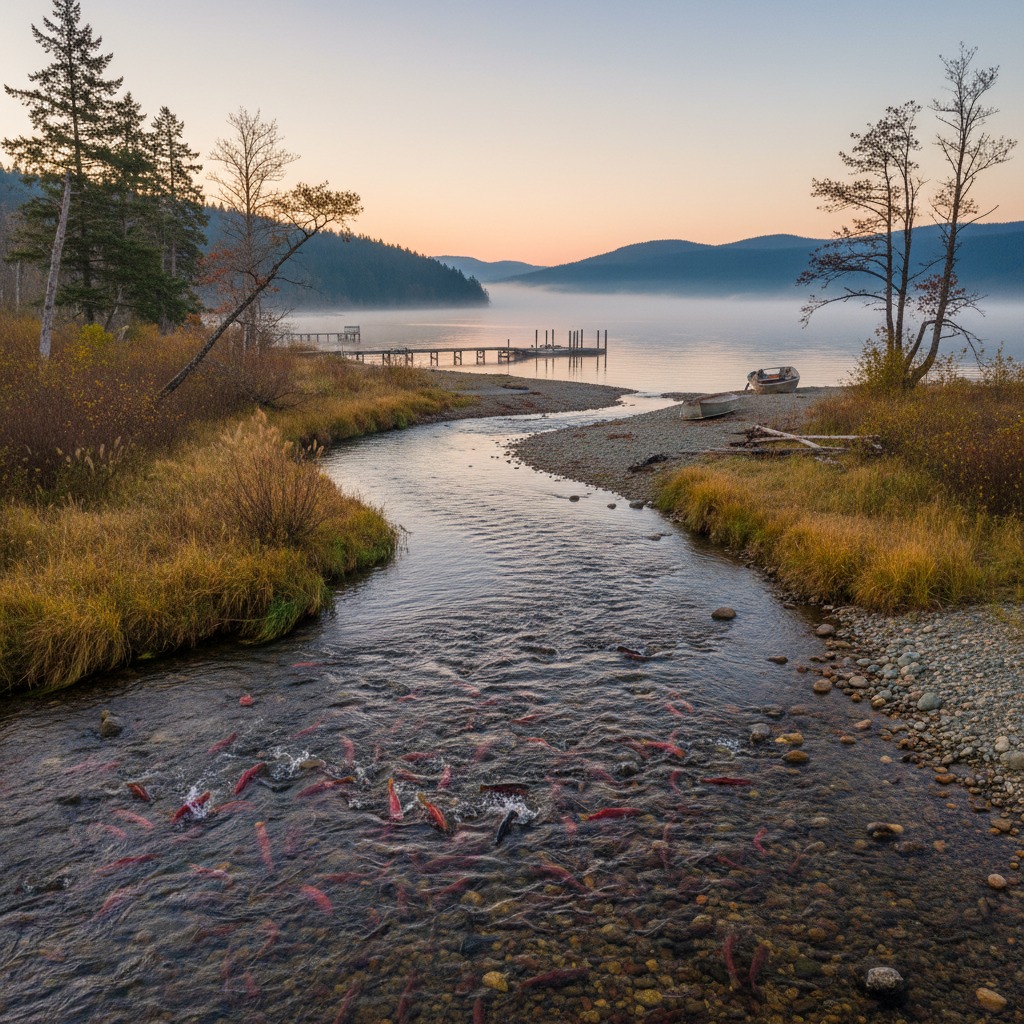
Every autumn, brook trout push upstream into the cold, spring-fed tributaries of Georgian Bay. They seek out gravel beds where groundwater percolates up through the stones, maintaining a steady temperature and dissolved oxygen level that their eggs require to survive the winter. These are not random locations. The fish return to the same reaches year after year, guided by chemical signatures they imprinted on as fry. Lose that gravel bed to siltation, pave over the spring that feeds it, or warm the water by a few degrees through upstream development, and you do not just lose a spawning site. You lose a population.
Spawning habitat is the bottleneck in the life cycle of virtually every freshwater fish species in Ontario. Adults can tolerate a range of conditions, but reproduction demands specifics: the right substrate, the right temperature, the right flow, the right dissolved oxygen concentration. Remove any one of these elements and the chain breaks.
What Makes Good Spawning Habitat
The requirements vary by species, but some principles hold broadly. Walleye and lake trout need clean, rocky or gravel substrates free of fine sediment. Their eggs lodge in the spaces between stones, where flowing water delivers oxygen and carries away metabolic waste. Pike and muskellunge require shallow, vegetated marshes that warm quickly in spring and provide cover for newly hatched fry. Smallmouth bass build nests on firm sand or gravel in sheltered bays, fanning the eggs with their tails to keep water circulating.
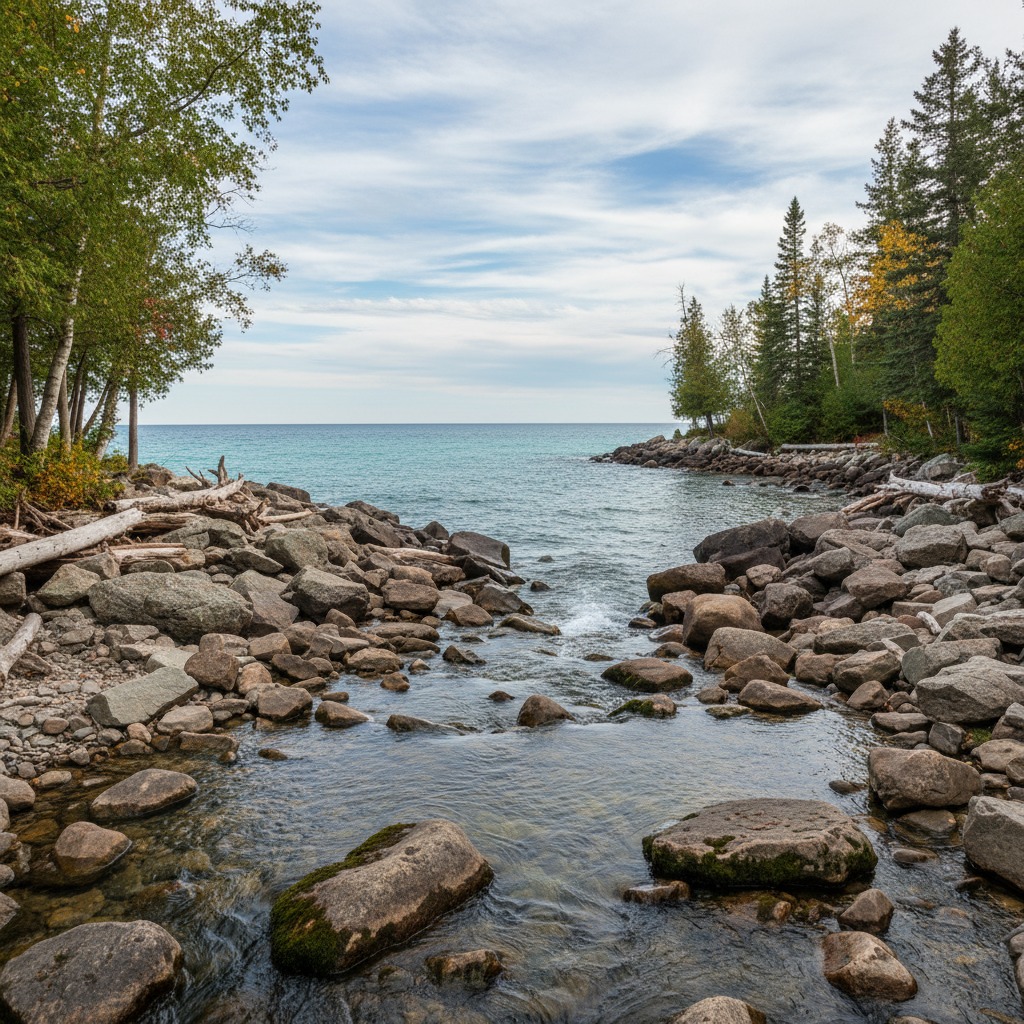
The common thread is vulnerability. Spawning habitats tend to be shallow, nearshore, and located where land and water interact most intensively. That puts them directly in the path of the activities that threaten them most: shoreline development, agricultural runoff, road construction, and stormwater discharge.
According to the Department of Fisheries and Oceans Canada, the federal Fisheries Act prohibits the harmful alteration, disruption, or destruction of fish habitat. But enforcement at the local level has historically been inconsistent, and many small-scale impacts go unreported or uninvestigated.
The Siltation Problem
Sediment loading is the single greatest threat to spawning habitat in Ontario's rivers and nearshore areas. When fine particles of clay, silt, or sand settle on gravel beds, they fill the interstitial spaces that eggs need for oxygenated water flow. Even a thin layer of fine sediment can suffocate an entire year class of eggs.
The sources are predictable. Construction sites without adequate erosion controls bleed sediment into adjacent watercourses. Agricultural fields with insufficient setbacks from streams contribute topsoil during rain events. Urban stormwater, carrying grit and sand from roads and parking lots, delivers a steady pulse of sediment with every rainfall. Road salt compounds the issue by destabilizing stream banks, a problem explored more fully in our article on how road salt is poisoning Ontario waterways.
Healthy riparian buffer zones along streams and rivers are one of the most effective defences against siltation. Tree roots stabilize banks, while the dense ground-level vegetation filters surface runoff before it reaches the water. Studies have shown that a 30-metre vegetated buffer can capture up to 85 percent of suspended sediment from agricultural runoff.
Temperature and the Climate Connection
Water temperature plays a decisive role in spawning success. Cold-water species like brook trout and lake trout cannot reproduce in streams that warm above certain thresholds. The thermal regime of a stream depends on shade cover, groundwater inputs, and the temperature of surface runoff entering from the surrounding landscape.
As climate change alters the hydrology of the Great Lakes region, stream temperatures are trending upward. Loss of forest cover along stream corridors removes the shade that keeps water cool during summer. Urbanization replaces permeable surfaces with asphalt and rooftops that absorb heat and deliver warm runoff directly to watercourses. The cumulative effect is a gradual compression of the thermal habitat available to cold-water spawning species.
Some communities have begun to recognize the economic stakes. Sport fishing contributes an estimated $2.2 billion annually to Ontario's economy. Towns built around fishing tourism, particularly in the Kawarthas, Muskoka, and along the Lake Huron coast, depend on healthy fish populations that can only be sustained if spawning habitat remains functional.
What Local Action Looks Like
Municipal governments have more influence over spawning habitat protection than many residents realize. Official plans and zoning bylaws can establish setback requirements that keep development away from sensitive shoreline and stream corridor areas. Site plan approval processes can mandate erosion and sediment control measures during construction. Stormwater management standards can require treatment of runoff before it enters watercourses.
Conservation authorities across Ontario maintain mapping of known spawning areas and can provide technical guidance to municipalities and landowners. The Lake Simcoe Region Conservation Authority, for example, has identified and mapped every known lake trout spawning shoal in Lake Simcoe, enabling targeted protection through land use planning and shoreline regulations.
Property owners along streams and lakeshores can contribute by maintaining natural shoreline vegetation, avoiding the use of fertilizers and pesticides near water, and reporting any observed habitat destruction to the local conservation authority. Planting native species along shoreline gardens not only stabilizes banks but also provides the overhanging cover and leaf litter inputs that stream ecosystems depend on.
The work is not glamorous. It involves attending planning meetings, commenting on development applications, maintaining vegetation buffers, and sometimes simply leaving a stretch of shoreline alone. But each gravel bed preserved, each stream corridor protected, each sediment source controlled represents an investment in the reproductive future of fish populations that have sustained communities along Ontario's waterways for millennia. There is no substitute for spawning habitat, and once it is lost, restoring it is enormously difficult and expensive. Prevention, as with so many environmental challenges, remains far cheaper than the cure.