When Condos Come to the Waterfront: Who Benefits?
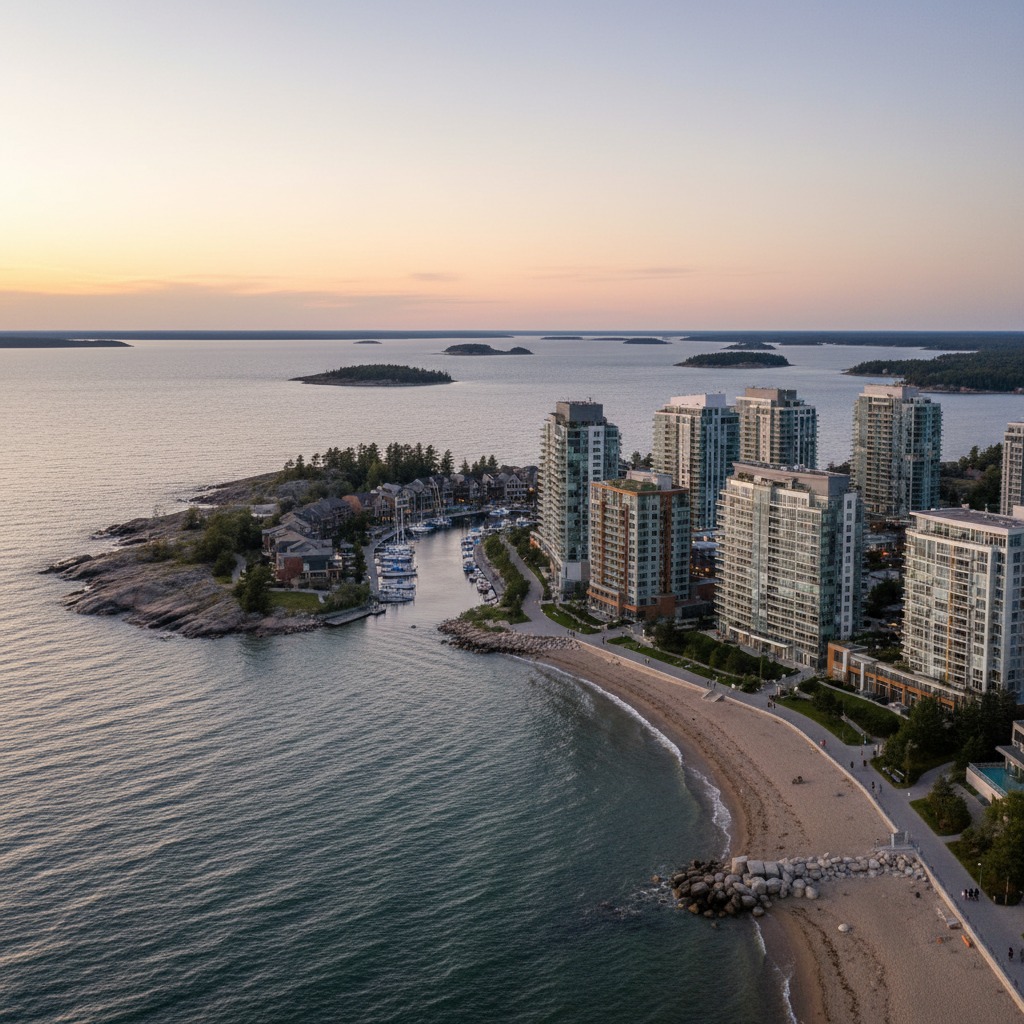
In the fall of 2023, the town of Cobourg approved a six-storey condominium development on a former industrial lot overlooking Lake Ontario. The developer promised 120 residential units, ground-floor retail space, a public waterfront promenade, and millions of dollars in development charges that would flow to the municipal coffers. The project's opponents saw something different: a wall of glass blocking views of the lake, a surge of traffic onto already-strained local roads, and a waterfront increasingly shaped by the tastes and budgets of people who did not grow up in Cobourg.
Waterfront condo development has become one of the most polarizing issues in small and mid-sized Ontario communities. Supporters frame these projects as economic catalysts that transform underused land into productive, tax-generating properties. Critics see them as vehicles for extracting value from public waterfronts and delivering it to private interests. Both sides have evidence to support their case.
The Developer's Pitch
The economic argument for waterfront condos is straightforward. Most of the sites targeted for development are former industrial properties, vacant lots, or underperforming commercial parcels. Transforming them into residential developments generates property tax revenue, construction employment, and spending at local businesses by new residents. In towns with aging populations and shrinking tax bases, these numbers can be compelling.
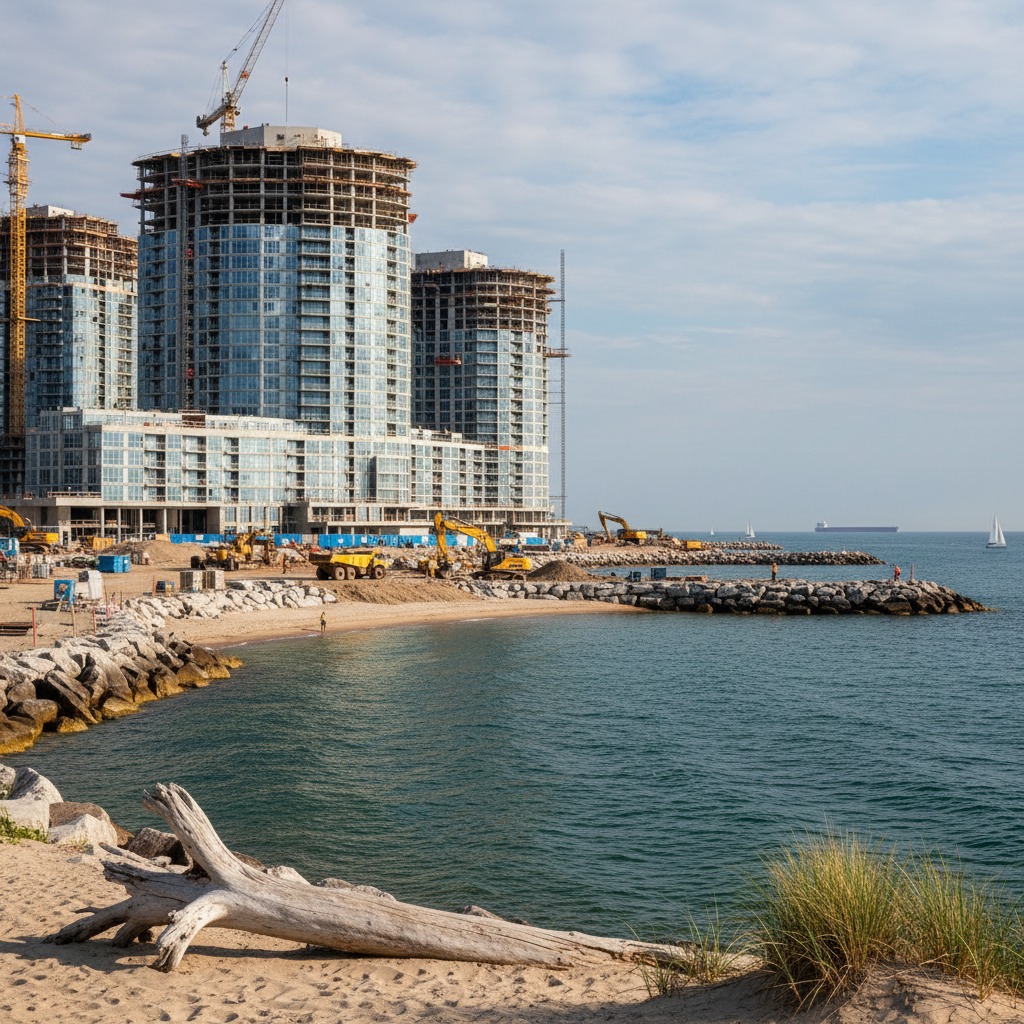
Developers also argue that condo projects can fund public amenities that municipalities could not otherwise afford. In exchange for higher density or taller buildings, developers may agree to provide public parkland, waterfront walkways, or contributions to affordable housing. These "community benefits" are negotiated through the planning approval process and can be substantial in dollar terms.
In Barrie, the redevelopment of the former Molson brewery site along Kempenfelt Bay included a commitment to a continuous public waterfront trail, new parkland, and a mix of unit sizes intended to attract both retirees and young families. The project was widely seen as a success story for waterfront revitalization, though not everyone agreed with the scale of the towers that came with it.
Who Actually Benefits
The distribution of benefits from waterfront condo projects is uneven, and understanding the pattern requires looking beyond the developer's marketing brochures. The most direct beneficiaries are typically the landowner who sells the development site (often at a significant premium over its pre-development value), the developer who builds and sells the units, and the buyers who acquire waterfront living at prices lower than a detached waterfront home.
The municipal government benefits from increased property tax revenue, but the relationship between new development and municipal finances is more complicated than it appears. Condo residents use roads, water, sewer, fire, and police services. In many cases, the cost of servicing high-density waterfront development exceeds the property tax revenue it generates, particularly in the early years when infrastructure must be expanded or upgraded to accommodate the new population.
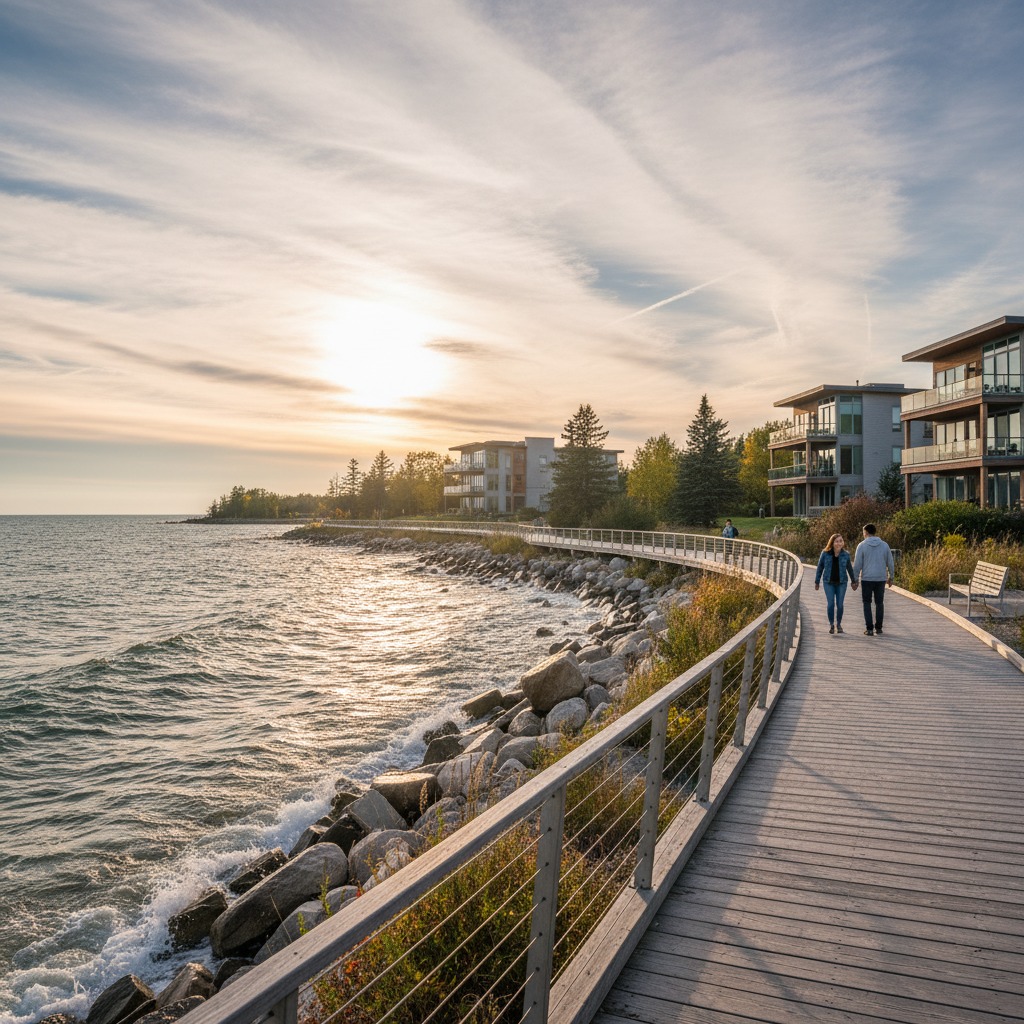
Existing residents may benefit from improved public spaces and amenities, but they also bear the costs of construction disruption, increased traffic, and changes to neighbourhood character. In communities where the waterfront has traditionally been accessible and low-key, the arrival of a large condo development can feel like an invasion.
The question of public waterfront access is particularly fraught. Condo projects often include public access provisions on paper, but the design and management of those spaces can make them feel private in practice. A narrow walkway squeezed between a building and a parking garage, overlooked by balconies and patrolled by security cameras, is technically public but functionally unwelcoming.
The Affordability Question
Proponents of waterfront condo development sometimes argue that adding housing supply helps with affordability. In theory, more units on the market should moderate price increases. In practice, waterfront condos in Ontario are rarely affordable. Units in new lakefront developments routinely list for $500,000 to over a million dollars, prices that are out of reach for most working families in the communities where they are built.
The effect on surrounding property values is debated. Some studies suggest that well-designed waterfront developments increase the value of nearby properties by improving the area's appeal. Others show that existing homeowners face higher property tax assessments without any corresponding increase in their income, effectively pricing long-time residents out of their own neighbourhoods through the tax system.
In beach towns across Ontario, this dynamic is playing out in real time. As condo towers rise along the waterfront, the character of the community shifts. Local shops that served year-round residents give way to boutiques and restaurants catering to seasonal visitors and new condo owners. The community becomes wealthier on paper but less diverse in practice.
Planning and Oversight
The planning framework for waterfront condo development in Ontario involves municipal official plans, zoning bylaws, and the site plan approval process. Under the Planning Act, municipalities have the authority to set height limits, density caps, and design standards for waterfront areas. They can also require developers to provide parkland, public access, and infrastructure improvements as conditions of approval.
The challenge is political will. Developers are skilled at framing their projects as economic opportunities that communities cannot afford to refuse. Council members who oppose a project may face pressure from business groups, accusations of being anti-growth, or the threat of an appeal to the Ontario Land Tribunal. The tribunal has a track record of overturning municipal decisions that restrict development, which means councils sometimes approve projects they are not comfortable with rather than risk losing at the tribunal and paying legal costs.
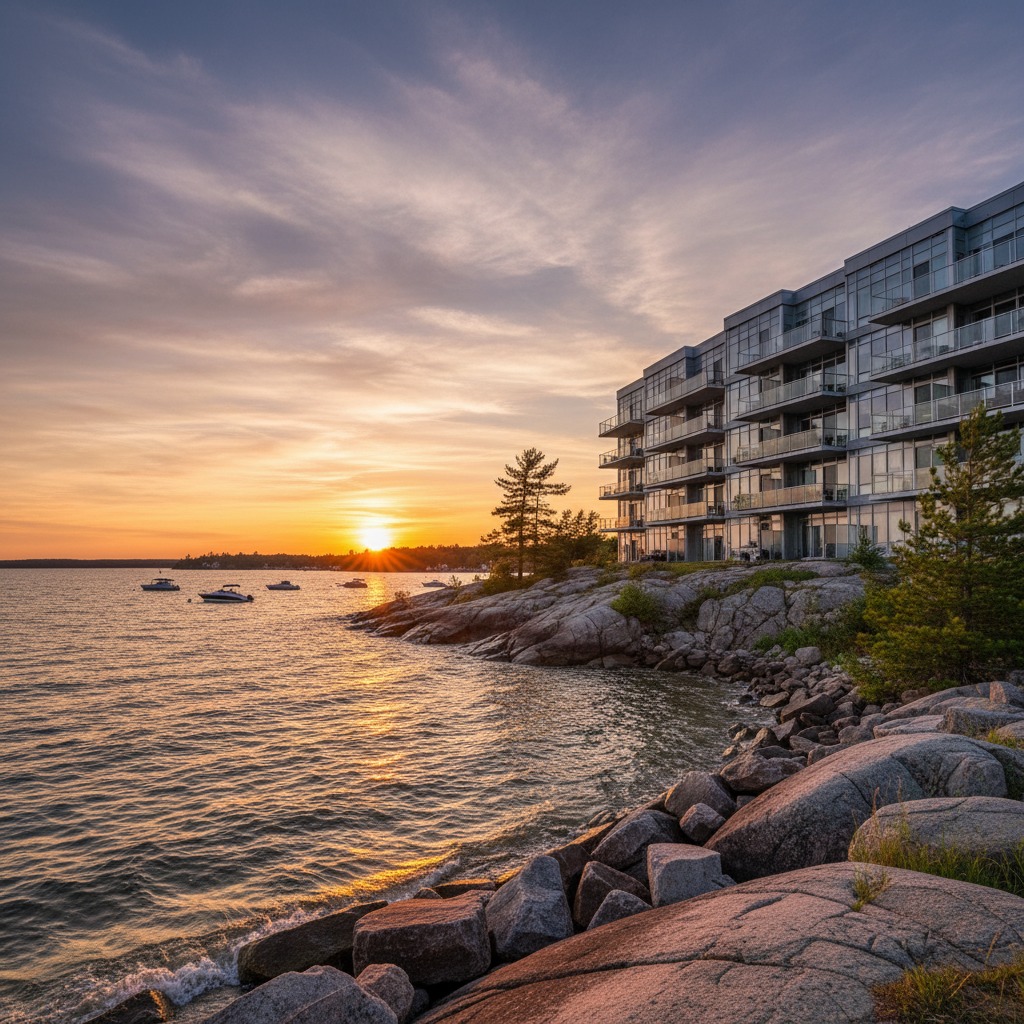
Community groups trying to shape waterfront condo development have limited tools. They can participate in the planning process, attend public meetings, submit comments, and appeal decisions. But the system is weighted toward approval. Under Ontario's planning framework, the default assumption is that development should proceed unless there are specific policy grounds to refuse it. Saying "we do not want a condo tower on our waterfront" is not, on its own, a valid planning argument.
Finding Better Outcomes
The question is not whether waterfront condo development should happen. In many communities, some form of waterfront intensification makes sense. The question is how to ensure that the benefits are broadly shared and the costs are not disproportionately borne by existing residents.
Better outcomes require stronger municipal planning frameworks that establish clear expectations for waterfront development before specific proposals arrive. Communities that have done this work, defining height limits, setback requirements, public access standards, and design guidelines in advance, are in a much stronger position to negotiate with developers than those that react to proposals one at a time.
They also require honest conversations about trade-offs. A waterfront condo project will change a community. The relevant question is whether the change is acceptable and whether the terms of the deal are fair. Too often, those conversations happen after the project is approved, when it is too late to shape the outcome. Engaging early, with clear expectations and strong zoning tools, gives communities a fighting chance.