
How Local Government Shapes Waterfront Planning Decisions
In the summer of 2024, the town council of Meaford, Ontario voted 4-3 to approve a zoning amendment that would allow a mixed-use development on the harbour. The three dissenting councillors cited concerns about building height, parking, and the loss of public access to the waterfront. The four who voted in favour pointed to the project's economic benefits and the developer's willingness to include a public walkway along the water's edge. The decision, made in a packed council chamber on a Tuesday evening, would reshape Meaford's harbour for the next 50 years.
This is how waterfront planning works in Ontario. For all the provincial policies, conservation authority regulations, and federal environmental laws that apply to shoreline development, the decisions that matter most are made by local councils and the planning staff who advise them. Municipal government is where the abstract language of policy meets the concrete reality of what gets built, and where.
The Tools Municipalities Have
Ontario's Planning Act gives municipalities a powerful set of tools for managing development. The most important are the official plan, which sets out the municipality's long-term vision for land use, and the zoning bylaw, which establishes the specific rules for what can be built on each parcel of land. Together, these documents determine the height, density, setbacks, and permitted uses for every property in the municipality, including those on the waterfront.

For waterfront areas, municipalities can adopt special policies that go beyond the standard zoning rules. These might include waterfront-specific design guidelines, enhanced setback requirements from the water's edge, height restrictions to preserve views, and requirements for public access corridors in new developments. Some municipalities have developed comprehensive waterfront master plans that guide development over decades.
The site plan approval process is another critical tool. When a developer proposes a project that conforms to the zoning bylaw, the municipality can still impose conditions through site plan review. These conditions can address building design, landscaping, parking layout, stormwater management, and public access. For waterfront projects, site plan conditions often include requirements for erosion control, shoreline naturalization, and the dedication of waterfront lands for public use.
Where the System Works Well
Municipalities that have invested in strong waterfront planning frameworks tend to produce better outcomes. The town of Collingwood, on the southern shore of Georgian Bay, adopted a detailed waterfront master plan in the early 2000s that established clear expectations for development along the harbour and shoreline. The plan set height limits, required public access at regular intervals, and mandated design standards for buildings visible from the water.
When developers proposed projects along the Collingwood waterfront, the master plan provided a clear framework for negotiation. The municipality could point to specific policies and say: this is what we expect. Developers could plan their projects accordingly, knowing in advance what would be approved and what would not. The result was a waterfront that, while heavily developed, retained meaningful public spaces and a coherent design vocabulary.
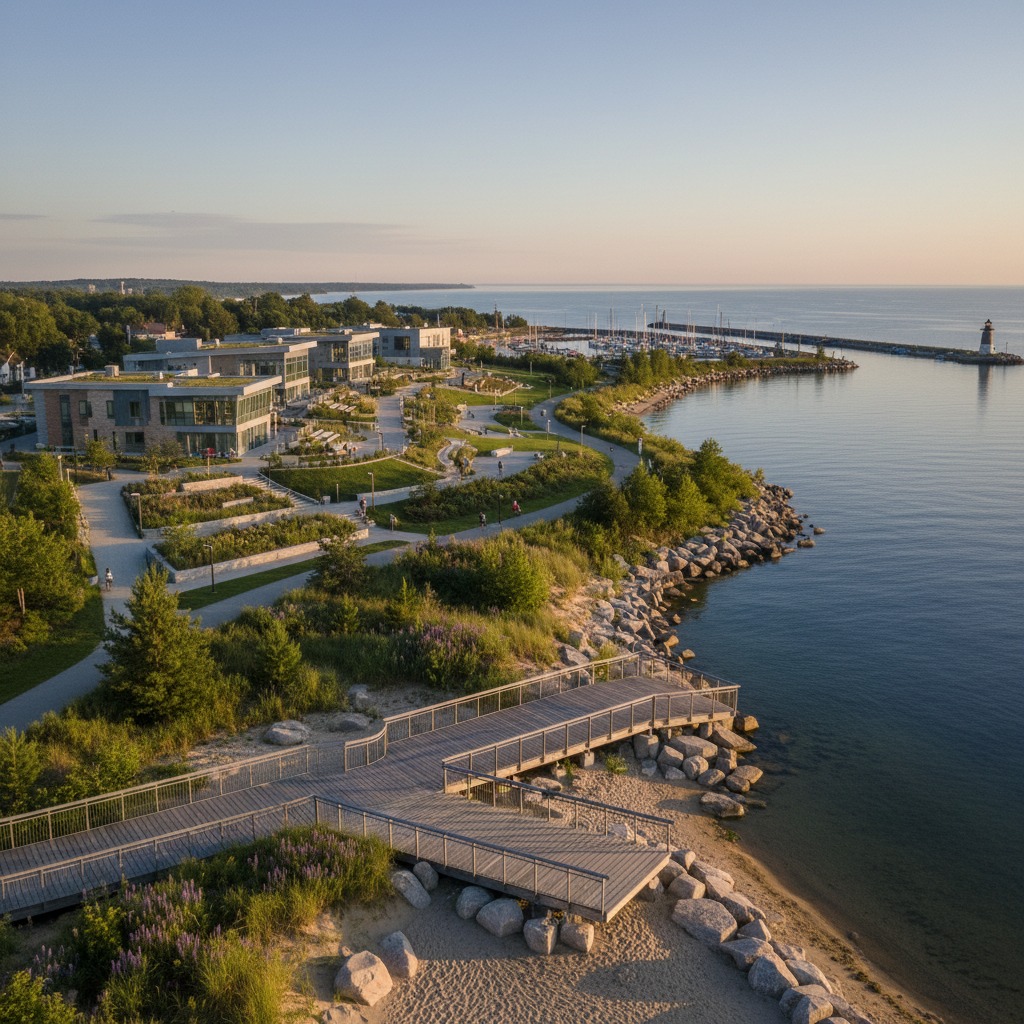
Similar success stories exist in communities like Port Hope, Goderich, and Orillia, where proactive waterfront planning has produced results that most residents and visitors appreciate. The common thread is municipal governments that did the planning work before development pressure arrived, rather than scrambling to react to individual proposals.
Where It Breaks Down
The system fails most often in communities where planning capacity is limited. Many small waterfront municipalities in Ontario have one or two planning staff, or rely on contract planners who are not embedded in the community. These municipalities may have official plans that have not been updated in years and zoning bylaws that do not reflect current conditions along the waterfront.
When a well-resourced developer arrives with a proposal for a major waterfront project, the municipality may lack the staff, expertise, or financial resources to evaluate it thoroughly. The developer's consultants produce detailed studies and persuasive presentations. The municipality's planners, juggling dozens of other files, may not have time to scrutinize the submissions as carefully as they should.
Political dynamics also play a role. In small towns, council members often know the developer, the landowner, and the neighbours personally. The pressure to approve, or to refuse, can come from relationships as much as from policy. Land use fights in small towns tend to be intensely personal, and council members who make unpopular decisions face consequences at the ballot box.
The Ontario Land Tribunal adds another layer of complexity. Developers who are unhappy with a municipal decision can appeal to the tribunal, which has the power to overturn council's decision and approve the project. The tribunal's decisions are supposed to be based on provincial policy and good planning principles, but critics argue that it tends to favour development and undermines local decision-making.
The Role of Public Engagement
Public participation is a cornerstone of the planning process, at least in theory. Ontario's Planning Act requires municipalities to provide notice of proposed planning changes and hold public meetings before making decisions. For waterfront projects, these meetings often draw significant community interest.
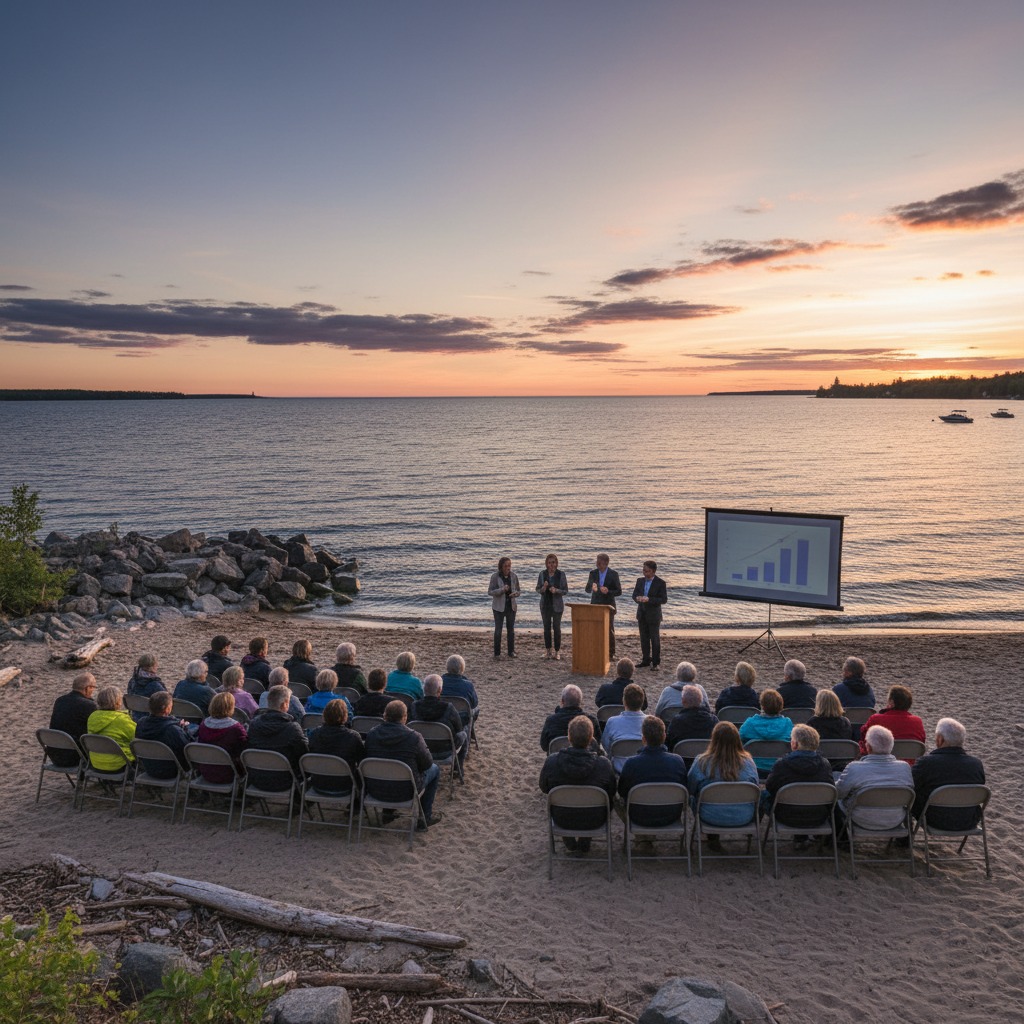
The quality of public engagement varies enormously. Some municipalities hold meaningful consultations with multiple opportunities for input and genuine consideration of community concerns. Others treat public meetings as a box-ticking exercise, holding the required sessions but making it clear that the decision has already been made.
Effective public engagement requires more than just holding a meeting. It requires providing clear information about what is being proposed, explaining the planning framework that applies, and demonstrating how public input has influenced the outcome. Communities where the planning process is transparent tend to produce decisions that, even when controversial, are at least perceived as legitimate.
What Residents Can Do
For residents who want to influence waterfront planning in their community, the most important step is to get involved before a specific project is proposed. Official plan reviews, zoning bylaw updates, and waterfront master plan processes are the moments when the rules are set. Participating in these processes gives residents a chance to shape the framework that will guide individual development decisions for years to come.
When a specific project is proposed, residents should review the application materials, attend public meetings, and submit written comments. Comments that reference specific provincial policies or official plan provisions carry more weight than general objections. If the project goes to the Ontario Land Tribunal, the written record of public input becomes part of the evidence that the tribunal considers.
Building relationships with municipal planning staff can also be valuable. Planners are professionals who want to do good work, and they are often more sympathetic to community concerns than their official reports suggest. Understanding the constraints they operate under, political pressure from council, legal requirements under the Planning Act, budget limitations, can help residents frame their input in ways that planners can use.
Waterfront planning is not glamorous work. It involves attending long meetings, reading technical documents, and arguing over setback distances and floor area ratios. But it is the work that determines what Ontario's waterfronts will look like for the next generation. Zoning changes, once made, are difficult to reverse. The time to shape them is before they happen.