Public vs Private: The Fight Over Shoreline Access
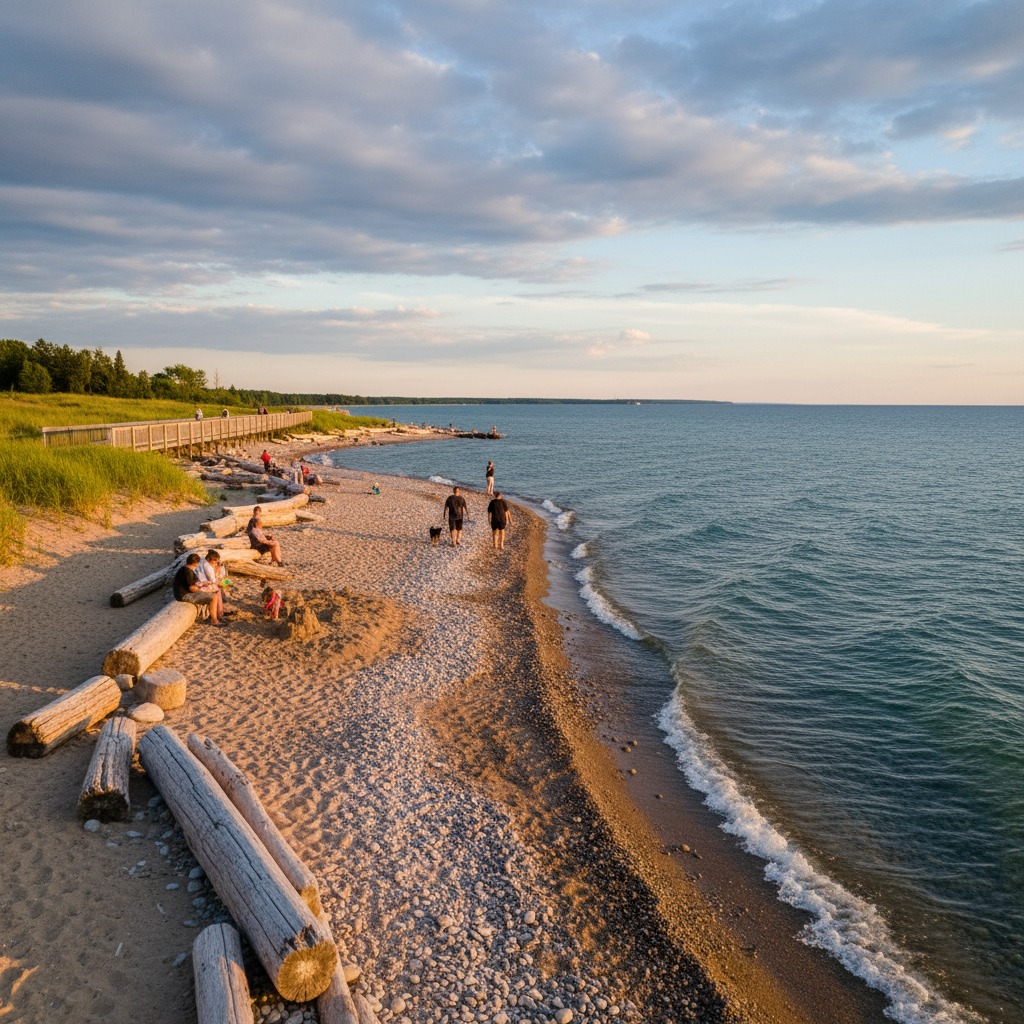
Along a quiet stretch of Lake Huron shoreline near Grand Bend, a well-worn footpath cuts between two cottage properties and drops down to the sand. For decades, locals have used this trail to reach the water. Then, in the summer of 2023, a new property owner installed a fence across it. The path vanished overnight. The community backlash did not.
Stories like this play out across Ontario every year. They pit waterfront property owners, who believe they have a right to control access to their land, against residents who argue that shorelines are a shared public resource. The disputes are rarely simple. They involve overlapping layers of municipal bylaws, provincial policy, and common law traditions that date back centuries.
Who Actually Owns the Shoreline?
In Ontario, the legal framework around shoreline ownership depends on the type of waterbody. For the Great Lakes, the Crown generally owns the lakebed below the ordinary high water mark. That means the strip of beach between the water line and the high water mark is technically public. But reaching that strip without crossing private land is another matter entirely.
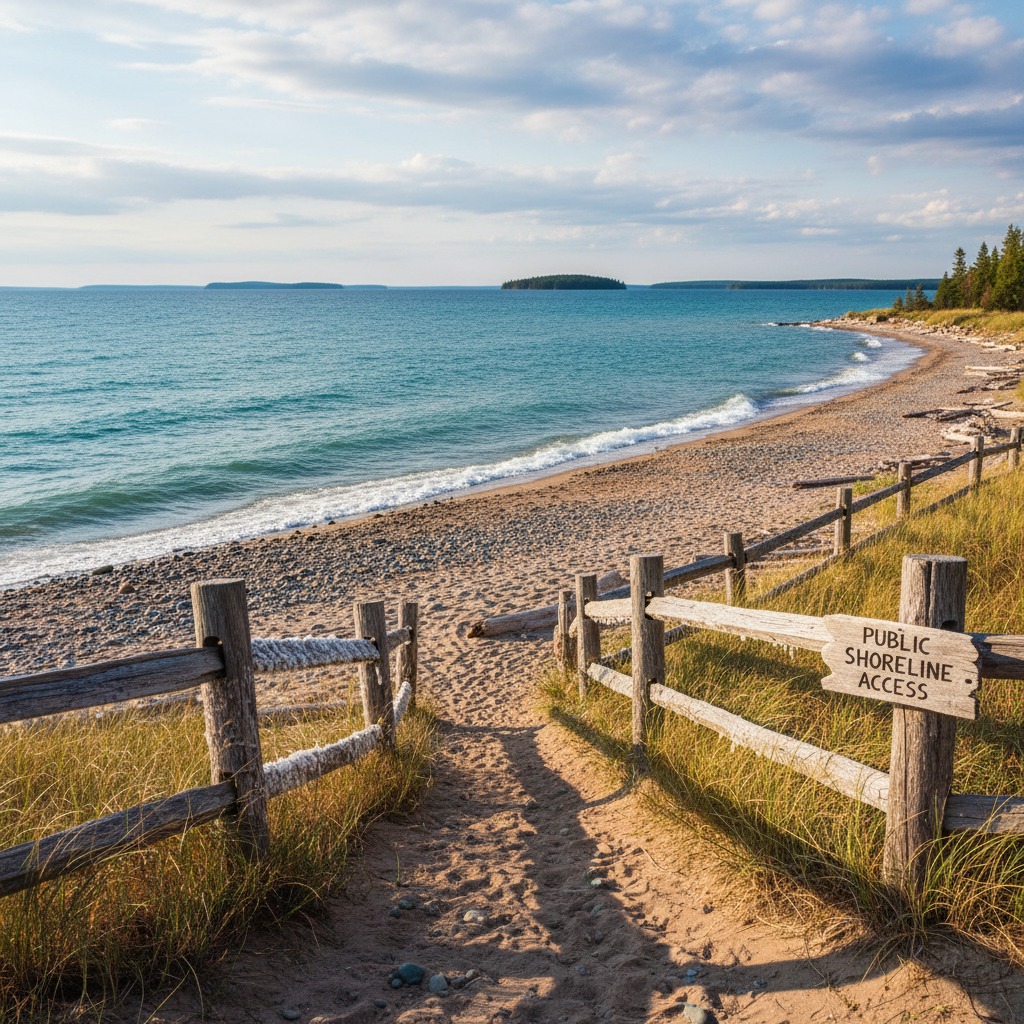
Most waterfront lots extend to the high water mark, and in many cases property owners have installed docks, retaining walls, and landscaping that blur the boundary between private and public ground. Unless a municipality has established a dedicated public access point, there may be no legal way for someone to walk from a road to the water without trespassing.
On inland lakes and rivers, the situation is even murkier. Many of these waterbodies have beds owned by the Crown, but the shoreline itself often falls within private property boundaries. Road allowances that once provided public access have been closed or sold off in various municipalities over the years, sometimes quietly and with little public input.
The Push for More Public Access
Advocacy groups across the province have been pushing municipalities to protect and expand public access to waterfronts. Organizations like the Lake Ontario Waterkeeper and local ratepayer associations argue that shoreline access is a matter of equity. As waterfront property prices continue to climb, fewer families can afford to live near the water. Without public access points, swimming, fishing, and simply enjoying the shoreline become privileges reserved for the wealthy.
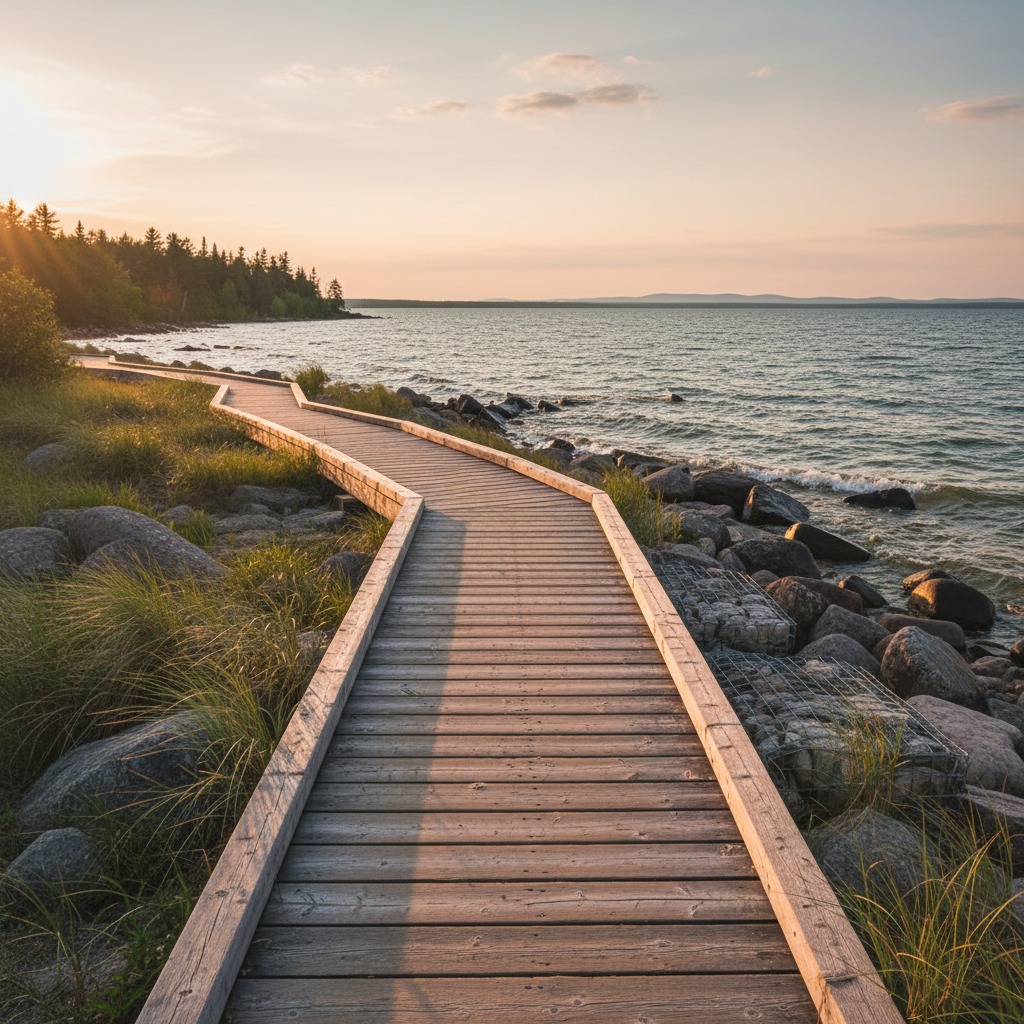
In Wasaga Beach, a long fight over public access to the town's famous sandy stretch led to new municipal investments in parking, pathways, and signage. The town recognized that its identity was tied to the beach, and restricting access would undermine both tourism and community life. Similar efforts have unfolded in harbour towns across Ontario, where municipalities are trying to balance private rights with public expectations.
The Provincial Policy Statement, which guides land use planning across Ontario, includes language about protecting public access to shorelines and waterfronts. But the policy is broad, and its enforcement depends largely on local councils and planning departments. Some municipalities have taken it seriously, requiring developers to include public access corridors in new waterfront projects. Others have treated it as an afterthought.
Property Owners Push Back
Waterfront property owners have their own legitimate concerns. Many have invested significant money in their properties and worry that unrestricted public access will bring noise, litter, parking problems, and liability risks. Some point to real incidents: campfires left burning on private beaches, boats anchored in front of docks, and strangers walking across lawns to reach the water.
The legal system has occasionally sided with property owners. In cases where a public access path crosses private land, courts have required municipalities to prove that the right of way was formally established and never legally closed. Without that documentation, which some townships lost or never properly recorded, the access point may not be legally defensible.
This has created a patchwork of outcomes across the province. In one township, a road allowance to the lake remains open and well-maintained. In the next, an identical road allowance has been fenced off for years, and the municipality lacks the will or the legal standing to reopen it.
How Municipalities Are Responding
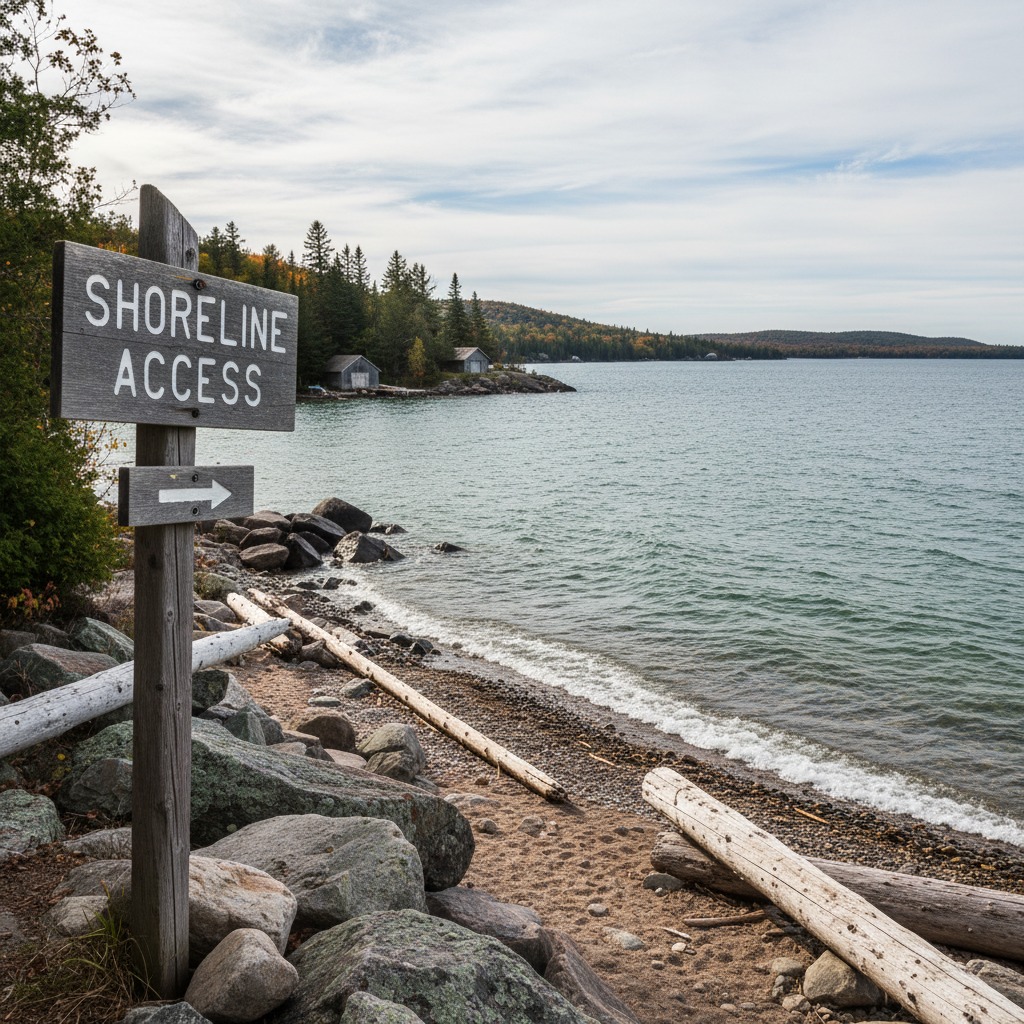
A growing number of municipalities are taking inventory of their existing waterfront access points. Tiny Township on Georgian Bay conducted a shoreline access review in 2022 that identified dozens of road allowances leading to the water, many of which had been informally blocked by adjacent property owners. The review prompted the township to begin clearing and marking several access points, a move that drew praise from some residents and anger from others.
Other municipalities have used the planning approval process to secure new access points. When a developer proposes a waterfront subdivision or condominium project, the municipality can require the dedication of a public access corridor as a condition of approval. This approach has been used effectively in communities along Lake Simcoe and the Trent-Severn Waterway, though it only works when new development is proposed.
In areas where development pressure is low, municipalities face harder choices. Purchasing private land to create new access points is expensive, and few small towns have the budget for it. Some have turned to provincial funding programs and conservation partnerships to help cover costs, but progress is slow.
The Bigger Picture
The fight over shoreline access touches on some of the deepest tensions in Ontario land use policy. It raises questions about who waterfronts belong to, how planning decisions should weigh private property rights against public benefit, and whether the current legal framework is adequate for a province where lakefront and riverfront land is becoming increasingly privatized.
As condo developments continue to reshape waterfronts in communities large and small, the opportunities to preserve or create public access are narrowing. Every parcel of shoreline that gets developed without a public corridor is one fewer chance for the community to reach the water.
For residents in towns like Grand Bend, the fence across the footpath is more than a property dispute. It is a symbol of a larger shift in how Ontario's waterfronts are being used and who gets to enjoy them. The legal battles will continue. So will the fence-cutting, if community meetings in the area are any indication. What remains to be seen is whether provincial and municipal leaders will step in with clearer rules before the disputes get worse.
The path forward likely involves a combination of better legal clarity, stronger municipal inventories of existing access points, and provincial policy that treats public waterfront access not as a nice-to-have, but as a planning priority.