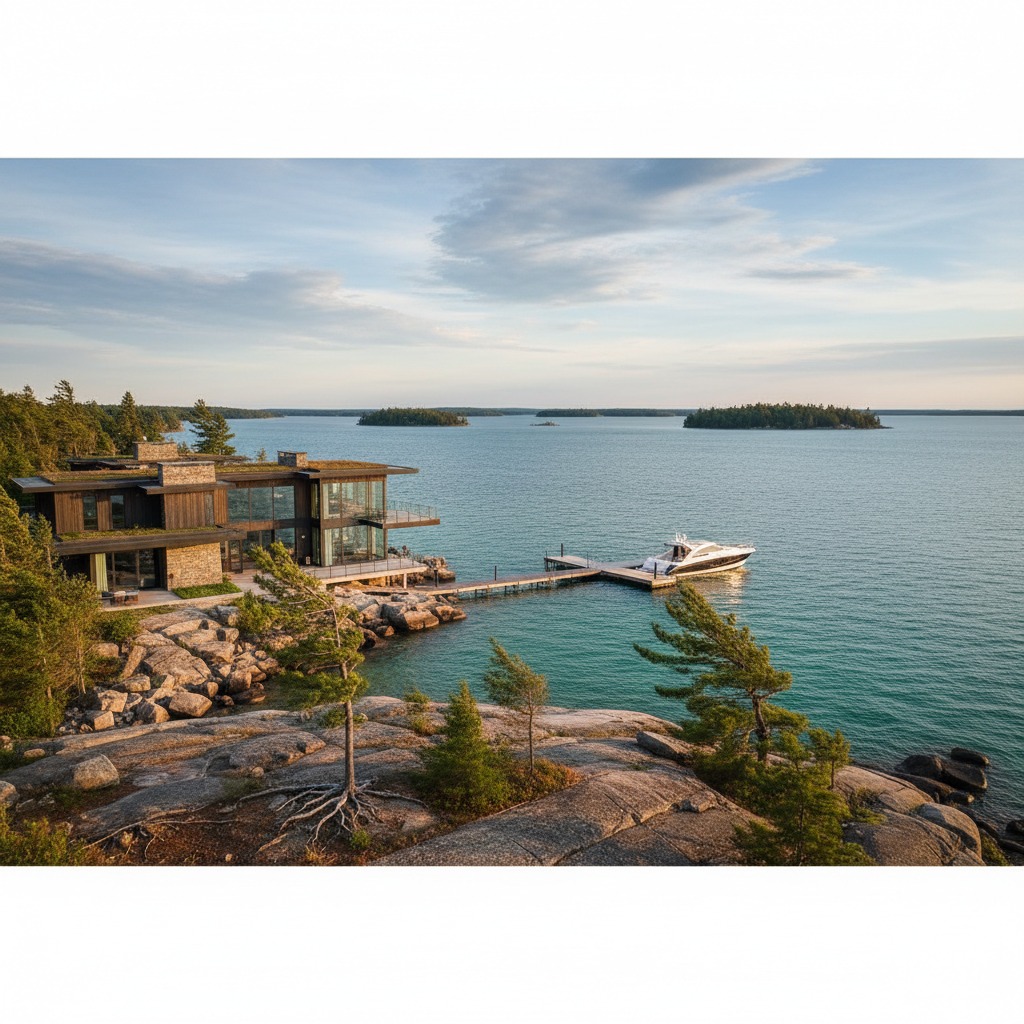
Waterfront Property Value Myths That Cost Buyers Money
Waterfront property has a mystique that distorts buyer thinking. The combination of scarcity, emotion, and lifestyle aspiration creates fertile ground for myths that persist despite contradicting evidence. These myths are not harmless. They lead buyers to overpay, overlook critical flaws, and make assumptions about future value that the market does not support.
After fifteen years in the waterfront real estate market, I have watched these myths cost buyers real money. Here are the ones that do the most damage.
Myth: Waterfront Property Always Appreciates
This is the big one. The belief that waterfront property is a guaranteed appreciating asset drives purchase decisions across Ontario every year. And it is, at best, a half-truth.
Over long periods, waterfront property in desirable areas has generally appreciated faster than inland property. But "generally" and "long periods" carry enormous caveats. Individual properties can lose value for years due to water quality problems, municipal reassessments, changing access conditions, environmental contamination, or simply falling out of favour as buyer preferences shift.
The pandemic-era cottage boom of 2020 to 2022 created a vivid case study. Prices in many waterfront markets jumped 40 to 80 percent in two years, driven by remote work demand and lifestyle migration. Since then, prices have corrected by 10 to 30 percent in many of those same markets. Buyers who purchased at peak prices with the assumption that appreciation would continue are now sitting on properties worth less than they paid.
Waterfront property can be a solid investment. But treating it as a guaranteed one leads to decisions made with insufficient caution and due diligence.
Myth: All Waterfront Is Created Equal
A metre of frontage on Lake Joseph in Muskoka bears no resemblance, in value or character, to a metre of frontage on a shallow lake in eastern Ontario. Yet buyers frequently compare waterfront properties as though "waterfront" is a single category.
The factors that differentiate waterfront value are numerous: lake size, water clarity, depth, fish species, boat access, public versus private lake, development density on the lake, distance from urban centres, road quality, and the presence or absence of nuisances like industrial operations, aggregate extraction, or heavy agricultural runoff.
A property on a lake with documented water quality problems, recurring algae blooms, or fish consumption advisories will not appreciate like one on a clean, well-managed lake. Buyers who ignore water quality data because the view looks nice from the deck are making a mistake that will show up at resale. The condition of the broader environment, including shoreline health, matters as much as the condition of the house.
Myth: The House Matters Most
On waterfront property, the house is often the least important component of value. Land value, specifically frontage and waterfront quality, drives the bulk of the assessment. A dated cottage on 200 feet of prime sandy shoreline is worth more than a renovated home on 50 feet of rocky, north-facing bank.
This reality frustrates buyers who invest heavily in home improvements expecting a proportional return. A $100,000 kitchen renovation on a waterfront property with poor shoreline, limited frontage, or water quality issues will not return $100,000 in added value. The land dictates the ceiling. The house merely fills in the gap between the land value and that ceiling.

Smart waterfront buyers prioritize land quality over building quality. A sound structure on great waterfront will always outperform a great structure on mediocre waterfront.
Myth: Waterfront Premiums Are Fixed
The premium that waterfront commands over comparable inland property fluctuates with market conditions, interest rates, and demographic trends. During the pandemic boom, waterfront premiums expanded significantly as demand surged. As interest rates rose and remote work policies evolved, the premium narrowed in many markets.
Historically, the waterfront premium in Ontario has ranged from 25 to 100 percent over comparable non-waterfront properties, depending on the market and the period. Assuming a specific premium will hold steady leads to overconfident purchase decisions and unrealistic expectations at resale time.
Myth: Insurance and Taxes Are Predictable
Buyers frequently base their financial projections on current insurance premiums and property taxes, assuming these costs will remain stable. Both assumptions are dangerous for waterfront property.
Property taxes on waterfront homes have been climbing faster than on comparable inland properties in many Ontario municipalities, driven by reassessments that capture the waterfront premium. A property assessed at $400,000 today may be reassessed at $550,000 in the next cycle, with a corresponding tax increase that blows through your projected budget.
Insurance costs have been even less predictable. Flood risk reassessments and tightening underwriting standards have produced premium increases of 50 to 200 percent for some waterfront properties. Properties that were easily insurable five years ago are now facing coverage limitations or exclusions that materially affect their value and saleability.
Myth: You Can Always Build What You Want
Buyers frequently purchase waterfront property with plans for expansion, renovation, or redevelopment, only to discover that setback requirements, zoning restrictions, and conservation authority regulations prevent or significantly limit their plans.
The non-conforming status of many older waterfront buildings creates a particular trap. A buyer sees a small cottage and imagines tearing it down to build their dream home. But the existing building may sit within the required setback from the water, meaning a new building would need to be placed farther back on the lot. On a shallow lot, this can make the planned build physically impossible.
Always verify what you can build before you buy. Contact the municipality, the conservation authority, and a qualified planner or architect. Get answers in writing. The cost of this research is trivial compared to the cost of discovering restrictions after you have closed the deal.
The Reality Check
Waterfront property can be a wonderful investment in lifestyle and, over time, in financial value. But it requires the same hard-nosed analysis as any significant purchase. Verify claims. Test assumptions. Get professional assessments of the land, the water, the building, and the regulatory environment. And recognize that the view from the deck, as beautiful as it is, does not tell you what the property is actually worth or what it will cost you to own it.