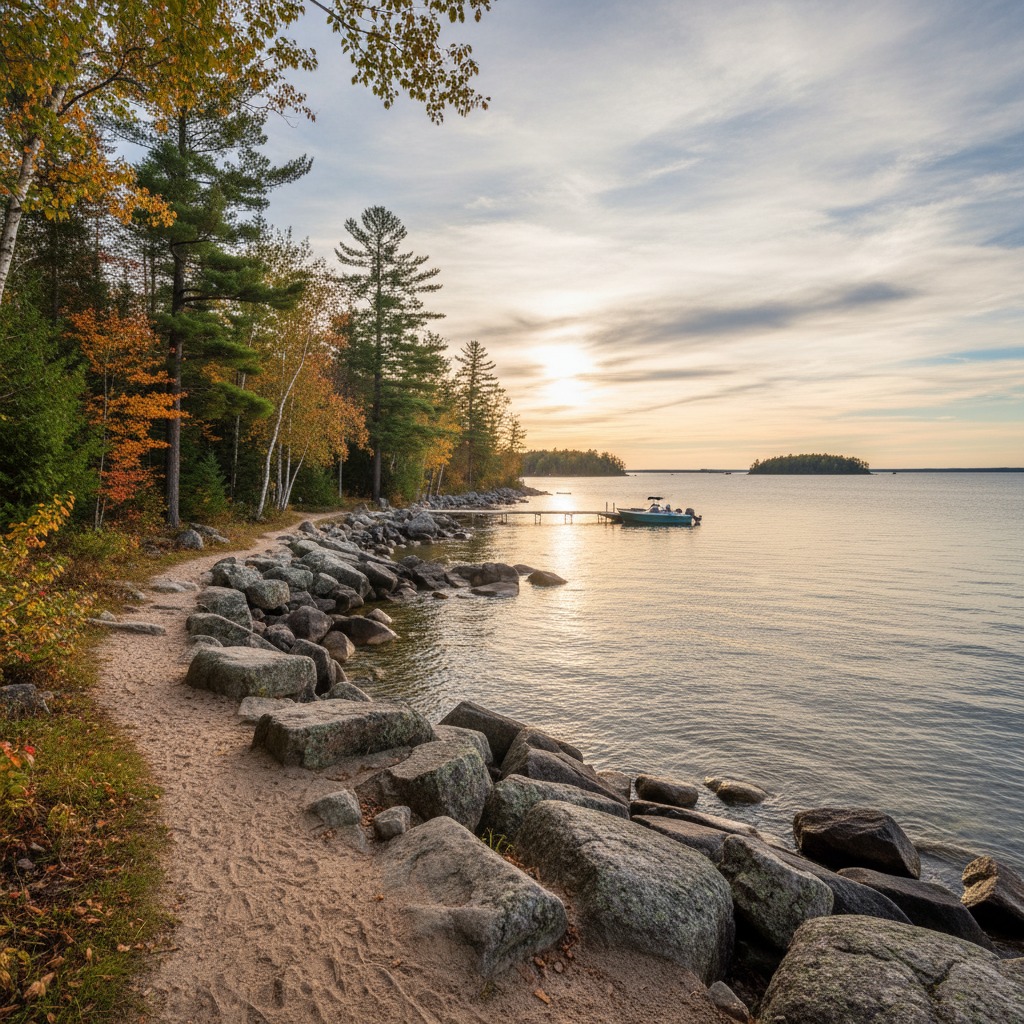
Lake Simcoe Shoreline: Beauty Under Pressure
Lake Simcoe is the fourth-largest lake entirely within Ontario, and it sits at the centre of the province's most intense growth corridor. Barrie is booming on the western shore. Orillia is growing at the northern tip. The eastern and southern shores, from Beaverton to Georgina, are absorbing spillover from the Greater Toronto Area at a pace that would have been unimaginable twenty years ago. The lake itself, 744 square kilometres of surface water, is caught between the recreational demands of millions of nearby residents and the ecological limits of a system that was already under stress.
This is a lake that people care about deeply. Lake Simcoe supports a fishery that includes lake trout, whitefish, perch, and bass. It provides drinking water for communities around its shore. It anchors a cottage and recreation economy worth hundreds of millions of dollars annually. And it is, by almost every measure, in trouble.
The Phosphorus Problem
Lake Simcoe's central ecological challenge is phosphorus loading. Excess phosphorus from agricultural runoff, stormwater, and aging septic systems feeds algae growth, which depletes oxygen in the deeper waters. Low oxygen levels threaten cold-water fish species, particularly lake trout, which need cold, well-oxygenated depths to survive.
The Lake Simcoe Protection Plan, introduced by the Ontario government in 2009, set targets for reducing phosphorus inputs and established a regulatory framework for development around the lake. The plan was a landmark piece of environmental legislation, and it has driven measurable reductions in phosphorus loading over the past fifteen years.
But the gains are fragile. Population growth around the lake is adding new sources of phosphorus even as existing ones are reduced. Stormwater from expanding urban areas carries pollutants into tributaries that feed the lake. Climate change is altering precipitation patterns, producing more intense rainfall events that overwhelm stormwater management systems. The Lake Simcoe Region Conservation Authority monitors conditions closely, and the data shows that the phosphorus targets remain difficult to meet, even with the protection plan in place.
Barrie and the Western Shore
Barrie's growth has been the most dramatic transformation on the Lake Simcoe shoreline. The city's population has roughly doubled since 2000, driven by highway improvements that cut commute times to Toronto and by housing prices that, while rising, remain below GTA levels. The condo towers along Barrie's waterfront are visible from across the lake, and they represent a density of development that is new to the Simcoe shoreline.
Barrie's waterfront itself is a success story within the broader growth narrative. The city invested heavily in Centennial Park, Heritage Park, and the waterfront trail system, creating a continuous public corridor along the lakeshore. The seasonal festivals, the public beach, and the marina attract visitors from across the region. As a revitalization effort, Barrie's waterfront is among the better-executed examples in Ontario.
The challenge is what happens behind the waterfront. The development that has made Barrie grow has also increased impervious surfaces, stormwater flows, and servicing demands. Every new subdivision, every new commercial plaza, adds to the cumulative pressure on the lake's watershed. The protection plan attempts to manage this, but the pace of growth tests the regulatory framework continuously.
Orillia and the Northern Reach
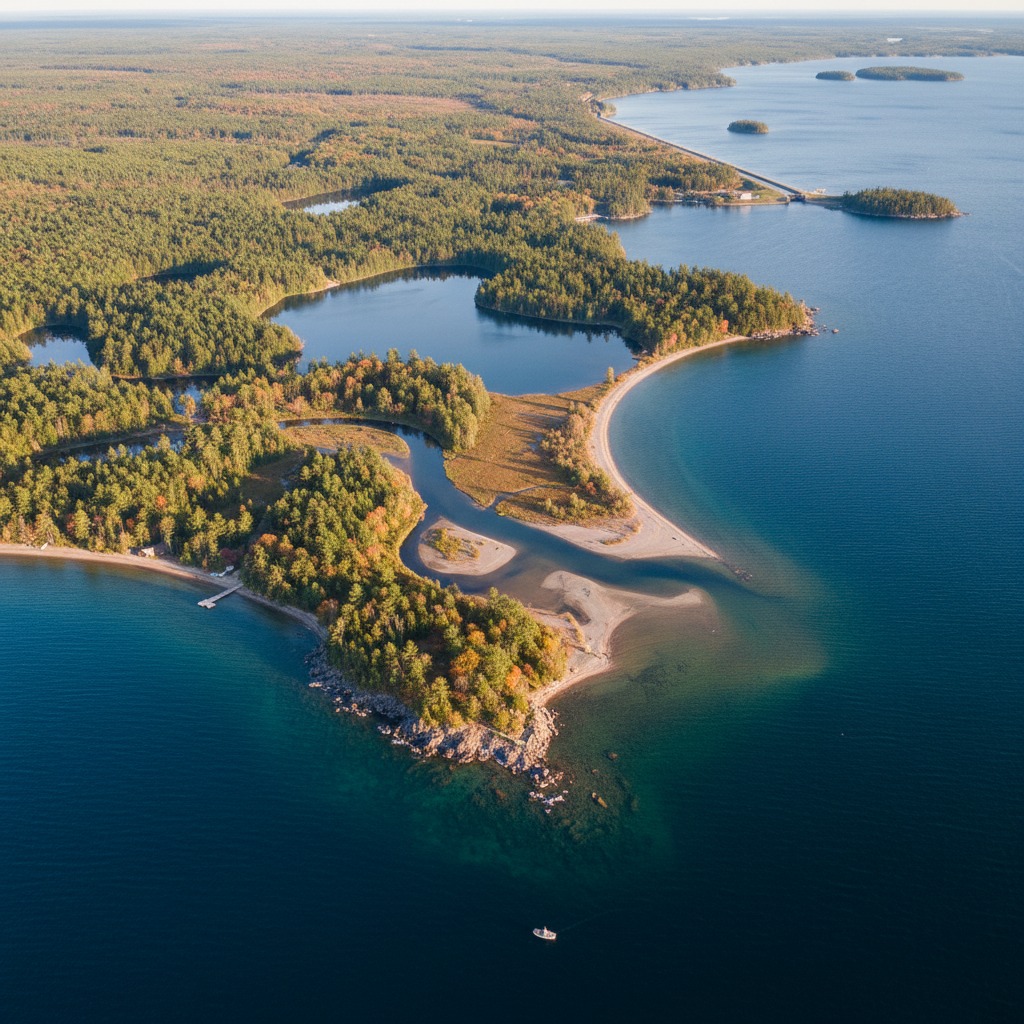
Orillia sits at the narrows where Lake Simcoe gives way to Lake Couchiching, and its waterfront reflects a different set of pressures. Smaller than Barrie and further from Toronto, Orillia has grown more modestly but still faces the tension between development ambitions and environmental constraints.
The city's waterfront district, rebuilt over the past two decades, is one of the more attractive in the region. Couchiching Beach Park, the town dock, and the waterfront trail create a public space that connects the downtown to the lake. The Casino Rama resort on Rama First Nation land brings tourism revenue to the area but also generates traffic and servicing demands that ripple through the surrounding communities.
The connection between Lake Simcoe and Georgian Bay through Lake Couchiching and the Severn River gives Orillia a strategic position in Ontario's waterway network. Boats travelling the Trent-Severn Waterway pass through Orillia, and the marina and lock facilities are significant community assets. That waterway connection also means that ecological conditions in Lake Simcoe affect downstream environments, adding urgency to the protection efforts.
The Eastern Shore
The eastern shore of Lake Simcoe, stretching from Beaverton through Lagoon City to Jackson's Point, has a different character than the urbanizing western shore. These communities are smaller, more seasonal, and more directly tied to the lake's recreational economy. Fishing, boating, and cottage life dominate the cultural landscape.
Lagoon City, a canal community built in the 1970s, is one of the more unusual residential developments on the lake. Every lot has direct water access through a system of constructed canals that connect to Cook's Bay. The development was controversial when it was built, and its ongoing maintenance costs and environmental implications remain subjects of debate. But the residents are fiercely loyal to their community, and Lagoon City functions as a tight-knit neighbourhood in a way that many waterfront developments do not achieve.
Jackson's Point, in the Town of Georgina, was once the summer playground for Toronto's wealthier families. The grand resort hotels are gone, but the village retains a Victorian charm that sets it apart from newer developments along the shore. The public beach and park provide waterfront access that the rest of Georgina's shoreline, largely residential and private, does not consistently offer.
The Ice Fishing Tradition
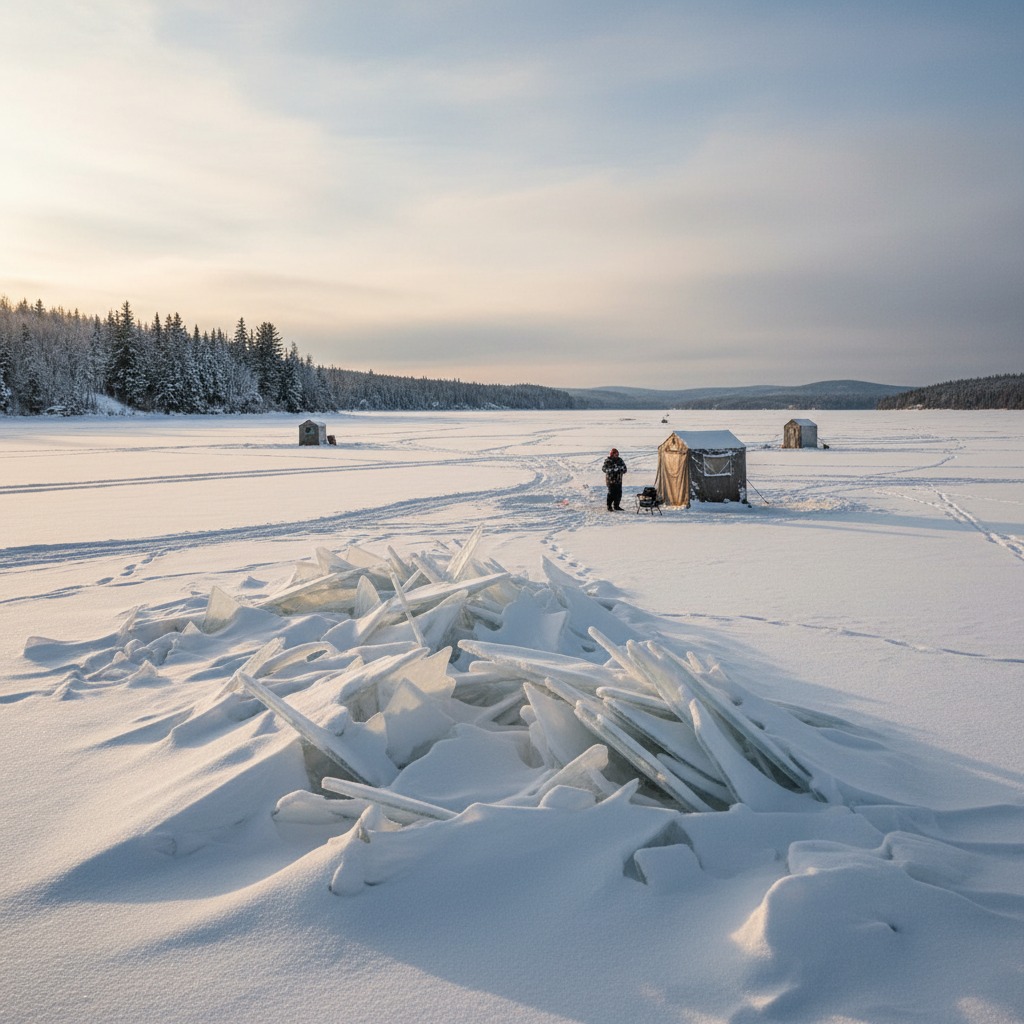
Lake Simcoe's ice fishing culture sets it apart from other Ontario lakes. The Simcoe ice fishery is one of the largest in the province, drawing thousands of anglers onto the frozen lake every winter. The ice hut communities that form on Cook's Bay and Kempenfelt Bay have their own social structures, their own traditions, and their own environmental impacts.
The fishery depends on healthy fish populations, which in turn depend on the lake's ecological health. Perch, the primary ice-fishing target, are sensitive to water quality conditions. The connection between phosphorus loading, algae growth, oxygen levels, and fish populations is direct and measurable. For the ice fishing community, environmental protection is not an abstract value. It is the foundation of their recreation.
Pathways Forward
The future of Lake Simcoe depends on decisions being made now by municipalities, conservation authorities, and the provincial government. The protection plan provides a framework, but implementation requires ongoing commitment and funding. The Lake Simcoe Region Conservation Authority coordinates much of the monitoring and restoration work, but the authority's resources are stretched across a growing mandate.
Some communities are leading by example. Innisfil, on the western shore, has implemented innovative stormwater management practices in new developments. Georgina has invested in shoreline naturalization projects. Harbour communities around the lake are working to reduce marina-related pollution. These efforts are meaningful, but they need to scale up to match the pace of growth.
Lake Simcoe is not a lost cause. The water quality improvements achieved since 2009 prove that concerted action can make a difference. But the margin for error is narrow. A lake under this much development pressure cannot absorb many more mistakes. The communities that are changing around its shores have a responsibility to the lake that transcends property values and tax revenue. Whether they honour that responsibility will determine whether Lake Simcoe remains the recreational and ecological treasure it has been for generations, or becomes a cautionary tale about growth without limits.